
Loading a Rifle: 250 Years of Service Rifle History
07/15/2026

On June 28, 1778, Private Joseph Plumb Martin stood in a wheat field in New Jersey and reloaded his musket in heat he later called the mouth of a heated oven.
The temperature ran near 100 degrees. Men on both sides were dropping dead from the heat before a musket ball could reach them. Martin bit the paper cartridge, tasted the raw black powder, poured the charge, seated the ball, and drove it home with a ramrod down a barrel that fouled worse with every shot. Then he did it again. A trained Continental soldier could manage about three aimed rounds a minute, and the whole shape of that battle came down to that number. The formations, the volleys, the way men were made to stand, all of it was built around how long it took to get the next round into a weapon.
That problem never went away. The 250 years of the American service rifle that followed are the story of solving it. Every advance below is a man trying to put the next round in faster while someone is trying to kill him.
The Flintlock Baseline
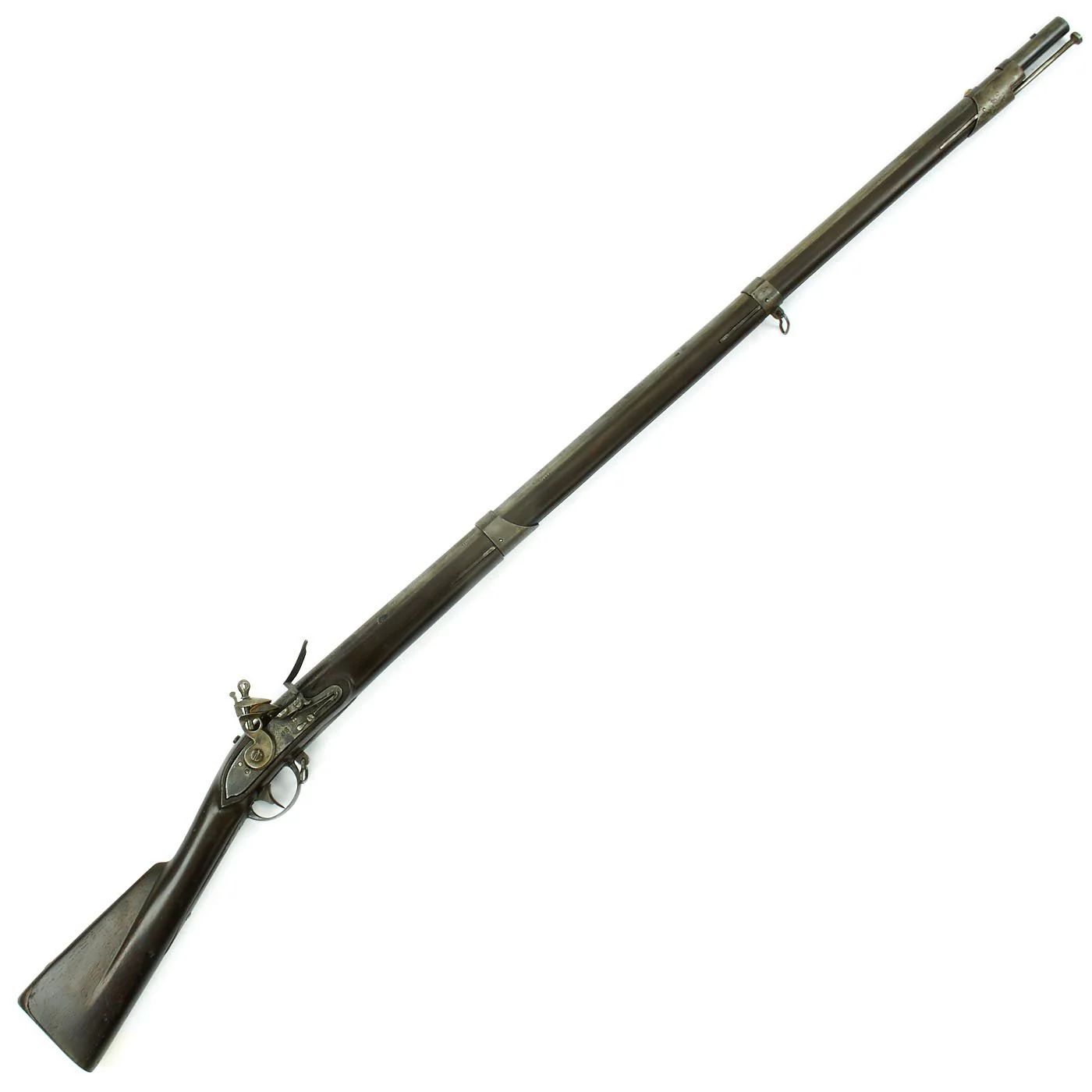
Martin's musket, whether a British Brown Bess taken in the field or a French Charleville shipped over to arm the Continentals, had no mechanical loading advantage of any kind. It was a smoothbore that loaded from the front. It did not have an action at all. A flintlock has a lock, the cock, flint, frizzen, and pan that throw the spark. The action, the mechanism that feeds and seats a cartridge at the breech, came later. Everything that followed is the story of that lock giving way to an action.
The loading sequence was codified by Inspector General Friedrich Wilhelm von Steuben in his 1779 drill manual, the book the Continental Army learned to fight from. A soldier drew the paper cartridge from his box and bit off the tail. He poured a pinch of powder into the pan and closed the frizzen over it. He grounded the butt, poured the rest of the charge down the muzzle, dropped in the ball and the paper, and drew his ramrod. He drove the whole load down the barrel, returned the ramrod, brought the lock to full cock, and presented. Only then could he fire.
Every one of those motions happened in the open, in front of the enemy, and any one of them could go wrong. Drop the ramrod and the weapon was finished for the rest of the fight. The rate of fire was not a property of the musket. It was a property of the man. A well-drilled infantryman got off roughly three aimed rounds a minute, and combat, fouling, and fear pulled that number down, not up.
You can see the bottleneck clearly at Bunker Hill on June 17, 1775. A fifteen-year-old fifer named John Greenwood, moving toward the firing line, watched a wounded patriot whose leg had been shattered by British fire. The man could not stand to shoot. So he sat in the dirt behind the rail fence and loaded muskets, one after another, biting cartridges and ramming powder and ball, passing each finished weapon up to the men who could still aim. The firing was the easy part. The labor, the time, and the exposure all lived in the reload. So armies stood shoulder to shoulder in lines and fired in volleys, because a single musket was dead weight for the twenty seconds it took to bring it back.
The Breech
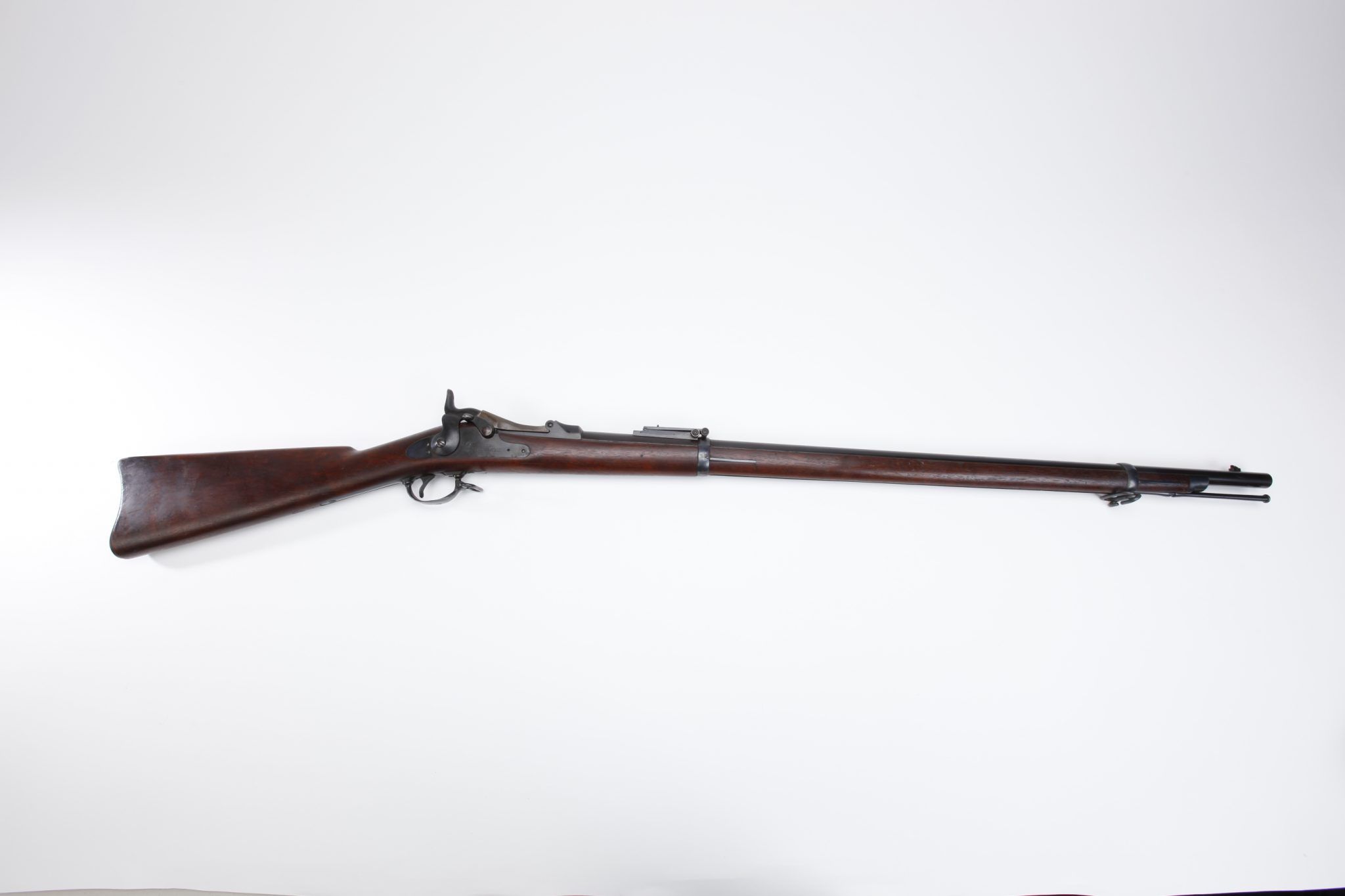
By the Spanish-American War in 1898, the reload had moved to the back of the weapon, and it changed everything about how exposed a man was when he ran dry.
Volunteer regiments and units like the 24th and 25th Infantry carried the Model 1873 Springfield, the "trapdoor." After firing its heavy .45-70 cartridge, the soldier flipped up a hinged block at the breech, which kicked the spent brass clear. He pushed a fresh round straight into the chamber and snapped the block shut. It was still one shot at a time, but the muzzle-loading drill was gone, and an experienced man could hold twelve to fifteen rounds a minute. That is four or five times what Martin managed at Monmouth.
The regulars carried something better. The Krag-Jørgensen chambered the modern .30-40 smokeless cartridge and fed from a side gate on the receiver. The soldier flipped the gate open and dropped in five loose rounds, and he could top the magazine off without opening the bolt on a live chamber. A skilled shooter ran it at twenty to thirty rounds a minute. The gap between the two rifles showed up plainly in Cuba. The trapdoor's black powder threw a white cloud on every shot that told the Spanish exactly where the American was, and the Spanish were shooting back with smokeless Mausers that gave away nothing.
The Krag's speed was not an abstraction to Sergeant William H. Thompkins of the 10th Cavalry. On the night of June 30, 1898, a landing party lay pinned on the beach at Tayabacoa, Cuba, and four attempts to pull them off had already failed under Spanish fire. Thompkins volunteered for the fifth. He rowed a whaleboat to the beach in the dark, worked his Krag against the Spanish blockhouses, and kept up enough fire from a five-round magazine to hold the enemy back while the wounded were loaded and rowed out. He earned the Medal of Honor for it.
The Stripper Clip
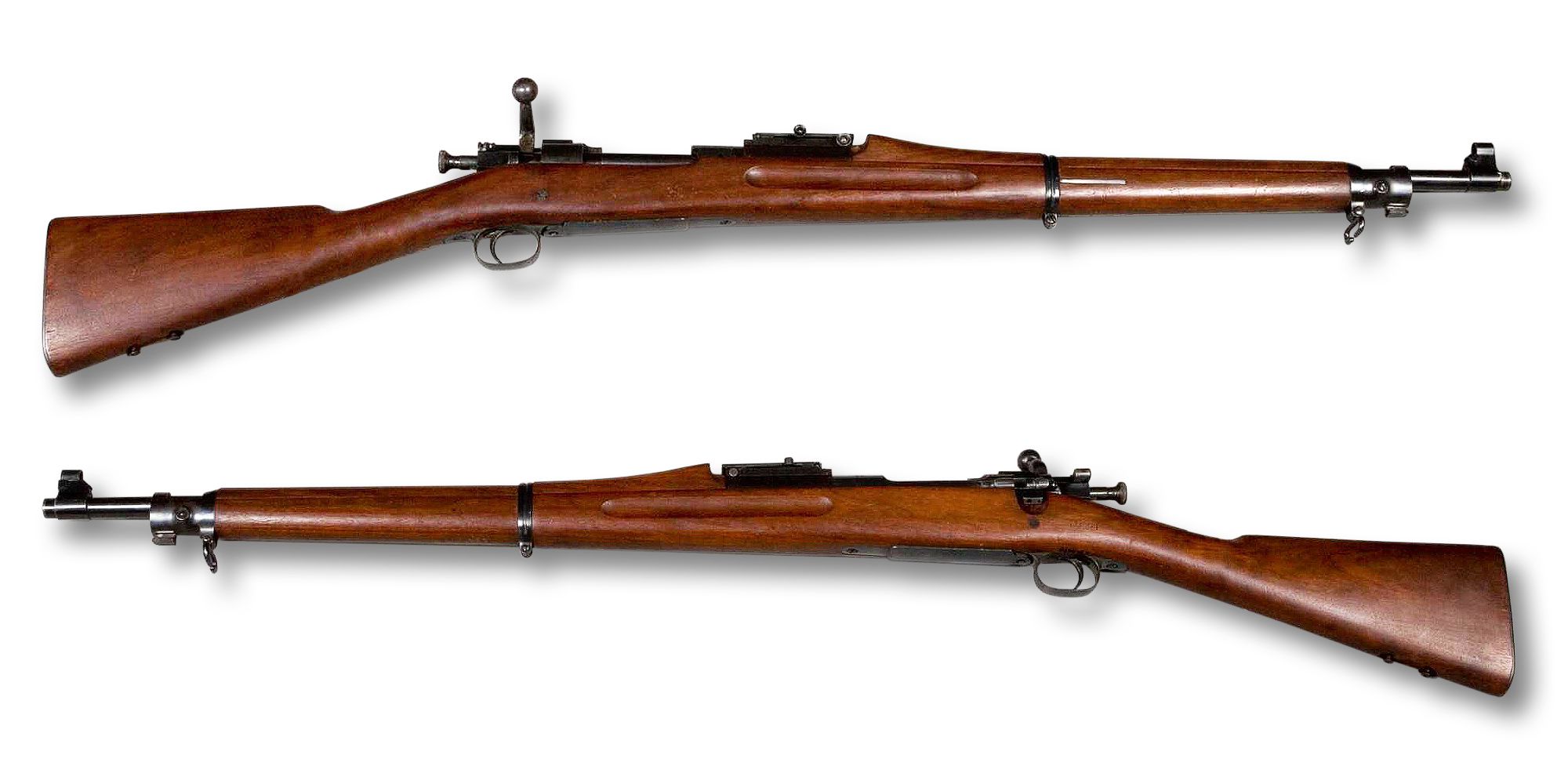
When the American Expeditionary Forces reached the trenches of World War I, a soldier no longer loaded one round at a time. The M1903 Springfield was the bolt-action rifle at its peak, a five-round rifle chambered in .30-06 with a Mauser-pattern action.
The thing that sped up the reload was a small strip of stamped metal. The soldier opened the bolt, set a stripper clip holding five rounds into the guides milled into the receiver, and pressed his thumb down. All five rounds stripped off the clip and into the magazine in one motion, in about two seconds, and the empty clip flicked away as the bolt ran forward. He no longer had to break his eyes off the enemy to thumb rounds in one by one. A trained rifleman held fifteen to thirty aimed rounds a minute with an '03, five to ten times the output of a flintlock, at ranges von Steuben could not have imagined.
Captain Samuel Woodfill used every bit of that in the Meuse-Argonne in October 1918. With his company pinned near Cunel, he went forward alone through the mud and spotted a German machine gun firing from a church tower about 300 yards off. He shot the gunner with his '03, then shot each man who stepped up to take the gun, working the bolt and dropping a fresh stripper clip in when the magazine ran dry. He cleared the tower, moved on to two more gun nests, and finished the last position in a shell hole in hand-to-hand fighting. One man took apart a defensive network because he could reload without losing his sight picture.
The Rifle Cycles Itself
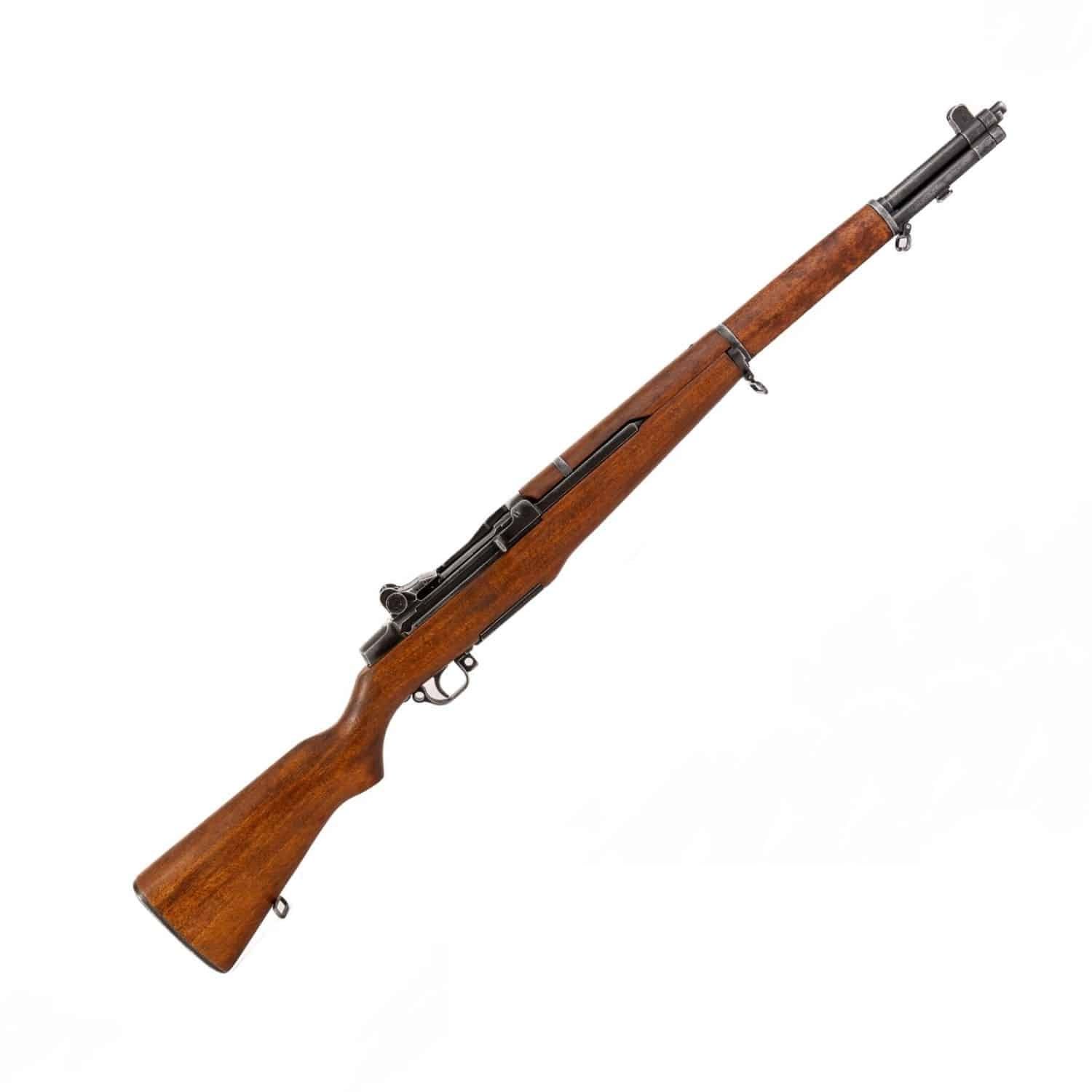
The M1 Garand did something no standard American service rifle had done before. It reloaded itself between shots.
The Garand was gas-operated and semi-automatic. It tapped a little of the propellant gas from each fired round, drove an operating rod to the rear, ejected the empty case, cocked the hammer, and stripped a fresh .30-06 into the chamber, all before the shooter could think about it. His firing hand never left the stock and his cheek never came off the rifle. The practical rate of aimed fire roughly doubled the bolt gun, to forty or fifty rounds a minute. The rifle fed from an eight-round en bloc clip that stayed inside the weapon. When the last round fired, the rifle spat the empty clip out with a sharp metallic ring and locked open, ready for the next block of eight to be shoved home.
The Garand put a volume of aimed fire in one man's hands that no bolt-action army could match on first contact. Private Harold Baumgarten found out how much the rifle could take on Omaha Beach on the morning of June 6, 1944. Pinned and wounded on the shingle, he looked down and saw a German round had punched clean through the steel receiver of his M1. Through the hole he could see the remaining seven cartridges still sitting in the clip. He flattened out, aimed at a German on the bluff, and fired one more round before the rifle came apart in his hands.
Ready Means a Full Magazine
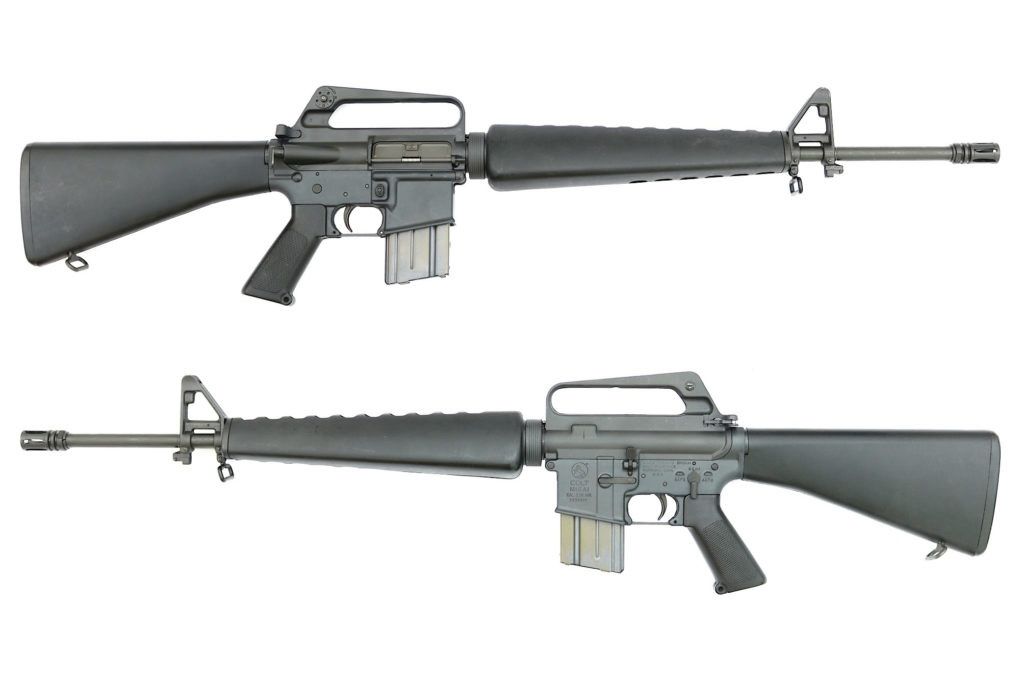
The M16 that reached Vietnam broke with everything before it. Aluminum receiver, synthetic furniture, and a small high-velocity 5.56mm round in place of the heavy .30 calibers. The reload broke with the past too. A soldier no longer fed rounds into the belly of the rifle at all. He dropped an empty box magazine, seated a fresh one holding twenty rounds, later thirty, and was back in the fight in a second or two. The unit of ammunition stopped being the round and became the magazine. A rifle was no longer "ready" because it had a round chambered. It was ready when a full magazine was locked in the well.
The early fielding of that rifle is the one place this 250-year line bends the wrong way. The M16 was designed around one powder. In 1964 the military switched to a different ball powder for production reasons. It burned dirtier and drove the action faster than the rifle was built for, so the bolt tried to yank the spent case out of the chamber before it had settled, and the extractor tore through the rim and left the empty brass stuck fast. The early rifles had no chrome lining in the chamber, cleaning kits were not issued, and a rumor spread that the rifle was self-cleaning. In the wet heat of Southeast Asia the bare chambers pitted and rusted, and the brass swelled into the pits. Men in firefights were found dead beside rifles they had field-stripped, or with cleaning rods still down the barrel where they had been trying to punch a jammed case loose. In 1967 the Ichord subcommittee laid the failure out in a hard 51-page report. The fixes followed: chrome-lined chambers, cleaning kits in every hand, the powder specification corrected. The men who died were failed by procurement, not by their own hands, and the platform they were handed became the longest-serving rifle in American history.
By Vietnam the drill was second nature, and it stayed that way from the paddies to the city. In the Ap Bac zone on May 2, 1967, Sergeant Leonard Keller and Specialist Raymond Wright were ambushed from a line of bunkers. Keller went up onto an exposed dike and walked straight into the fire, emptying magazine after magazine to keep the enemy's heads down while Wright closed and grenaded the positions. The two of them cleared seven bunkers, and the whole assault depended on Keller being able to drop an empty and seat a full one without breaking stride. Thirty-seven years later, in a black, flooded house in Fallujah in November 2004, Staff Sergeant David Bellavia fought room to room against entrenched insurgents, swapping M4 magazines by feel in the dark as fast as he ran them dry, until the last of the fight came down to a knife. The rifle had changed. The thing he was doing with it, getting the next rounds up before the man across the room could, was exactly what Martin was doing in the wheat field.
250 Years of That
A modern rifleman can run a magazine dry, drop it, and seat thirty fresh rounds before Joseph Plumb Martin could have gotten his second shot off at Monmouth. That is the distance the American service rifle traveled in 250 years, measured the only way that ever mattered in a fight.
Every step of it was the same problem worked again. The muzzle became the breech. The single round became the stripper clip. The clip became a rifle that loaded itself. The self-loading rifle became a magazine a man could swap without looking. The machinery kept getting better at buying back the seconds a soldier spends not shooting.
The seconds are almost gone now. The problem is not. Somewhere a rifle still runs dry at the worst possible moment, and a man still has to put the next round in while he is being shot at. He does it faster than anyone before him. He is still the one who has to do it.
Hard to Kill. Forever Free.
Related Posts

The StG 44 was the world's first true assault rifle. We break down how Hugo Schmeisser's intermediate cartridge concept changed infantry combat forever, and how its logic runs directly from WWII to the M4 carbine American soldiers carry today.

Every doctrine you take for granted, fire and maneuver, base of fire, the squad automatic weapon, came out of four years of trial and error in the mud between 1914 and 1918. The machine gun is the weapon that broke infantry combat and forced every army on earth to rebuild it from the ground up.

In a global war defined by millions of infantrymen, a single piece of precision glass could hold a frontline or doom a tank crew. Explore the history of World War II optics, the fatal flaws in American sniper doctrine, and how early scopes laid the groundwork for today's tactical battlefield.

A Colorado company, born on the 4th of July, 2018
Helpful Links

Join the Revolution
Join our e-mail newsletter for giveaways, hot deals, and Swampfox news.
©2026 Swampfox Optics. All rights reserved.
Designed and powered by WebriQ.