
Best Red Dot for Sig P365: Complete Buyer's Guide
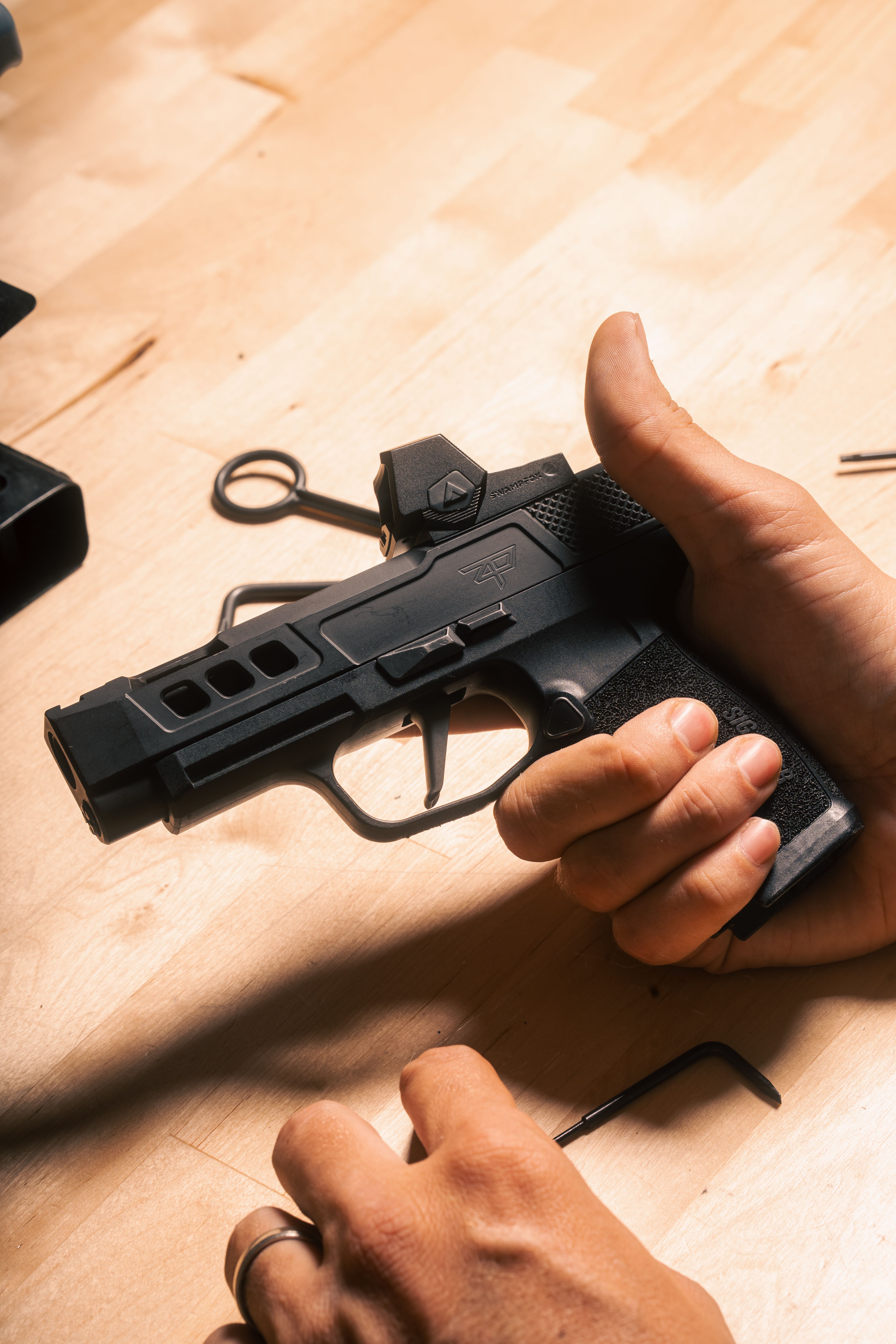
Every optic-ready P365 accepts an RMSc-footprint optic. That part has not changed, and it is the only part that matters for picking a dot.
What has changed is how Sig cuts the slide. Older optic-ready models use the original RMSc-pattern cut. Newer production, including the current P365X, XL, AXG Legion, Fuse Tacops, and Luxe, uses Sig's SIG-LOC (Leverage Optimized Connection) cut. Sig designed SIG-LOC to be backward compatible with the Shield RMSc footprint, so an RMSc optic still drops on. The SIG-LOC locating pins just go unused.
The Swampfox Sentinel II is a true RMSc-footprint optic. It direct-mounts on both cut styles, old and new, no plates and no modifications either way. The practical difference between the two is hardware: original cuts use M3 screws into threaded posts, SIG-LOC cuts use M4 screws into tapped holes. More on that below.
If the RMSc naming trips you up, do not overthink it. Sig's own RomeoZero was built to the RMSc spec, same hole spacing and lug placement, so the different names do not change anything mechanically. A true RMSc optic fits the cut.
The only owners who need to stop and think are running a non-optic-ready P365 and want to add a dot. That is a slide-milling or slide-swap conversation, not an optic-selection one.
The P365 Family: One Footprint, Two Cuts
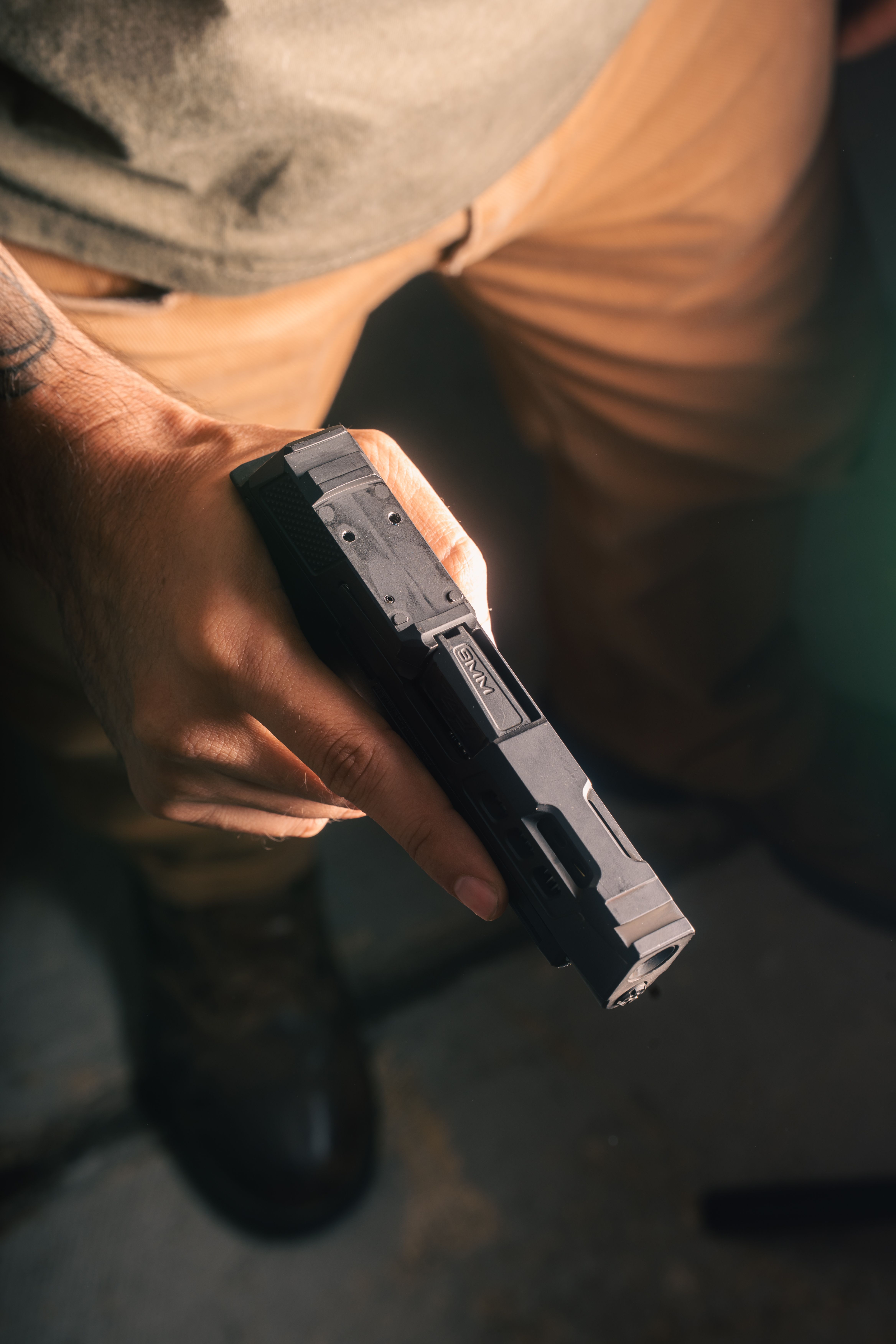
Sig has built a lot of P365 variants. Every optic-ready model accepts the RMSc footprint. What changes between them is frame size, grip module, slide length, capacity, and, on current production, whether the slide wears the original RMSc-pattern cut or Sig's newer SIG-LOC cut.
Standard P365 (optic-ready): The original compact model, sold optic-ready from the factory. On these, the rear sight lives in the cover plate, so pulling the plate to mount an optic takes the rear sight with it. Sentinel II mounts directly.
P365X: One of the highest-volume guns in the family. 3.1-inch slide on the X grip module, 12-round flush capacity, optic-ready. First-gen slides carry the rear sight on the cover plate; October 2022 onward carry it in its own slide dovetail; current production has moved to SIG-LOC. Sentinel II direct-mounts on all of them.
P365 X-Macro: Expanded-capacity variant with a longer grip module, flush 17-round magazine. The X-Macro puts 17 rounds in a package no wider than the original P365. Original cut on earlier runs, SIG-LOC on current production. Direct mount, no plates.
P365 XL: Longer slide, longer sight radius. Older XLs use the original RMSc-pattern cut; current production has moved to SIG-LOC. Both accept the Sentinel II direct. On first-gen XL slides, the rear iron sight was built into the factory cover plate, so pulling the plate loses the rear sight. If that is your gun and you want irons behind the dot, the Sentinel II's built-in rear sight guide handles it (see the co-witness section below).
P365 AXG Legion: Alloy Macro-size AXG grip module with G10 panels, over an integrally compensated 3.7-inch slide running a 3.1-inch barrel and Sig's two-port expansion chamber, 17-round capacity. Optic cut is RMSc-compatible: earlier runs use the RMSc-pattern cut, current configurations ship with a Romeo-X SIG-LOC optic installed and use M4 hardware. The Sentinel II direct-mounts either way with the correct screws.
P365 Fuse: The mechanical outlier of the family. The Fuse was the first P365 cut with true RMSc locating bosses, and it uses M4 screws instead of M3. Tacops configurations ship with a Romeo-X SIG-LOC optic. It is RMSc-compatible, so the Sentinel II drops on, but do not assume Fuse hardware and fitment match the older guns. They do not.
The takeaway: every optic-ready P365 is built to accept the RMSc footprint. The decision is which optic to put on it, not whether a true RMSc optic will fit.
How the P365 Slide Cut Actually Works
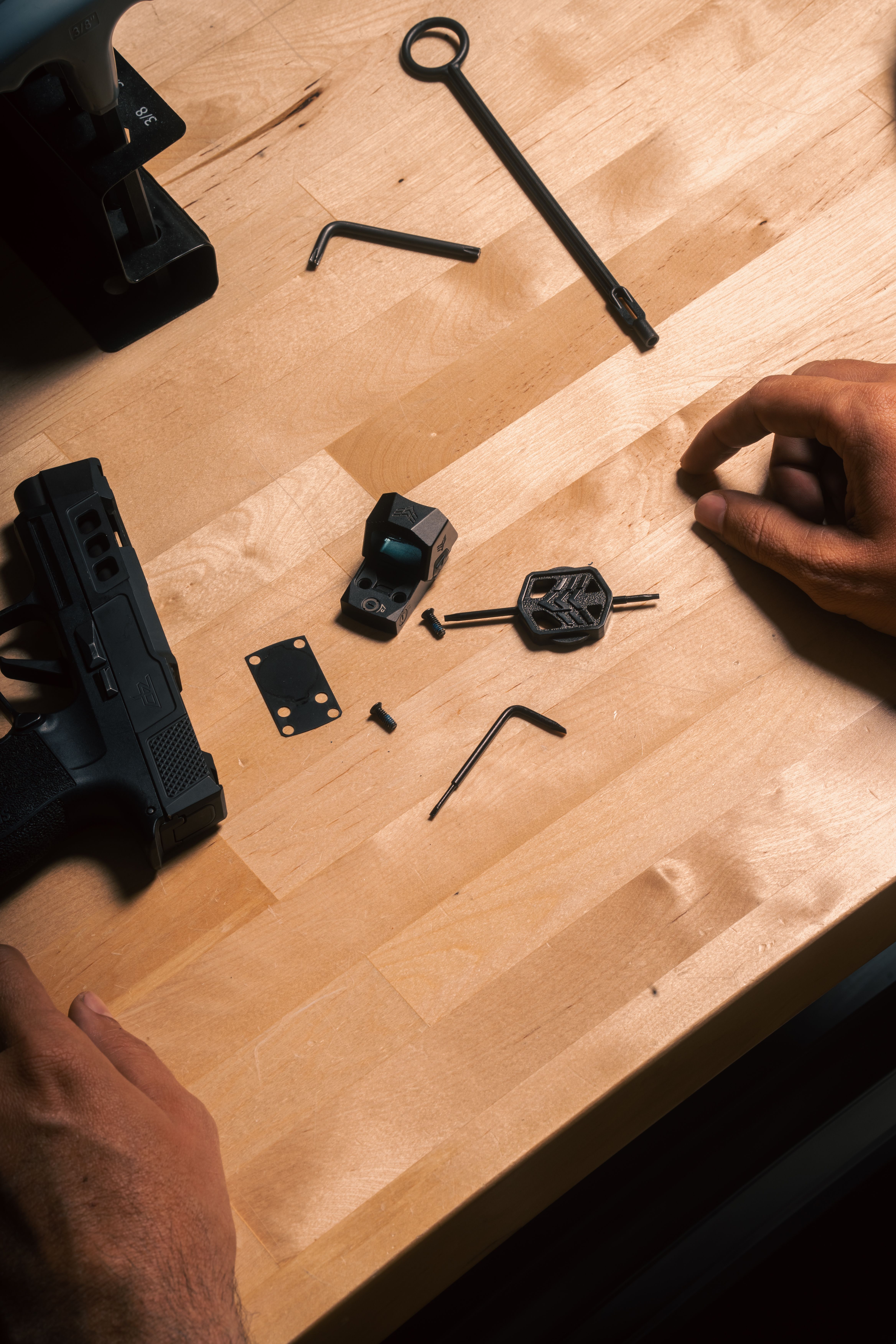
The P365 cut differs from some other RMSc platforms in one specific way, at least on the original cuts. Platforms like the Glock 43X MOS use a full four-lug cut (two front lugs, two rear). Sig machined the original P365 slides without rear recoil lugs. That means those original cuts natively accept both full-RMSc optics and modified-footprint sights like the Holosun K-series, which lack the rear lug holes and would need adapter plates or slide milling on a four-lug cut like the 43X MOS. On an original P365 cut, they drop straight on.
Then the family got more complicated. The Fuse broke the pattern by adding true RMSc locating bosses, and Sig's newer SIG-LOC cut is a third variation with its own locating pins and M4 hardware. Here is what that means in practice: modified-footprint optics like the Holosun K-series are the ones whose compatibility varies cut by cut. K-series plates and optics that seated fine on an older P365 do not necessarily seat on the Fuse. Aftermarket hardware charts call the Fuse and Legion out separately for exactly this reason.
A true full-RMSc optic sidesteps all of it. Because the Sentinel II runs the full RMSc footprint, it mounts on all three cut generations without caring which one you own. That is the whole argument for a true-footprint optic on a platform that keeps changing its cut.
Which Cut Do I Have?
Pull the cover plate (or look at your factory optic mount) and check the optic pocket:
Original RMSc-pattern cut: Threaded posts standing up in the pocket, sized for M3 screws. This is the older standard P365, X, XL, and X-Macro.
Fuse cut: Raised RMSc locating bosses plus tapped holes for M4 screws, no threaded posts. Unique to the Fuse.
SIG-LOC cut: SIG-LOC locating pins and tapped M4 holes, no threaded posts. This is current-production X, XL, AXG Legion, Fuse Tacops, and Luxe.
If you are running the Sentinel II, all three take it direct. The only thing that changes is which screws you grab, which brings us to the part people get wrong.
Watch Your Screw Length
The extractor spring channel on the P365 sits directly beneath the right-side optic screw hole. Use a screw that is too long and you will pinch the extractor spring. The gun will malfunction. People find out the hard way, usually at the range.
Two things to get right. First, length: verify the correct screw length for the P365 before you torque anything down. Second, the screws themselves. Sig ships dedicated optic-installation screws with optic-ready P365s, and those are not the same as the cover plate screws, so do not reach for whatever came off the plate. The cleaner path is the hardware Swampfox includes with the Sentinel II. It ships with four screw sets, one of them specifically for the Sig Sauer P365, so the correct screws are in the box.
One more wrinkle from the cut generations above: original cuts take M3 screws into threaded posts, while the Fuse and SIG-LOC cuts take M4 screws into tapped holes. If you own a newer gun and follow M3-era instructions, you will be chasing the wrong hardware. Match the screw to your cut. If you are running a different optic, check the manufacturer's P365-specific documentation or source the correct screws from an aftermarket supplier like Calculated Kinetics or QVO Tactical.
Why the Sentinel II
The Sentinel II runs the full RMSc footprint. It drops onto any optic-ready P365 slide without plates, sits low, and keeps you in the fight if the dot ever goes dark.
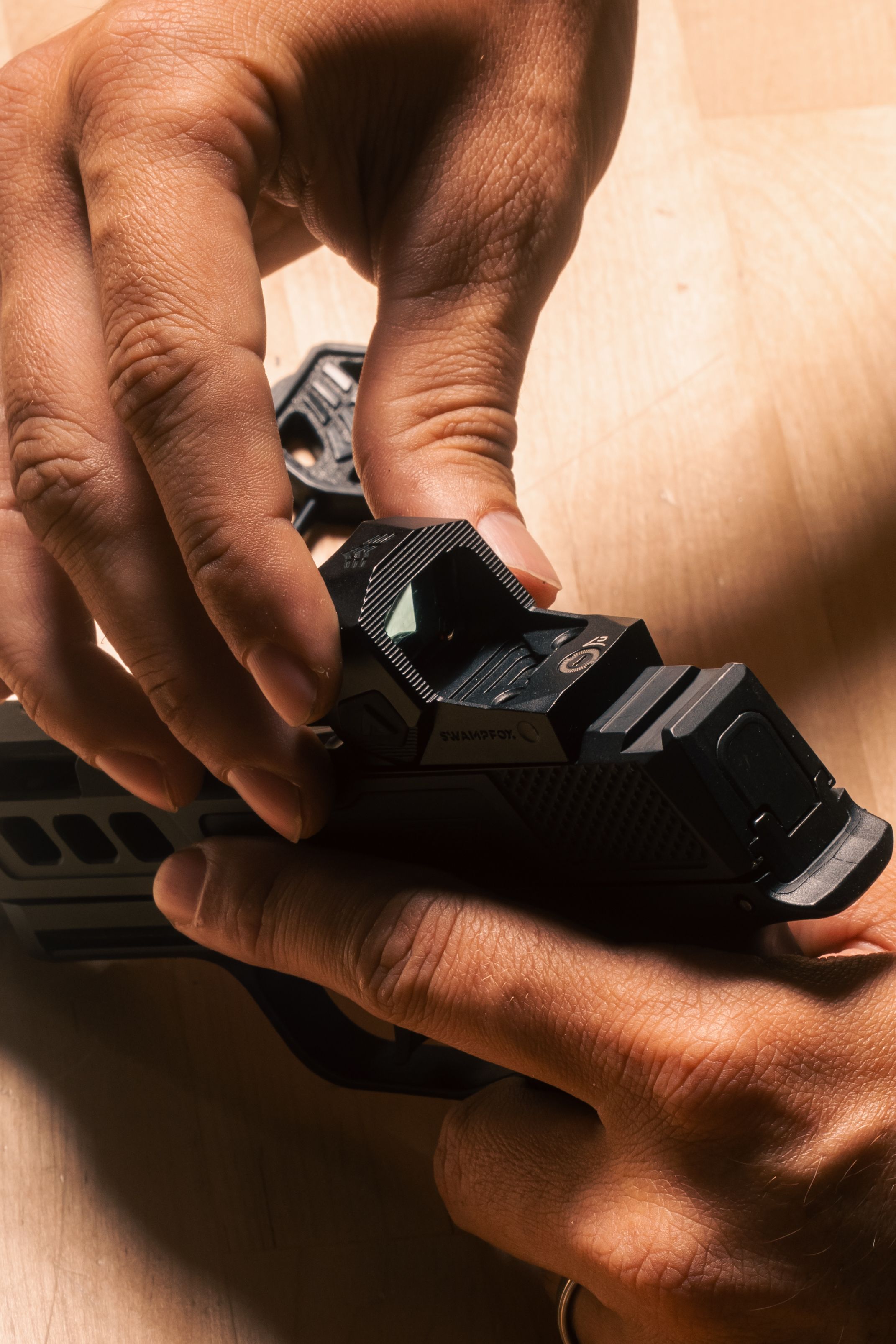
1. Co-Witness or Back Up Your Irons, Either Way
Whether your P365 keeps its factory rear iron sight after you mount an optic depends on which slide you have. The Sentinel II covers both cases.
If you run a second-gen X or X-Macro slide (October 2022 onward), the factory rear sight sits in its own dovetail, separate from the cover plate, so it stays put when you mount the optic. The Sentinel II sits low enough that standard-height factory irons show up through the bottom of the window. Battery dies mid-session, you have irons, you transition and keep shooting.
If you run a first-gen X or XL slide, or the standard P365 Optic Ready, the rear sight is built into the cover plate. Pull the plate to mount the optic and the factory rear sight goes with it. This is where the Sentinel II does something no plate-mounted competitor can: it has a built-in removable rear sight guide that installs forward of the window and pairs with your factory front sight for a usable backup sight picture. RECOIL validated it on a P365 specifically, noting the guide places the rear sight right where you want it.
Either way, you are not left staring at a dead dot with no plan B. That is the pitch, and it holds for every P365 owner instead of just the ones with the right slide.
2. Keeps the P365 Slim
Sig built the P365 to disappear. The X-Macro puts 17 rounds in a package no wider than the original P365. The Sentinel II stays tight to the slide, no extra height working against the gun's whole point.
3. Sentinel II Specs
- 3 MOA dot, available in red or green.
- 10 manual brightness settings, including 2 night-vision compatible levels. No auto-brightness; you set it where you want it.
- Up to 50,000-hour battery life. You are changing batteries on a schedule, not in a crisis.
- Shake 'N Wake. The optic sleeps when the gun sits still and wakes on movement.
- 1 MOA per click windage and elevation adjustments.
- Built-in removable rear sight guide (blackout or tritium) for P365s that lose the factory rear sight with the cover plate.
- 7075-T6 aluminum body, 20mm window, CR2032 battery.
- IPX7 waterproof, submersion-rated.
Installation: Mounting the Sentinel II on a P365
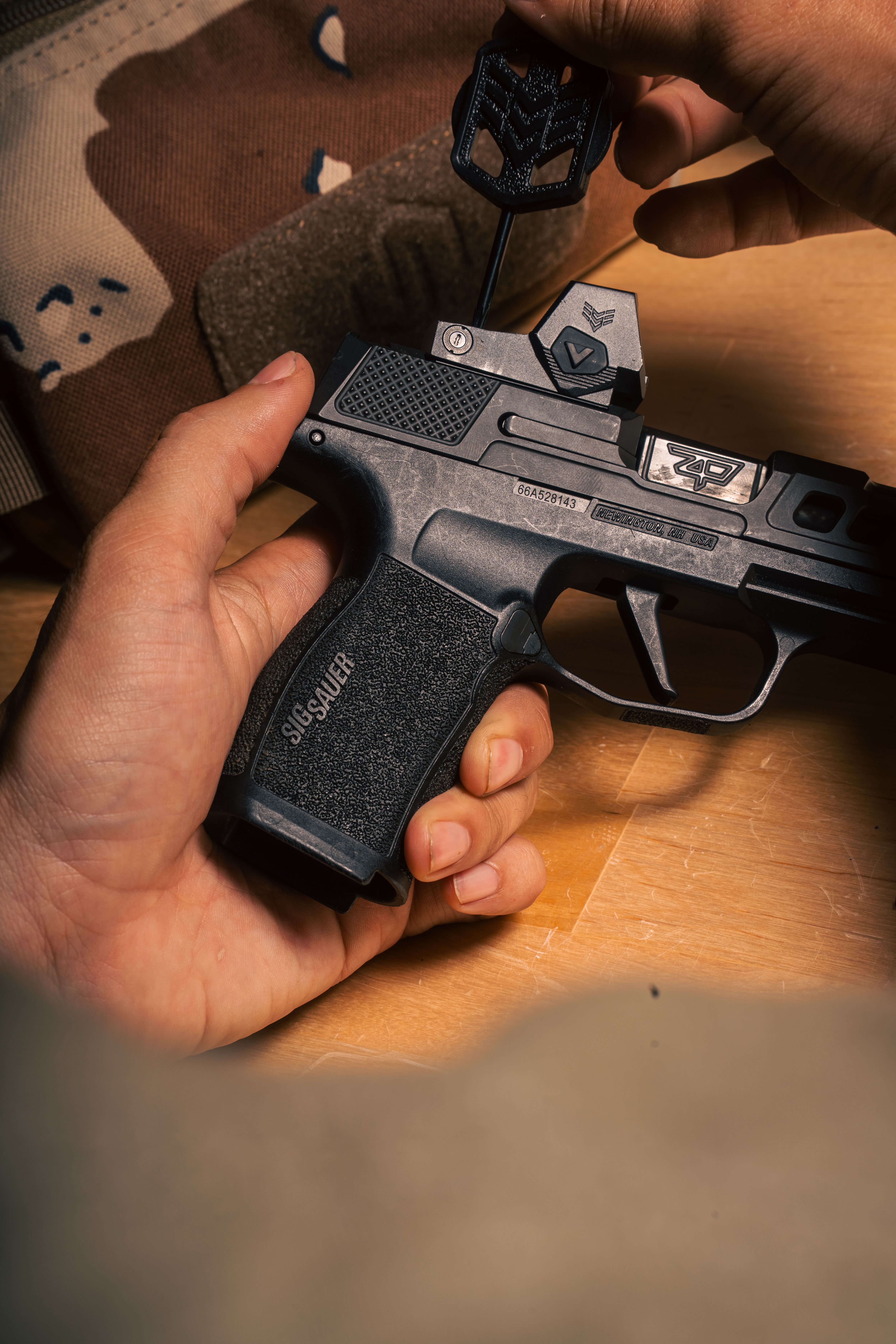
This takes about five minutes. Before you start, confirm which cut you have (see the sidebar above) so you grab the right screws, and check your P365 manual or Sig's spec sheet for the correct bit size on the cover plate screws.
- Clear the weapon. Chamber check, physically and visually. Do this before anything else touches the slide.
- Remove the factory cover plate. It is held on by two small screws. Keep them somewhere you will find them if you ever need to reinstall the cover, though you probably will not.
- Test fit the Sentinel II. Set it in the optic cut and check for any wobble or rocking. It should sit dead flat. If it does not, confirm the footprint is seating and that nothing is fouling the fit.
- Install the mounting screws. Use the correct screws for your cut, M3 for original cuts and M4 for Fuse and SIG-LOC cuts, from the set Swampfox includes with the Sentinel II. Follow Swampfox's torque spec for this platform. Do not use the screws Sig includes with the cover plate.
- Apply Blue Loctite. A small amount on each screw thread before driving them. The P365 has a snappy recoil impulse and dry screws will back out. Loctite costs less than a lost zero.
- Zero at the range. The Sentinel II adjusts in 1 MOA increments. Most P365 shooters start at 15 yards.
The Verdict
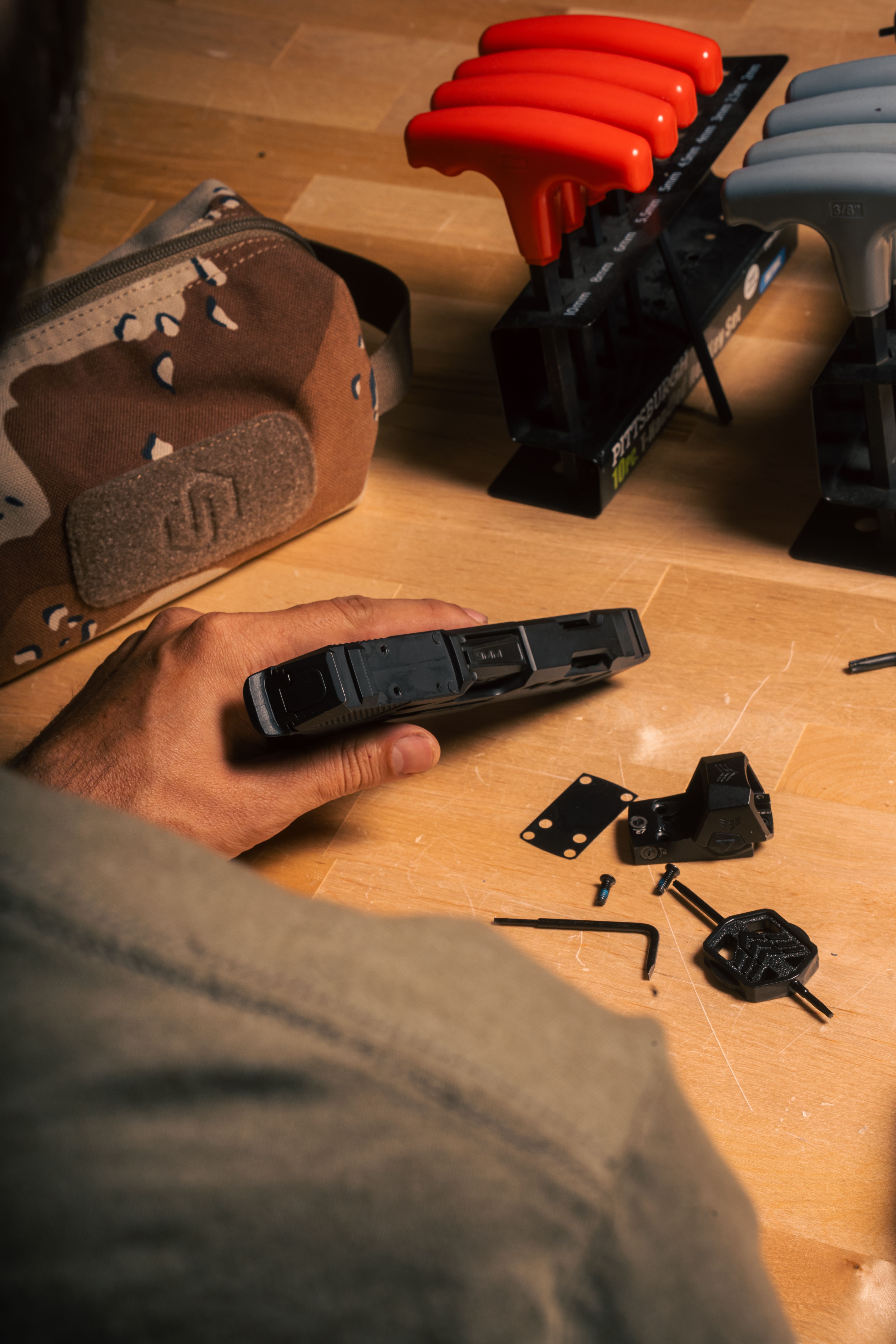
The P365 is a serious carry platform, and the X-Macro in particular has become a go-to for shooters who want full-size capacity without full-size dimensions. It deserves an optic built for the footprint, mounted clean to the slide.
The Swampfox Sentinel II does that. It mounts direct on every optic-ready P365, old cut or new, sits low, keeps your irons in play through the window or its own rear sight guide, and runs up to 50,000 hours on a battery. Mount it and carry it.
Frequently Asked Questions
What red dot fits the Sig P365?
Any optic built to the RMSc footprint fits an optic-ready P365, including the Swampfox Sentinel II. That covers the standard P365, X, X-Macro, XL, AXG Legion, and Fuse. The Sentinel II direct-mounts on all of them with no adapter plate. Just note that current production uses Sig's SIG-LOC cut, which Sig built to accept Shield RMSc optics as well, so a true RMSc optic still drops straight on with the locating pins going unused.
Do all P365 models use the same optic cut?
No, and this is the part that trips people up. Every optic-ready P365 accepts the RMSc footprint, but Sig machines the slide more than one way. Older models use the original RMSc-pattern cut. Current production (P365X, XL, AXG Legion, Fuse Tacops, Luxe) uses Sig's SIG-LOC cut, which Sig built to stay backward compatible with the RMSc footprint. The Fuse adds a third variation with true RMSc locating bosses. A true RMSc optic like the Sentinel II fits all three.
What is the SIG-LOC footprint, and will an RMSc optic still fit?
SIG-LOC (Leverage Optimized Connection) is Sig's newer proprietary optic mounting cut, now shipping across much of the current P365 line. Sig designed it to mount both SIG-LOC and Shield RMSc footprint optics, so a true RMSc optic like the Sentinel II drops straight on. The SIG-LOC locating pins simply go unused.
Does the Sig P365 X-Macro use the RMSc footprint?
Yes. Earlier X-Macro runs use the original RMSc-pattern cut and current production uses SIG-LOC, and both accept an RMSc optic direct. The Sentinel II mounts with no plate.
What red dot fits the P365 Fuse?
The Fuse is RMSc-compatible, so a true RMSc optic like the Sentinel II mounts on it. Be careful with modified-footprint optics: the Fuse was the first P365 cut with true RMSc locating bosses and it uses M4 screws, so Holosun K-series plates and optics that fit older P365s do not necessarily seat on the Fuse. This is a good reason to run a full-RMSc optic.
Will the P365 keep its iron sights after I mount a red dot?
It depends on the slide. Second-gen X and X-Macro slides (October 2022 onward) carry the rear sight in its own dovetail, so it stays when you mount the optic and you can co-witness through the Sentinel II window. First-gen X and XL slides and the standard P365 Optic Ready build the rear sight into the cover plate, so you lose it when the plate comes off. The Sentinel II's built-in removable rear sight guide solves that by pairing with your factory front sight.
What screws do I need to mount a red dot on a P365?
Match the screw to your cut. Original RMSc-pattern cuts take M3 screws into threaded posts. Fuse and SIG-LOC cuts take M4 screws into tapped holes. The Sentinel II ships with a screw set that includes hardware for the P365. Do not use the cover plate screws, and watch your screw length: the extractor spring channel sits right under the right-side screw hole, and a too-long screw will pinch it and cause malfunctions. If the screws you need are not in the box, or you are mounting a different optic, the Swampfox Ultimate Red Dot Screw Pack carries both the M3 and M4 hardware for the P365.
How do I install a red dot on a Sig P365?
Clear the weapon, remove the factory cover plate, test fit the optic for a flat seat, install the correct screws for your cut with a dab of Blue Loctite, and zero at 15 yards. Plan on about five minutes plus range time. Full steps are in the installation section above.
Related Posts

Engineered for everyday carry, the Swampfox Sentinel II features an RMSC footprint, new body design, 20mm window, and removable rear sight guide.

If you own a Glock 43X, 48, or 43 MOS, most popular micro red dots won't mount directly to your slide without an adapter plate or permanent modification. We break down exactly why the RMSc footprint creates that problem, and why a true direct-mount optic like the Swampfox Sentinel II is the right solution for clean co-witness, durability, and concealability.

Red dots are everywhere, but does your pistol really need an optic? We break down the red dot reality with advantages and disadvantages of pistol optics.

A Colorado company, born on the 4th of July, 2018
Helpful Links

Join the Revolution
Join our e-mail newsletter for giveaways, hot deals, and Swampfox news.
©2026 Swampfox Optics. All rights reserved.
Designed and powered by WebriQ.