
Devil Dogs: The 4th Marine Brigade at Belleau Wood
05/29/2026

On June 6, 1918, the 4th Marine Brigade stepped into the open wheat fields south of the Bois de Belleau and walked into German machine guns.
By the end of that day, the brigade had taken 31 officer casualties and 1,056 enlisted casualties. It was the bloodiest single day in Marine Corps history to that point. The Germans had fortified the woods with interlocking fields of fire, artillery spotters, and multiple veteran divisions dug into rocky ravines so deep that the tree cover blocked the sun. The Americans had been in France for less than a year.
They went back in five more times.
What happened in those woods over the next three weeks is how the United States Marine Corps became the United States Marine Corps.
Fifty Miles from Paris
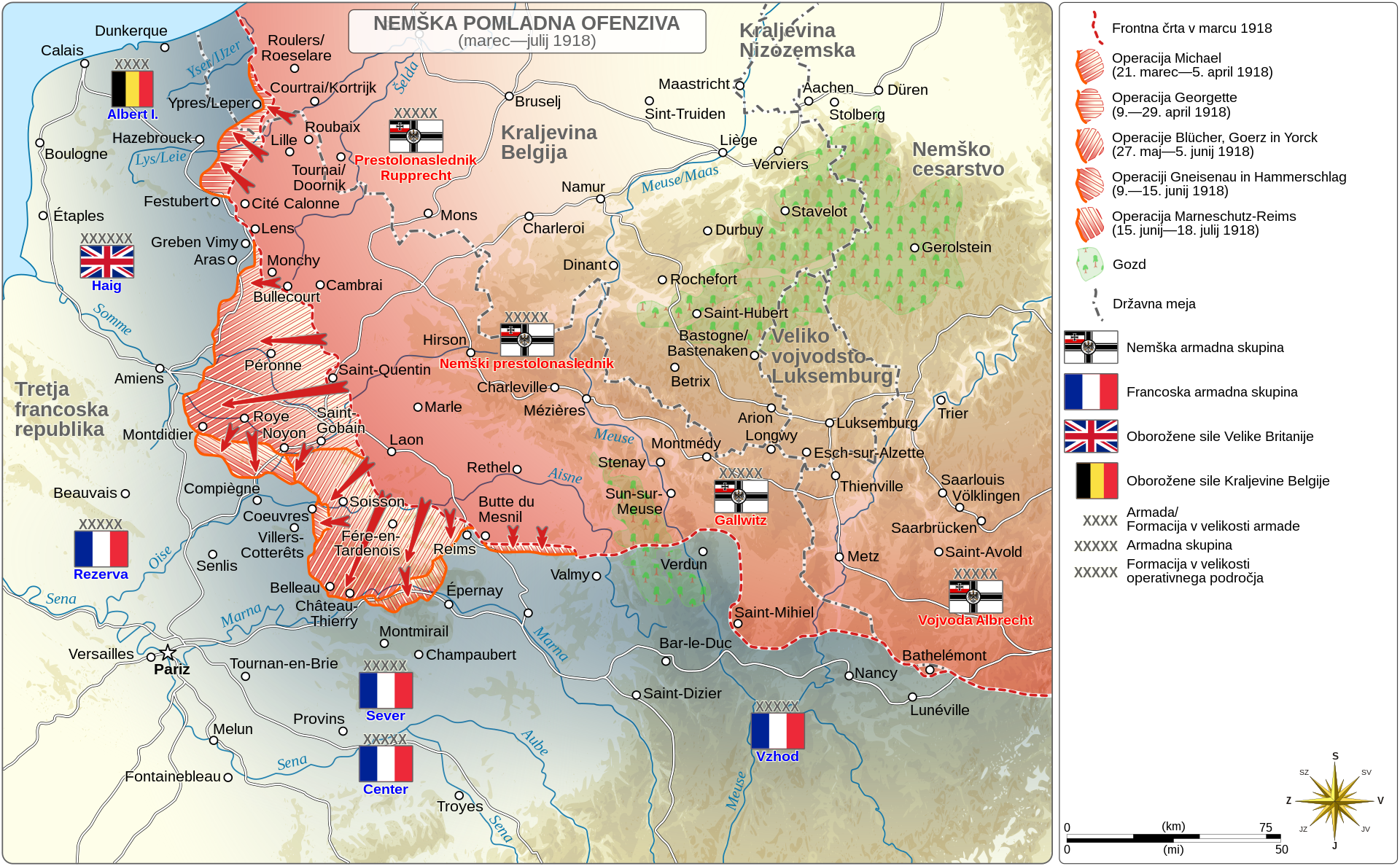
In the spring of 1918, Germany had one last chance to win the war. With Russia knocked out and dozens of veteran Eastern Front divisions now freed up, General Erich Ludendorff launched the Kaiserschlacht, the Kaiser's Battle, a series of massive offensives designed to break the Allied lines and capture Paris before American forces could arrive in sufficient numbers to matter.
By late May, the third phase of the offensive had shattered the French lines at Chemin des Dames and driven unchecked to Chateau-Thierry on the Marne River. German forces were fifty miles from Paris. Allied command was close to panic. The 2nd Division, which included the 4th Marine Brigade, was rushed forward to plug a four-and-a-half kilometer gap in the French line near the village of Lucy-le-Bocage.
When the Marines arrived on June 1, retreating French forces advised them to fall back.
Captain Lloyd W. Williams of the 51st Company, 2nd Battalion, 5th Marines, had a response for that. "Retreat? Hell, we just got here."
The 4th Marine Brigade held the line and prepared to take the fight into the woods.
The Wheat Fields
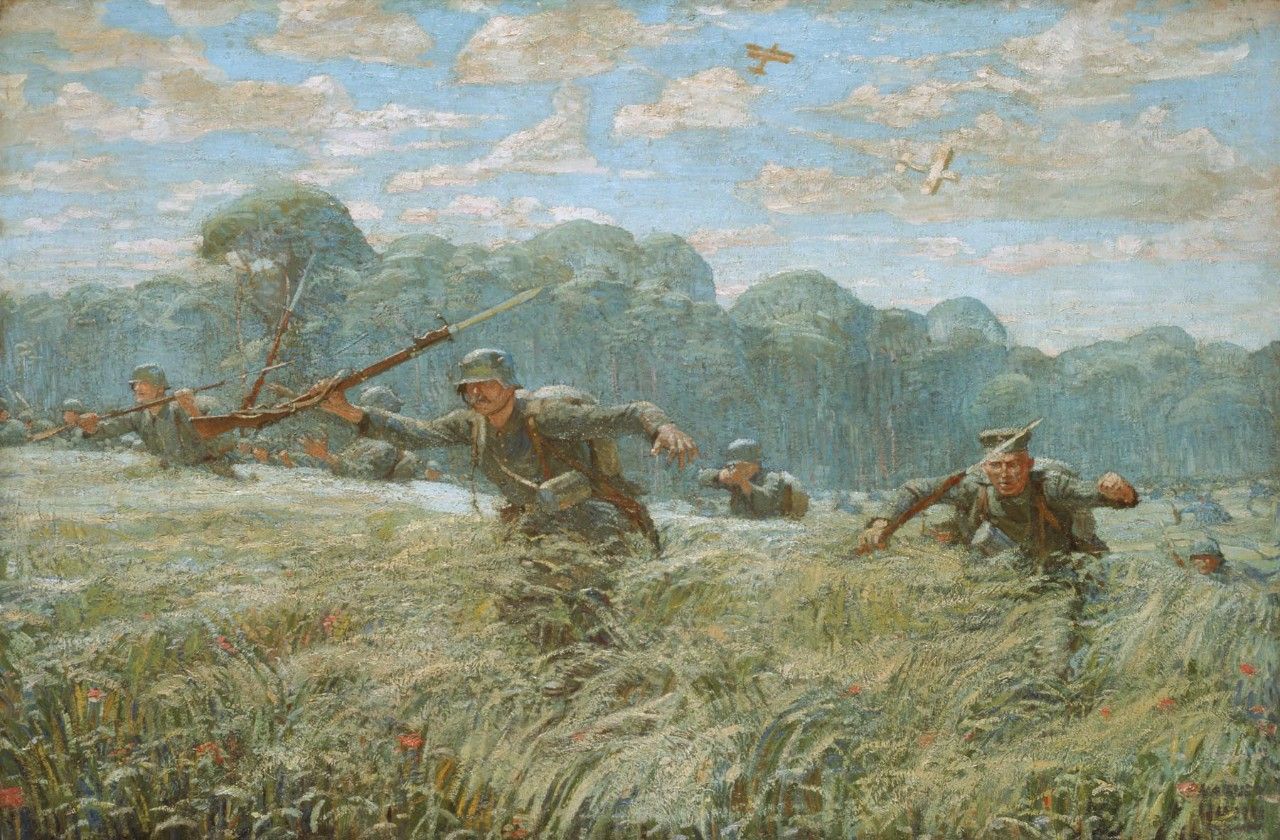
The AEF's training had emphasized linear formations, disciplined waves of men advancing in rows. In flat, open wheat fields with no cover, those formations gave the German machine gunners exactly what they needed. Marines were cut down before they reached the tree line.
Major Frederic Wise, commanding the 2nd Battalion of the 5th Marines, was asked about the state of his men after the initial assault. His answer: "There aren't any more Marines."
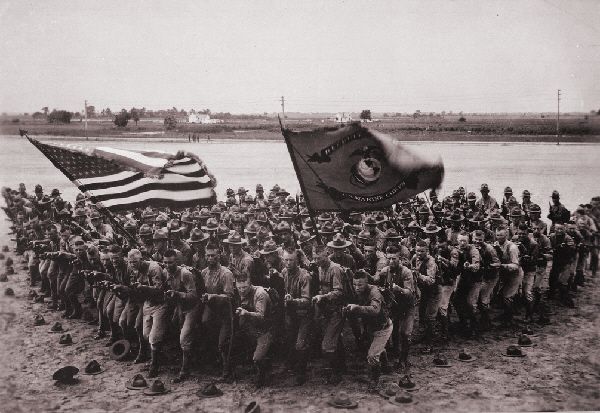
But the line didn't break. Major Thomas Holcomb's 2nd Battalion of the 6th Marines seized the adjacent village of Bouresches on that same opening day. It was a foothold in a disaster. It was also the beginning of the end for the German position.
The brigade regrouped, brought up ammunition, and went back in.
The Men
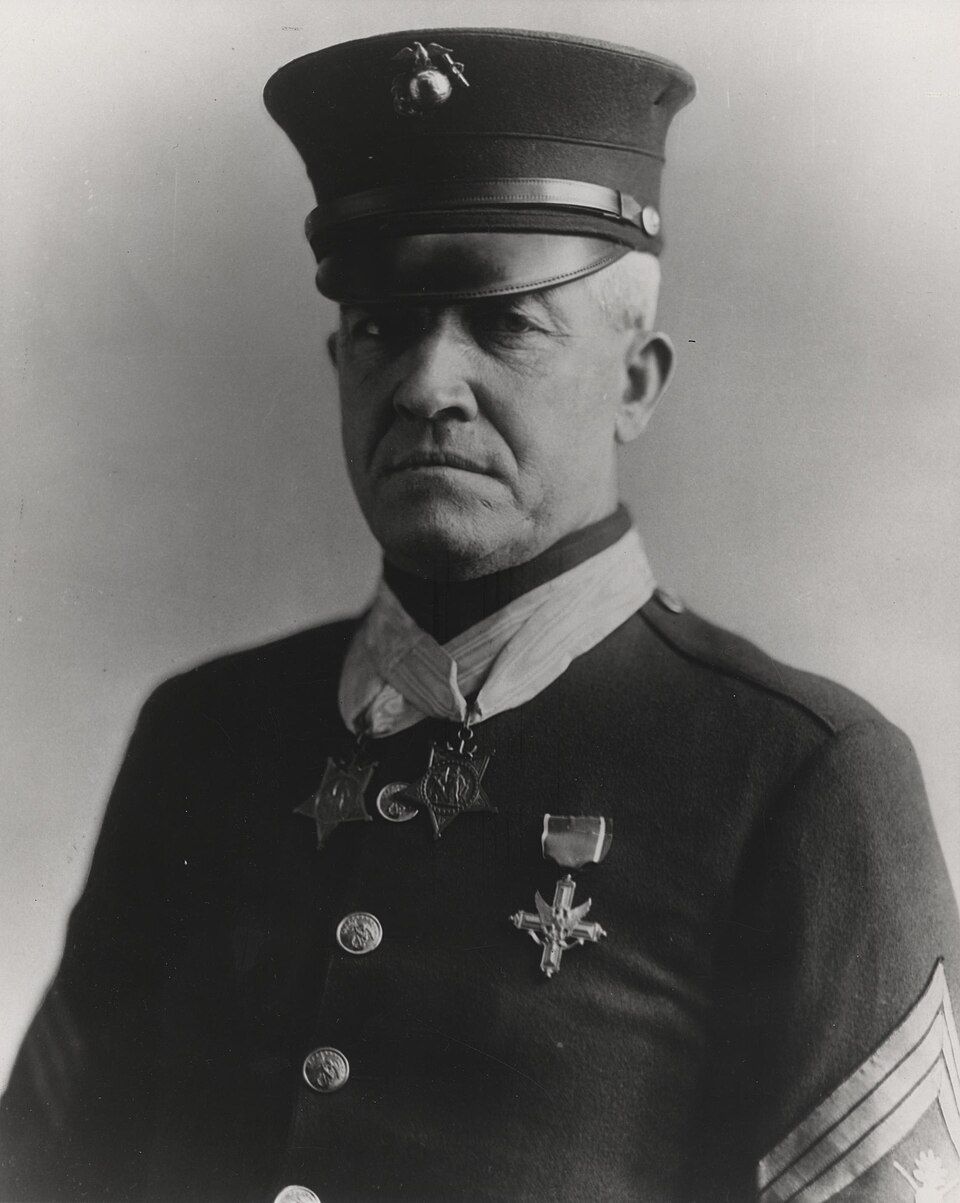
Sergeant Major Daniel J. Daly stood five foot six and weighed 132 pounds. He was already a legend before Belleau Wood, one of only nineteen Marines in history to receive the Medal of Honor twice, once during the Boxer Rebellion in China and once in Haiti in 1915. At Belleau Wood, pinned down outside Lucy-le-Bocage by heavy fire, Daly looked at the men around him. Then he stood up, leaped forward into the enemy fire, and shouted: "Come on, you sons of bitches, do you want to live forever?"
They followed him. Daly earned the Navy Cross and the Distinguished Service Cross for repeated acts of heroism during the battle.
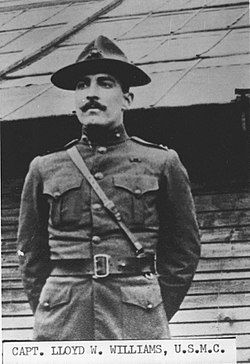
Captain Lloyd Williams did not survive the woods he refused to leave. On June 11, he led an assault that routed a German position at enormous cost. Only one of his ten officers came out without a wound. Sixteen of his 250 enlisted men escaped injury. Shrapnel tore through Williams in the chaos and gas did the rest. When medical personnel reached him in the field, he was bleeding out.
He ordered them away. "Don't bother with me. Take care of my good men."
He died shortly after from a second shell.
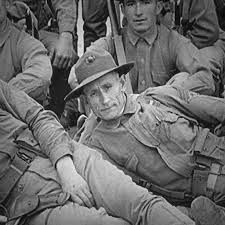
Gunnery Sergeant Fred Stockham's story belongs in a different category entirely. On June 13, during an artillery bombardment, a Marine near him took shrapnel that destroyed his gas mask. The Germans had been running mustard gas attacks throughout the battle. Without a mask, the man was going to die from the chemical burns in his lungs.
Stockham took off his own mask and put it on the wounded Marine.
He knew what that meant. He kept evacuating the wounded until he could no longer stand. He died on June 22 from the gas exposure. The Marine he saved, Barak Mattingly, survived. Stockham received the Medal of Honor posthumously.
The Woods
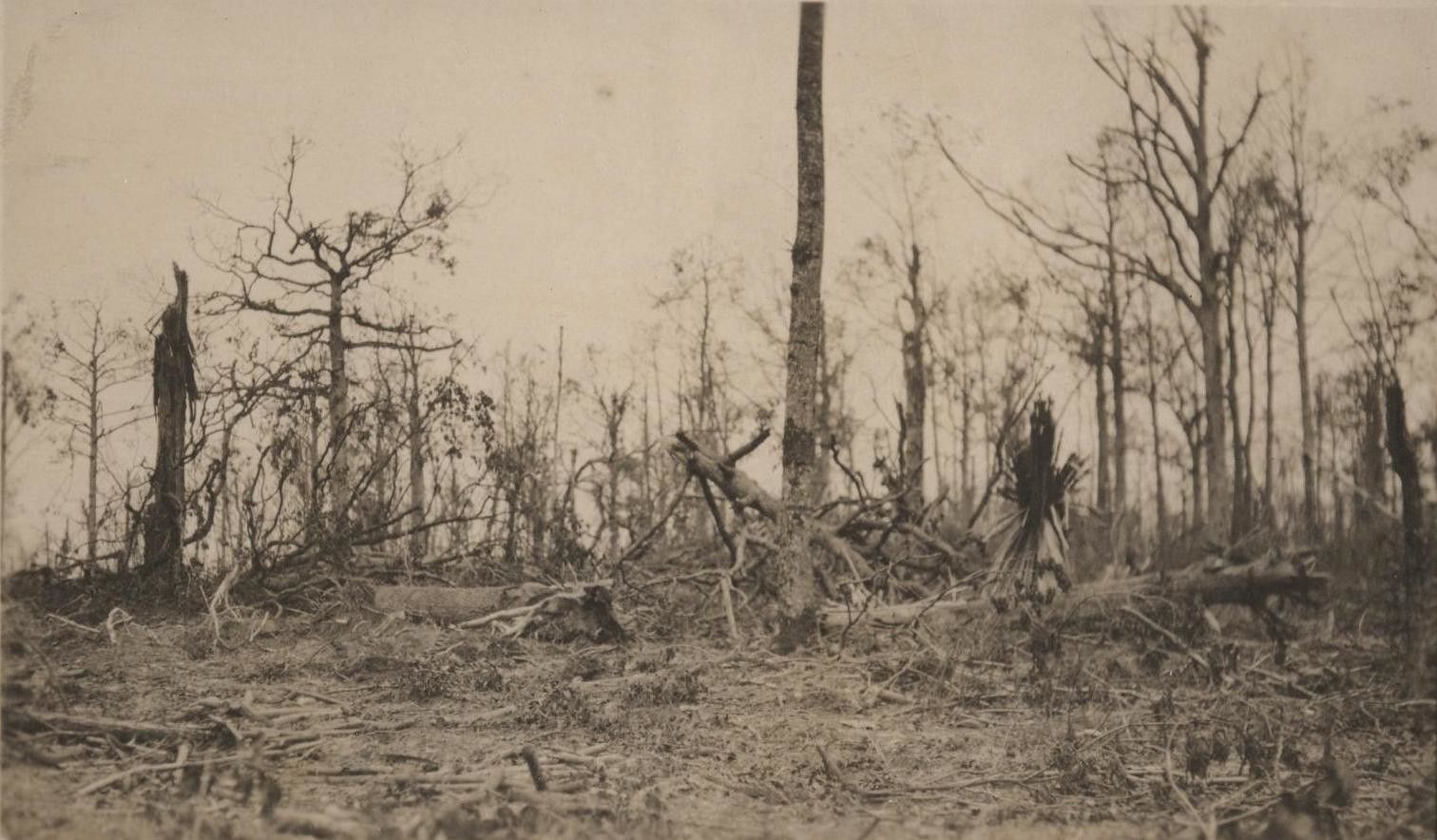
Six separate assaults went into Belleau Wood between June 1 and June 26. Each one pushed deeper into the German defenses. The fighting routinely collapsed into close work that rifles couldn't finish. Bayonets, bolo knives, and bare hands in rocky ravines too narrow to maneuver.
The 1st Battalion of the 6th Marines fought so relentlessly through those confined spaces that they earned a name within the brigade: "1/6 Hard."
On June 26, Major Maurice Shearer's 3rd Battalion of the 5th Marines cleared the last German position in the northern edge of the woods. Shearer sent a single sentence back to higher command.
"Woods now U.S. Marine Corps entirely."
Total Marine casualties for the battle: 616 killed, 332 died of wounds, 2,468 wounded. More than 900 more were poisoned by gas. For many of the engaged units, that exceeded half their combat strength. The German High Command had committed some of their best formations specifically to prove that fresh American soldiers could not stand up to veteran European troops. They got their answer.
The Name
Two things happened after the battle that gave the Marines the name they still carry.
First, French General Jean-Marie Degoutte issued an official order. The Bois de Belleau would no longer appear on French military maps under that name. In all official documents going forward, it would be called the Bois de la Brigade de Marine. The Wood of the Marine Brigade. The 5th and 6th Marine Regiments received the Croix de Guerre. The braided Fourragere that Marines in those units still receive today has been awarded without interruption since 1918.
Second, in July 1918, an American illustrator named Charles Buckles Falls produced a recruiting poster showing a snarling American Bulldog chasing a German Dachshund in a spiked helmet. "Teufel Hunden. Devil Dogs." across the top. It ran in every newspaper in the country.
Historians have noted that there is no record of German troops actually using the phrase in reference to the Marines. The correct German compound noun would be Teufelshunde, not the two-word version on the poster. The name almost certainly originated with American press rather than German soldiers. But the French renamed a forest after them. The French had been fighting this war since 1914 and they knew exactly what they were looking at.
The poster made it official. The forest made it true.
In 1921, Brigadier General Smedley Butler formalized the bulldog connection by enlisting a registered English bulldog at Quantico under a contract length listed as "life." The dog was promoted to Sergeant Major by 1924. The line of bulldog mascots continues today, with the current mascot named Chesty XVI.
250 Years of That
The 4th Marine Brigade arrived in France in 1918 as a small maritime infantry force that much of the Army's senior leadership viewed with skepticism. They left Belleau Wood as something a foreign government felt obligated to honor in perpetuity by renaming the ground they bled on.
The German High Command had bet on American soldiers folding. They went into those woods expecting to demonstrate that the AEF was not a serious fighting force. After six assaults and 3,400 Marine casualties, the Germans abandoned the position.
That is the story behind the name. Not a nickname someone invented. Not a poster. The willingness to walk into the wheat fields on June 6, and the willingness to go back in five more times after that.
The tools change. The uniform changes. That part doesn't.
Hard to Kill. Forever Free.
The 4th Marine Brigade
5th Marine Regiment | 6th Marine Regiment | 6th Machine Gun Battalion
Croix de Guerre (Regimental) | Bois de la Brigade de Marine
Medal of Honor recipients at Belleau Wood: GySgt Ernest A. Janson, GySgt Fred W. Stockham, Lt. Orlando H. Petty (USN), Lt. (j.g.) Weedon E. Osborne (USN)
Related Posts

Every doctrine you take for granted, fire and maneuver, base of fire, the squad automatic weapon, came out of four years of trial and error in the mud between 1914 and 1918. The machine gun is the weapon that broke infantry combat and forced every army on earth to rebuild it from the ground up.

The 369th Infantry Regiment spent 191 days on the front lines of WWI, longer than any other American unit. They never lost a foot of ground. This is the story of the Harlem Hellfighters and Sergeant Henry Johnson, the porter from Albany who took on two dozen Germans with a bolo knife.

When the United States declared war on Germany in April 1917, the U.S. Army had 127,000 men, no division structures, and no formal sniper doctrine. This is the story of two flawed scopes, a metallurgical nightmare, and an Arkansas duck hunter who outshot all of it with iron sights.

A Colorado company, born on the 4th of July, 2018
Helpful Links

Join the Revolution
Join our e-mail newsletter for giveaways, hot deals, and Swampfox news.
©2026 Swampfox Optics. All rights reserved.
Designed and powered by WebriQ.