
191 Days: The Harlem Hellfighters of World War I
05/20/2026

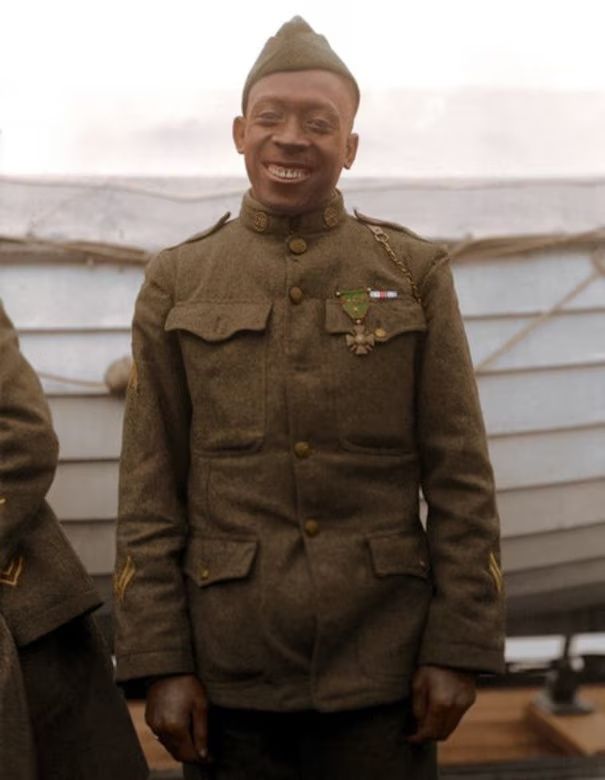
Around 2 a.m. on the morning of May 15, 1918, in a sentry post on the edge of the Argonne Forest, Private Henry Johnson heard wire-cutters snipping at the perimeter fence.
He was 26 years old, five foot four, 130 pounds. A Red Cap porter from Albany. He had been carrying bags at Union Station less than a year earlier.
He threw a grenade into the dark.
A German raiding party of at least twelve men, possibly closer to two dozen, opened up with grenades and rifle fire. His partner, seventeen-year-old Private Needham Roberts of Trenton, took shrapnel almost immediately and could do nothing but feed Johnson grenades from the bottom of the trench.
Johnson threw until he ran out. He fired the three rounds in his French Berthier rifle. He swung the rifle as a club until the stock splintered on a German's skull. When he saw the Germans dragging Roberts away as a prisoner, he drew his Army-issue bolo knife and charged.
He stabbed one through the stomach. He killed another with the blade driven through the top of the head.
When French and American troops finally reached the outpost, the Germans had broken contact. Johnson had killed four confirmed and wounded an estimated twenty more. He had twenty-one wounds himself.
"There wasn't anything so fine about it," he said later. "Just fought for my life. A rabbit would have done that."
The French pinned the Croix de Guerre with Gold Palm on his chest the next day. He was the first American soldier to receive it. The U.S. press called him "Black Death." His own Army gave him no medal, no Purple Heart, and no disability pension when he came home.
A Regiment That Existed on Paper
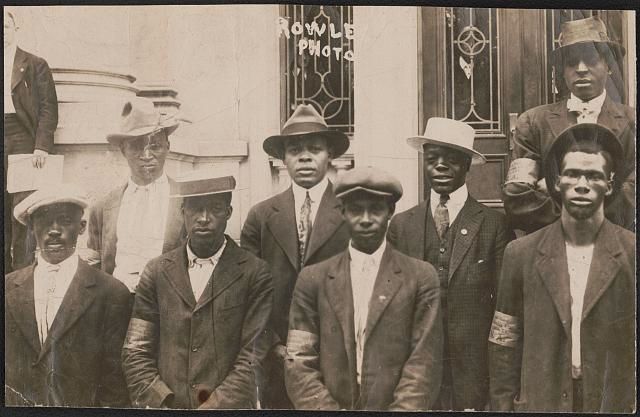
The 369th Infantry Regiment did not exist before 1916. It came together after a decade of petitions from Black New Yorkers asking the state for the right to fight in a country that did not want them under arms.
Charles Fillmore led the effort. A Spanish-American War veteran from Harlem who had been refused by the legislature for years. He finally raised a "provisionary" regiment of a thousand civilian men to embarrass New York into action. The legislature passed the authorizing bill in 1913. The unit then sat on paper for three years while nobody organized it.
In June 1916, Governor Charles Whitman appointed William Hayward to build the regiment. Hayward was a white former Nebraska National Guard colonel. He made Fillmore a captain. He also recruited James Reese Europe, who was the most famous Black bandleader in America at the time, and put him in charge of both a machine gun company and the regimental band. Europe went to Puerto Rico to recruit musicians for his reed section.
By April 1917, when America declared war on Germany, the 15th New York was the first New York unit to recruit to full strength. Over two thousand men. Hotel porters, mailmen, doormen, factory workers, students.
They were also the first New York unit denied the right to march with their fellow soldiers.
Spartanburg
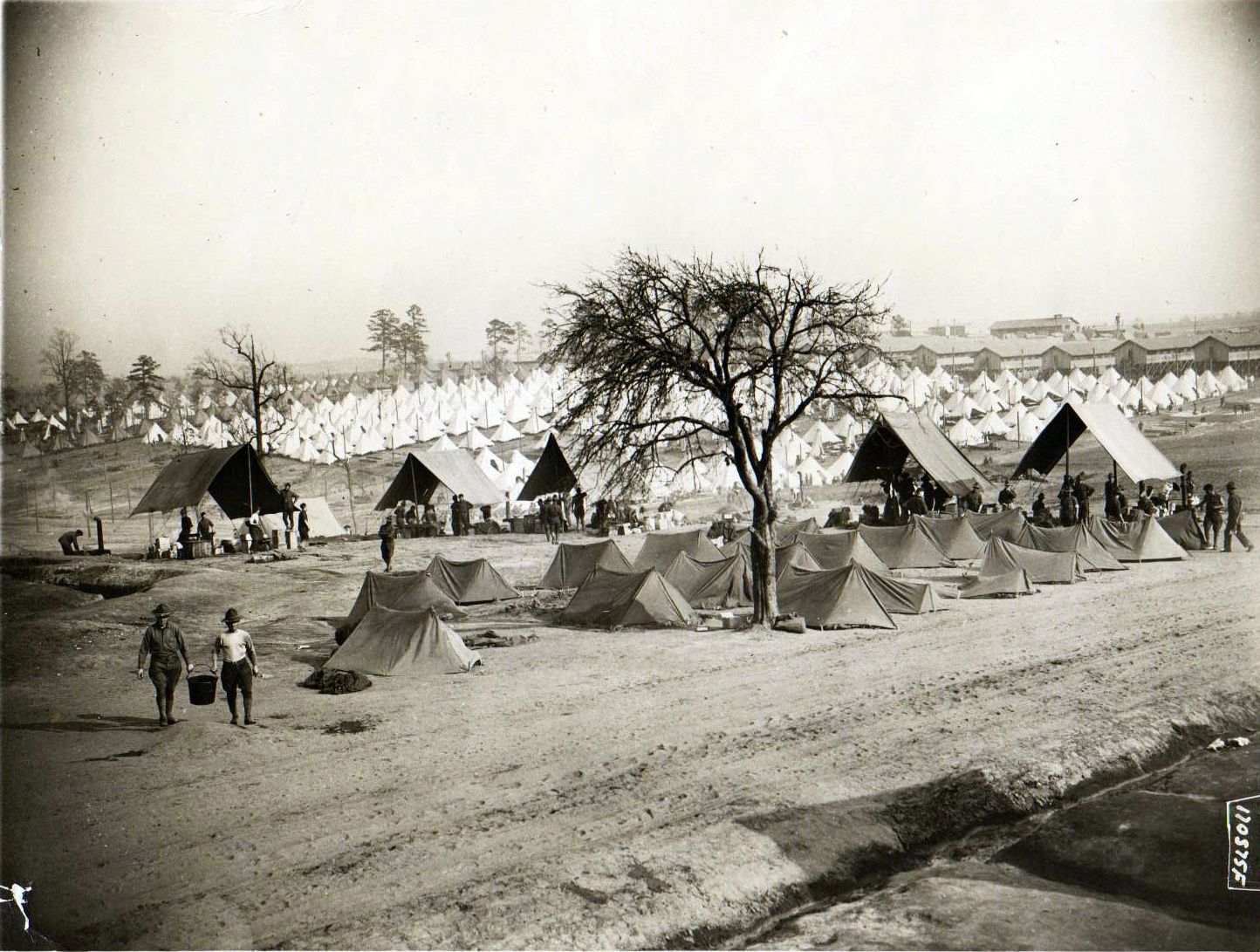
In October 1917, after basic training at Camp Whitman in Poughkeepsie, the 15th was ordered to Camp Wadsworth in Spartanburg, South Carolina, for combat training.
This was two months after the Houston Riot. In August of that year, racial tensions between Black soldiers and white residents in Houston had erupted into bloodshed that killed twenty people. Sending a regiment of Black New Yorkers to South Carolina for combat training was, to put it generously, a failure of imagination.
The harassment started the day they arrived. Soldiers were thrown off sidewalks. Shops refused to serve them. Local residents made it clear, often loudly, that they did not consider the Hellfighters welcome.
Lieutenant James Reese Europe and Drum Major Noble Sissle walked into a hotel lobby newsstand to buy a newspaper. A white man assaulted Sissle. White soldiers from New York's 27th Division, the so-called "Rainbow Division," came to their defense. They reportedly told Spartanburg shop owners that if they refused to serve the men of the 15th, the whites would shut the businesses down. Europe pulled his men out before anyone fired a weapon.
Colonel Hayward was on a train to Washington at the same moment, going to argue directly with the Secretary of War that his men needed to be moved or deployed immediately before the situation went the way Houston had gone.
The regiment was withdrawn after less than two weeks at Camp Wadsworth.
Before they shipped for France in December 1917, the 15th asked permission to march in the farewell parade of the 42nd Division, the Rainbow Division of New York's National Guard.
"Black is not a color in the rainbow."
The Doorstep of the French
The 369th, freshly redesignated from the 15th New York, arrived at Brest in December 1917. They were among the first hundred thousand American troops in France.
The American Expeditionary Forces under General John J. Pershing did not put them on the line. Like the vast majority of the roughly 380,000 African Americans who served in the war, they were assigned to stevedore and labor duties. Unloading ships. Building roads. Digging latrines. Only about one in ten Black American soldiers in WWI ever saw combat.
By spring 1918 the French Army was bleeding to death. Verdun and the Somme had stripped them down to manpower they did not have. Pershing, who had refused on principle to break up American units to plug French gaps, made an exception for the 369th. In March 1918 they were attached to the 16th Division of the French Fourth Army under General Henri Gouraud.
"Our great American general simply put the black orphan in a basket, set it on the doorstep of the French, pulled the bell, and went away." — Colonel Hayward
The French were not interested in the basket part. France had been fielding Black colonial soldiers from Senegal, Morocco, and Algeria for decades. The 369th turned in their Springfield rifles, traded most of their American kit for French gear, kept their U.S. Army uniforms, and started training in French tactics.
They were issued the Berthier M1907-15 rifle, an 8mm Lebel bolt-action fed by a three-round en-bloc clip. They got the older Lebel M1886-93 as well, a tube-fed rifle that had been the first smokeless-powder service rifle in the world. They got the CSRG Chauchat, an 8mm Lebel light machine gun with a built-in bipod that was about as well-loved as a wet boot but gave squads mobile automatic fire. They got the Viven-Bessiere "VB" rifle grenade, fired from a cup discharger mounted on the muzzle of the Lebel. They got the steel Adrian helmet, the first modern combat helmet, designed by Louis Adrian in 1915 to protect against shrapnel from indirect artillery fire.
They kept their American bolo knives. The Army had adopted the heavy machete-like blade from the Philippine Insurrection back in 1899.
"Their Lebels were nowhere near as good as our Springfields. The French, you see, were great believers in the hand grenade. Their rifles seemed more or less something to put a bayonet on." — Captain Hamilton Fish, 369th Infantry
They had three weeks to learn the new weapons and the French way of fighting before they entered the trenches in the Champagne sector on April 8, 1918.
They stayed there for 191 days.
191 Days
One hundred and ninety-one consecutive days in front-line combat. Longer than any other American unit in WWI. Fifteen hundred casualties, the highest of any U.S. regiment in the war. Never lost a foot of ground. Never lost a man to permanent capture.
The Germans nicknamed them the Hollenkampfer, the Hellfighters. The French called them the Hommes de Bronze, the Men of Bronze. The men themselves, taking after the regimental rattlesnake insignia inspired by the Revolutionary War-era Gadsden flag, called themselves the Harlem Rattlers.
In July 1918 they helped repulse the final German offensive of the war at the Second Battle of the Marne, losing 14 men and 51 wounded in a single action. They went on to fight at Chateau-Thierry and Belleau Wood.
On September 26, 1918, the 369th attacked behind a French artillery barrage at the opening of the Meuse-Argonne Offensive. They cleared successive German trench lines and captured the village of Ripont. They climbed Bellevue Ridge. They crossed the Dormoise River under fire. On September 29 they stormed the heavily fortified town of Sechault, captured prisoners, and seized six cannons and a large number of machine guns. They advanced fourteen kilometers in nine days, at times moving faster than the French units on their flanks and risking being cut off.
A third of the regiment became casualties at Sechault.
On November 11, 1918, when the Armistice was signed, the 369th was holding the line in the Vosges Mountains. Nine days after that, they became the first regiment of any Allied army to reach the Rhine River.
"My men never retire. They go forward or they die." — Colonel Hayward
The record held: 171 individual Croix de Guerre awards, a regimental Croix de Guerre with Silver Star and Streamer for Meuse-Argonne, and the distinction of being the first Americans to receive France's highest decoration for valor.
The Band That Took Jazz to France
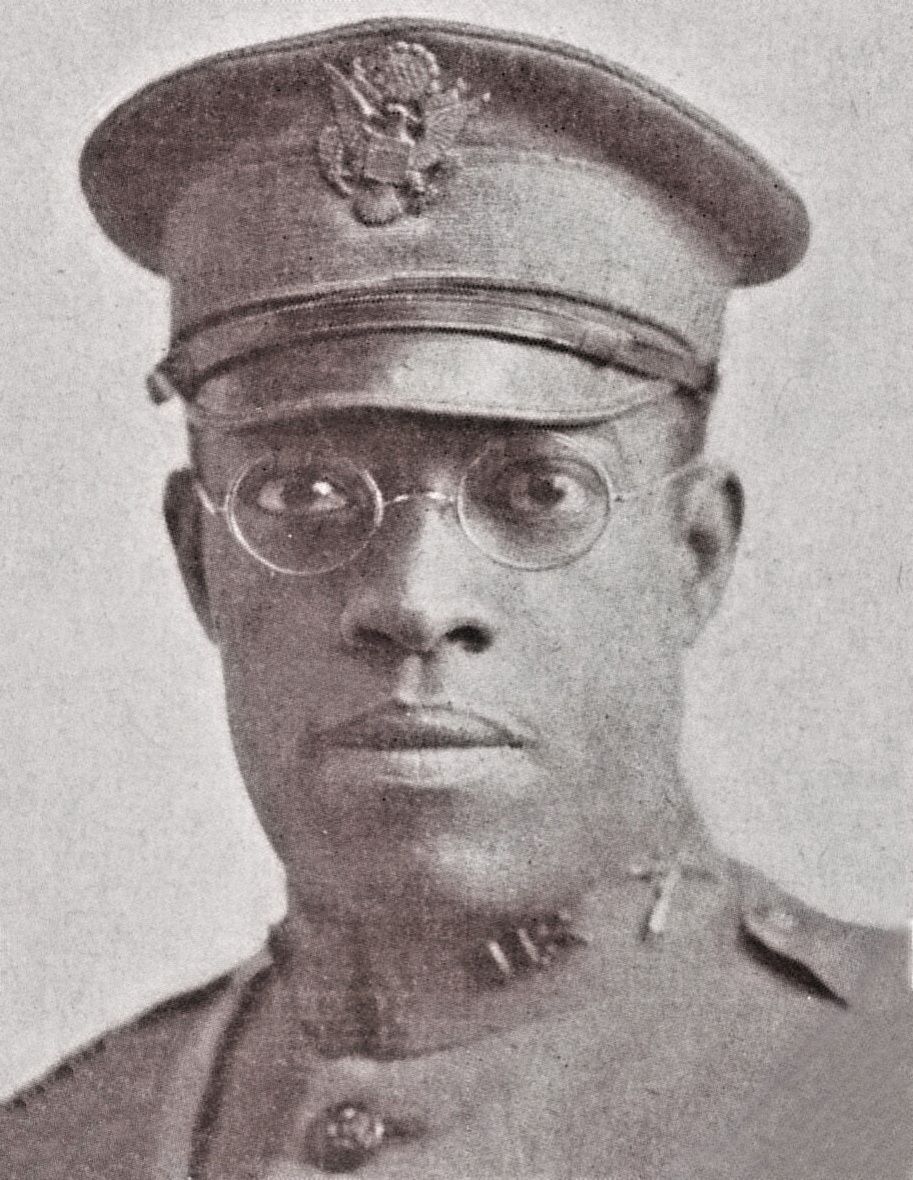
While the rifle companies were holding trenches, Lieutenant James Reese Europe was doing something else. After surviving a German gas attack, he was ordered to take the regimental band on a morale tour of France.
Over two thousand miles of touring. British, French, and American troops. French civilians. Hospital wards full of wounded men. The band played W.C. Handy's "Memphis Blues" at the Jardin des Tuileries in Paris alongside European military orchestras, and Noble Sissle later said the performance "started ragtimitis in France."
Europe wrote his most famous song, "On Patrol in No Man's Land," from a hospital bed.
He was also the first African American officer to lead troops into combat in the Great War. He took a raiding patrol into No Man's Land himself, on his own initiative, because the question of whether a Black officer could do it was still being asked.
The Parade and the Aftermath
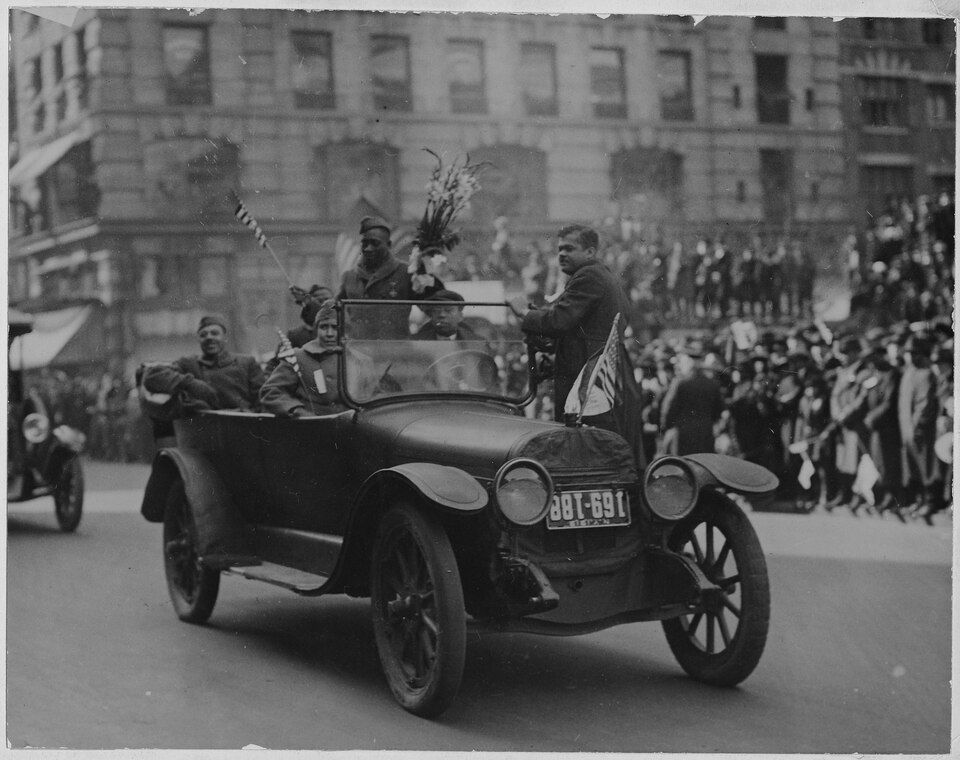
On February 17, 1919, the Harlem Hellfighters marched up Fifth Avenue from 23rd Street, then turned and went up Lenox Avenue to 145th Street in Harlem. Schools were dismissed for the day. The regiment moved in tight French combat formation, in their Adrian helmets, behind James Reese Europe's band.
Henry Johnson rode in the lead car, an open-top Cadillac, waving a handful of red lilies. The crowd shouted "Oh, you Black Death!" along the entire seven-mile route.
It was the only parade they were ever included in. When a later all-services Victory Parade was held, the Hellfighters were not permitted to march.
That summer became the Red Summer of 1919. Anti-Black riots broke out in twenty-six American cities. Some of them targeted Black veterans still in uniform.
Henry Johnson's discharge papers did not mention his twenty-one wounds. He was denied a Purple Heart and a disability pension. He went back to his porter job in Albany, but the metal plate holding his left foot together would not let him work consistently. He gave a speech in 1919 that criticized racism in the Army and was largely abandoned by the country that had used his face to sell Victory War Stamps.
He died on July 1, 1929. He was 32 years old.
For seventy-two years his family believed he had been buried in a pauper's grave. In 2001, researchers confirmed he had actually been laid to rest with full military honors at Arlington National Cemetery on July 6, 1929. His own son, Herman Johnson, a Tuskegee Airman, learned the truth for the first time at age seventy-six.
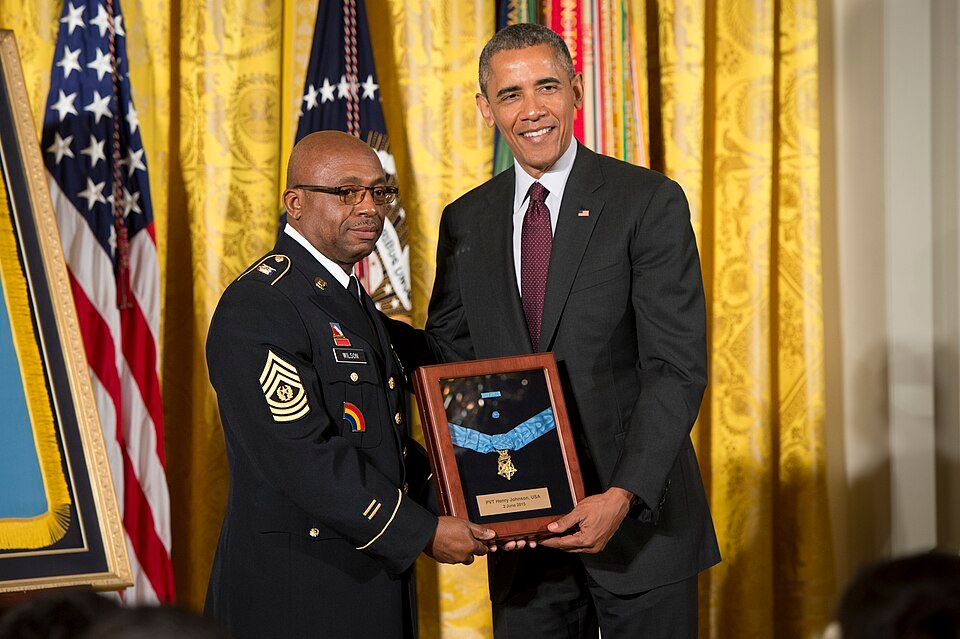
Henry Johnson received the Purple Heart in 1996. The Distinguished Service Cross in 2002. The Medal of Honor from President Obama on June 2, 2015. Ninety-seven years after the fight.
James Reese Europe never got to grow old either. On May 9, 1919, less than three months after the parade, one of his own drummers stabbed him to death during a backstage argument in Boston. He was 39. New York City gave him the first public funeral ever held for a Black American.
What They Earned
The 369th was awarded the Congressional Gold Medal in August 2021. The Army Center of Military History approved the official designation "Harlem Hellfighters" in 2020. The Harlem River Drive was renamed Harlem Hellfighters Drive in 2003. A twelve-foot black granite monument stands in Harlem with the regimental rattlesnake on it, a replica of the one in France. The 369th Sustainment Brigade still bears the lineage and the armory is still in Harlem.
A hundred and sixty-nine of the men are buried or memorialized at American cemeteries overseas. Most at Meuse-Argonne.
They marched off to a war they were not allowed to march to. They fought it in another country's helmet with another country's rifle. They held the line for 191 straight days and never gave back an inch of ground.
Related Posts

James Megellas was lethal enough to sprint at a 45-ton Panther tank and kill it with two grenades. He earned the Distinguished Service Cross for running through mortar fire with a wounded man over his shoulder, firing a Thompson one-handed to suppress the enemy on the way out. He did it more than once. The most decorated officer in the history of the 82nd Airborne Division didn't lead from behind. He led from the front, in every battle, in every storm, carrying the men who couldn't carry themselves.

Every doctrine you take for granted, fire and maneuver, base of fire, the squad automatic weapon, came out of four years of trial and error in the mud between 1914 and 1918. The machine gun is the weapon that broke infantry combat and forced every army on earth to rebuild it from the ground up.

The true story of Private Salvatore J. Gallo, a Sicilian-born Brooklyn kid who fought in North Africa and behind enemy lines in Europe during World War II. Part of the Swampfox Optics American Warrior 250th Anniversary campaign.

A Colorado company, born on the 4th of July, 2018
Helpful Links

Join the Revolution
Join our e-mail newsletter for giveaways, hot deals, and Swampfox news.
©2026 Swampfox Optics. All rights reserved.
Designed and powered by WebriQ.