
The Caliber the Army Tried to Quit
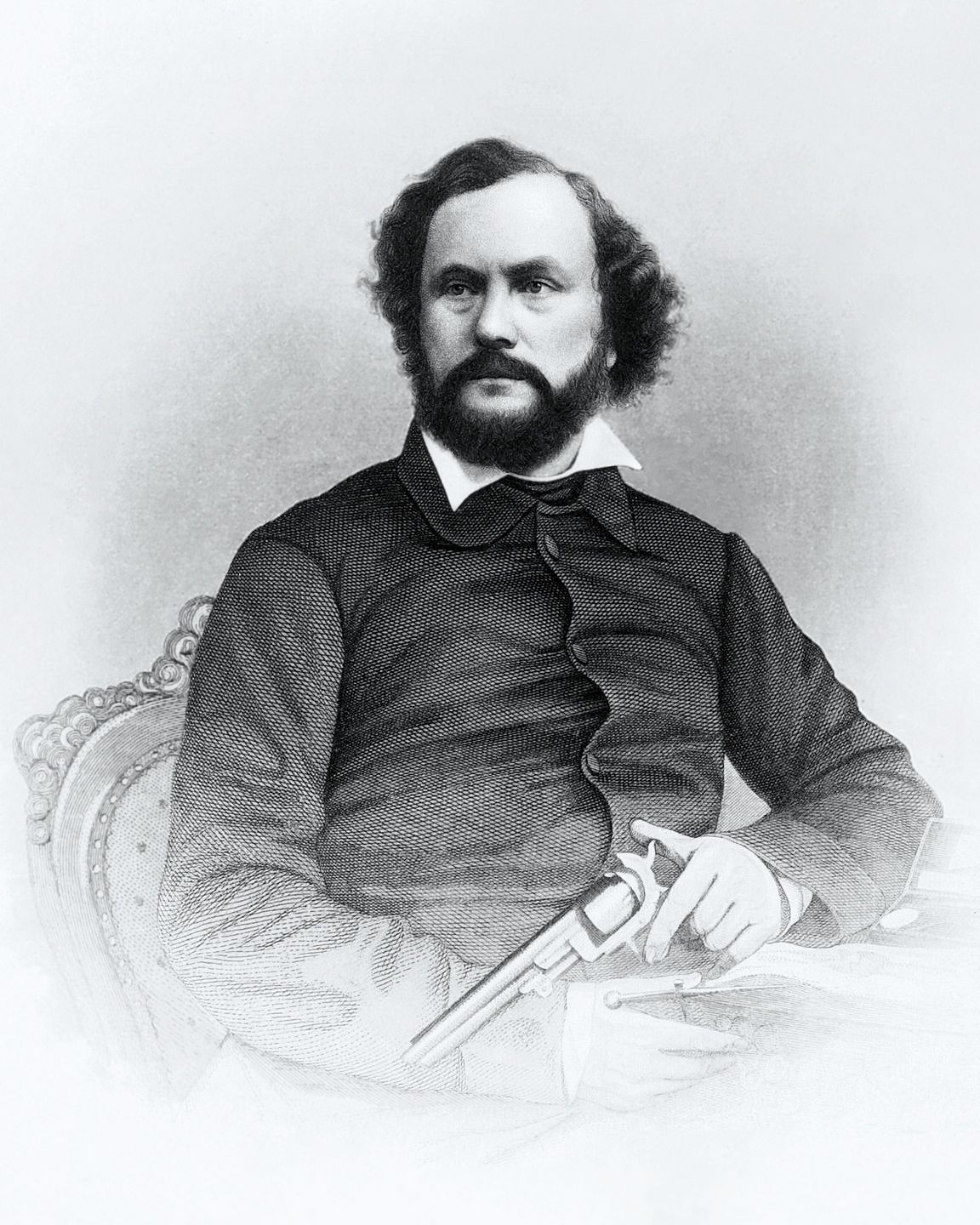
On October 26, 1905, on the island of Samar, a prisoner named Antonio Caspi tried to escape.
He fought the guards hand-to-hand. A soldier put four rounds into him at point-blank range with a regulation Army revolver. Three of them went through his chest and into his lungs. The fourth passed through his right hand and out his forearm.
Caspi kept fighting.
The bullets did not stop him. He was stopped when a soldier caved in his forehead with the butt of a Springfield carbine.
The revolver was a Colt Model 1892, chambered in .38 Long Colt, and it was the standard sidearm of the United States Army. An Army Medical Corps officer named Louis LaGarde wrote the wounds down in detail, because by 1905 the question of why American soldiers were emptying their revolvers into men who would not fall had become a problem the Ordnance Department could no longer ignore.
The Army already owned the answer. It had carried a cartridge that would have put Caspi down on the first shot, and it had carried that cartridge for more than twenty years before deciding it could do better.
The .45 That Set the Standard
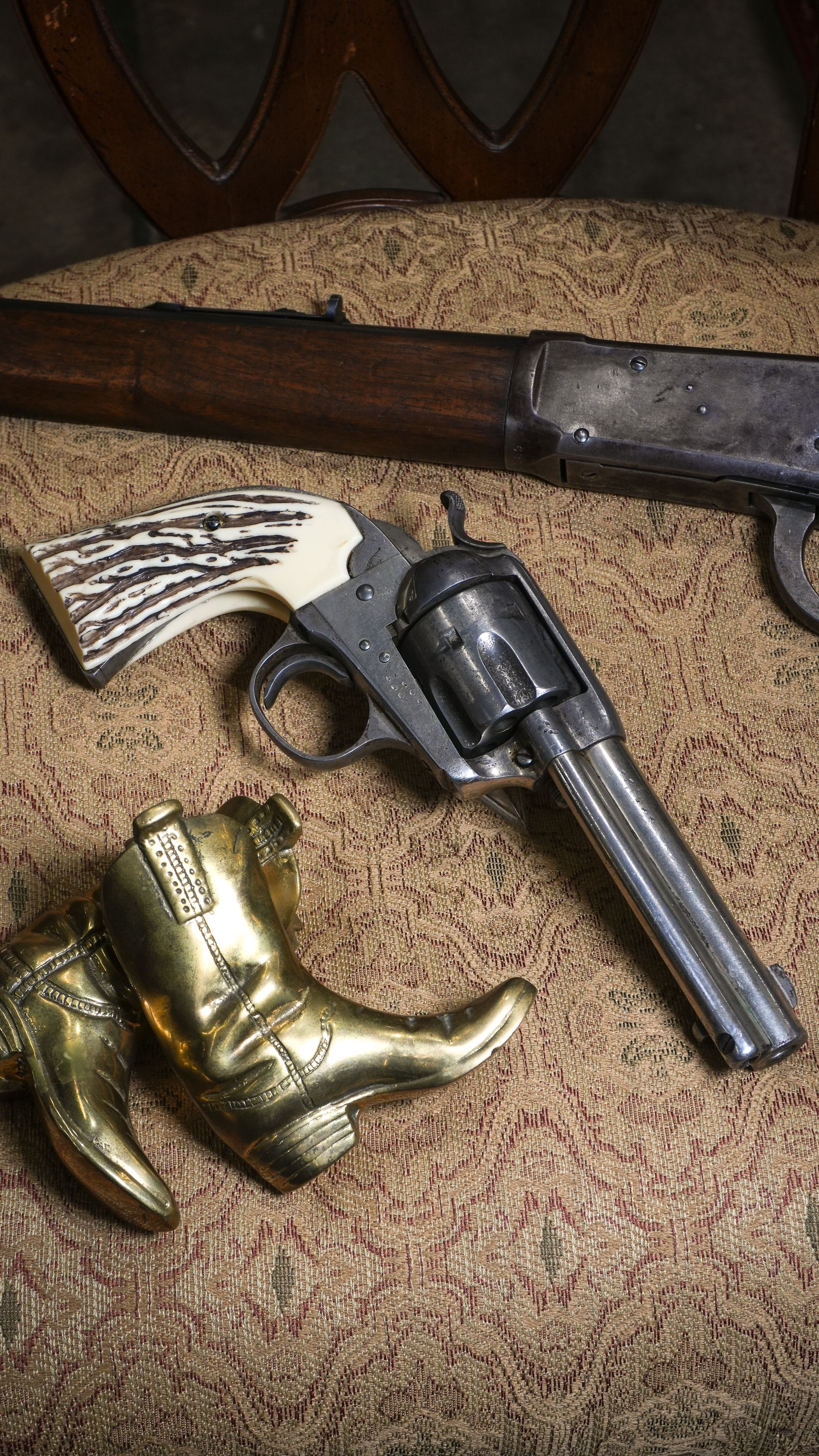
The cartridge was the .45 Colt, and the gun was the Colt Single Action Army.
The Army adopted it in 1873 as the New Model Army Metallic Cartridge Revolving Pistol. Colt engineers William Mason and Charles Richards had built it around a self-contained metallic cartridge, which put it a full generation ahead of the cap-and-ball percussion revolvers it replaced. No loose powder, no ball, no caps. Load through the side gate, cock the hammer, fire.
The cartridge did the work. Period ordnance loads ran a 250 to 255 grain lead bullet over roughly 40 grains of black powder, leaving the muzzle around 850 to 900 feet per second with more than 400 foot-pounds of energy behind it. A heavy, slow bullet that crushes tissue and breaks bone. It was built to stop a man or the horse he rode in on, and it did.
Colt’s first Army contract in July 1873 was for 8,000 revolvers, inspected at the factory by Orville Ainsworth, whose “OWA” stamp marks the earliest guns. They came in three barrel lengths: the 7.5-inch Cavalry, the 5.5-inch Artillery, and the 4.75-inch Civilian. The 7.5-inch Cavalry rode on the hip of the 7th Cavalry at the Little Bighorn in 1876. By the end of 1874 the Army had more than 12,500 of them in .45 Colt.
It was slow to reload. You worked the empties out one chamber at a time through the loading gate with a rod under the barrel. But it was simple, it was nearly indestructible, and it hit like a maul. For nineteen years it was the standard.
Trading Power for Speed
By the late 1880s the Ordnance Department had decided the Single Action Army was behind the times, and on the mechanics they had a case.
The single-action lockwork meant thumbing the hammer back for every shot. Reloading meant clearing spent brass one chamber at a time. European armies were moving to double-action revolvers that fired with one pull of the trigger and dumped all six empties at once. The Army wanted that, and in 1892 it got it.
The Colt Model 1892 New Army and Navy was a real leap. A double-action trigger. A cylinder that swung out the side so every empty cleared on one stroke of the ejector. Under stress, in the dark, it loaded and fired far faster than the old Colt.
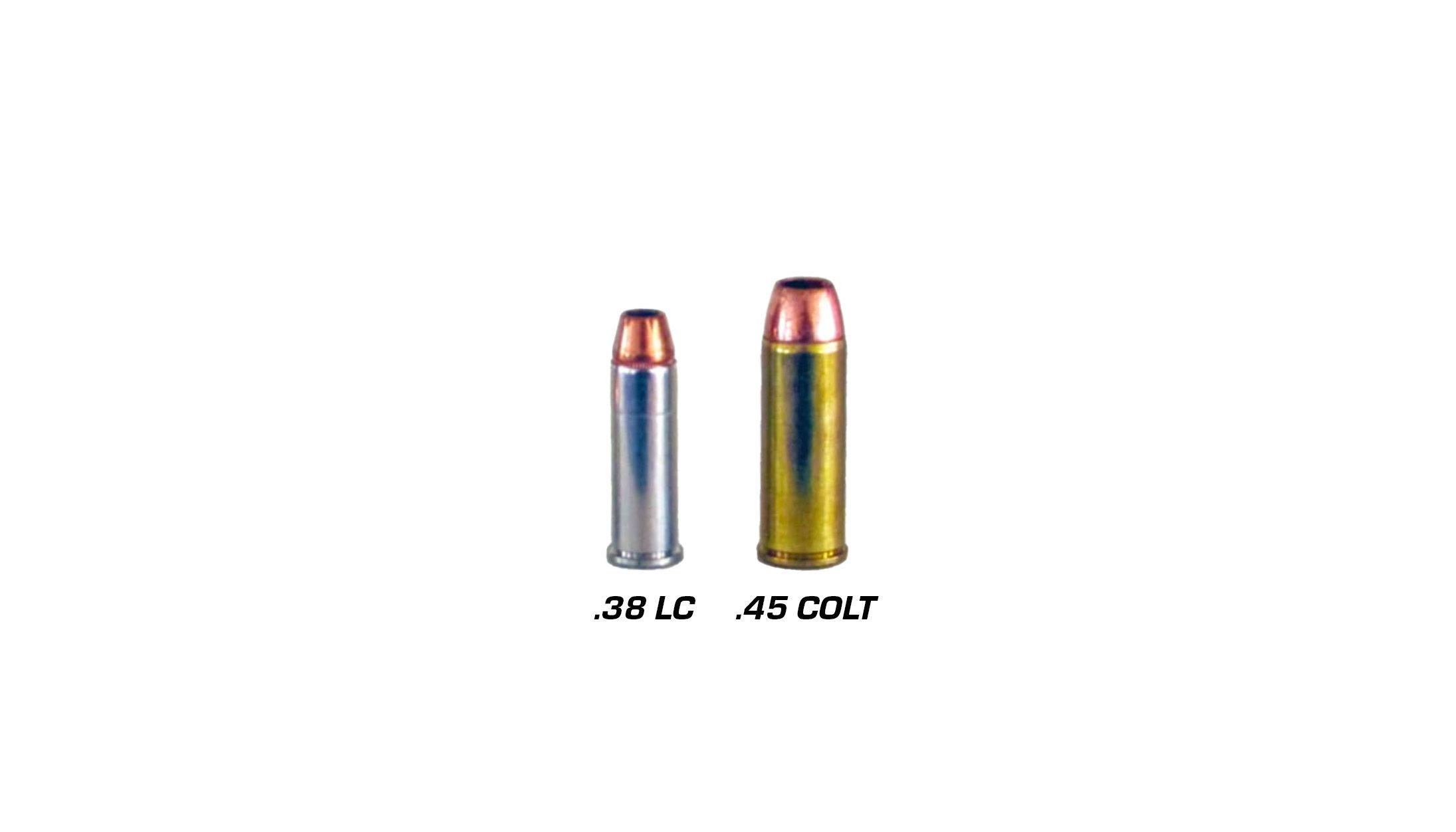
The leap came with a bill. A .45-caliber double-action revolver with a swing-out cylinder ran heavy, and the recoil beat on the crane and the latch. So the Army shrank the cartridge and adopted the .38 Long Colt. The official reasoning leaned on rate of fire, lighter weight, and softer recoil, and treated the loss of power as a fair trade.
It was not a fair trade. The .38 Long Colt threw a 148 to 150 grain bullet at about 720 to 770 feet per second, for roughly 195 foot-pounds of energy. Against the .45 Colt’s 400-plus, the Army had cut its sidearm’s energy in half and filed it under modernization.
Against the right enemy it held up. In the conventional fighting of the Spanish-American War in 1898, where revolvers settled close arguments at the edge of rifle and artillery range, the .38 did its job. The reckoning was waiting in the Philippines.
The Philippines
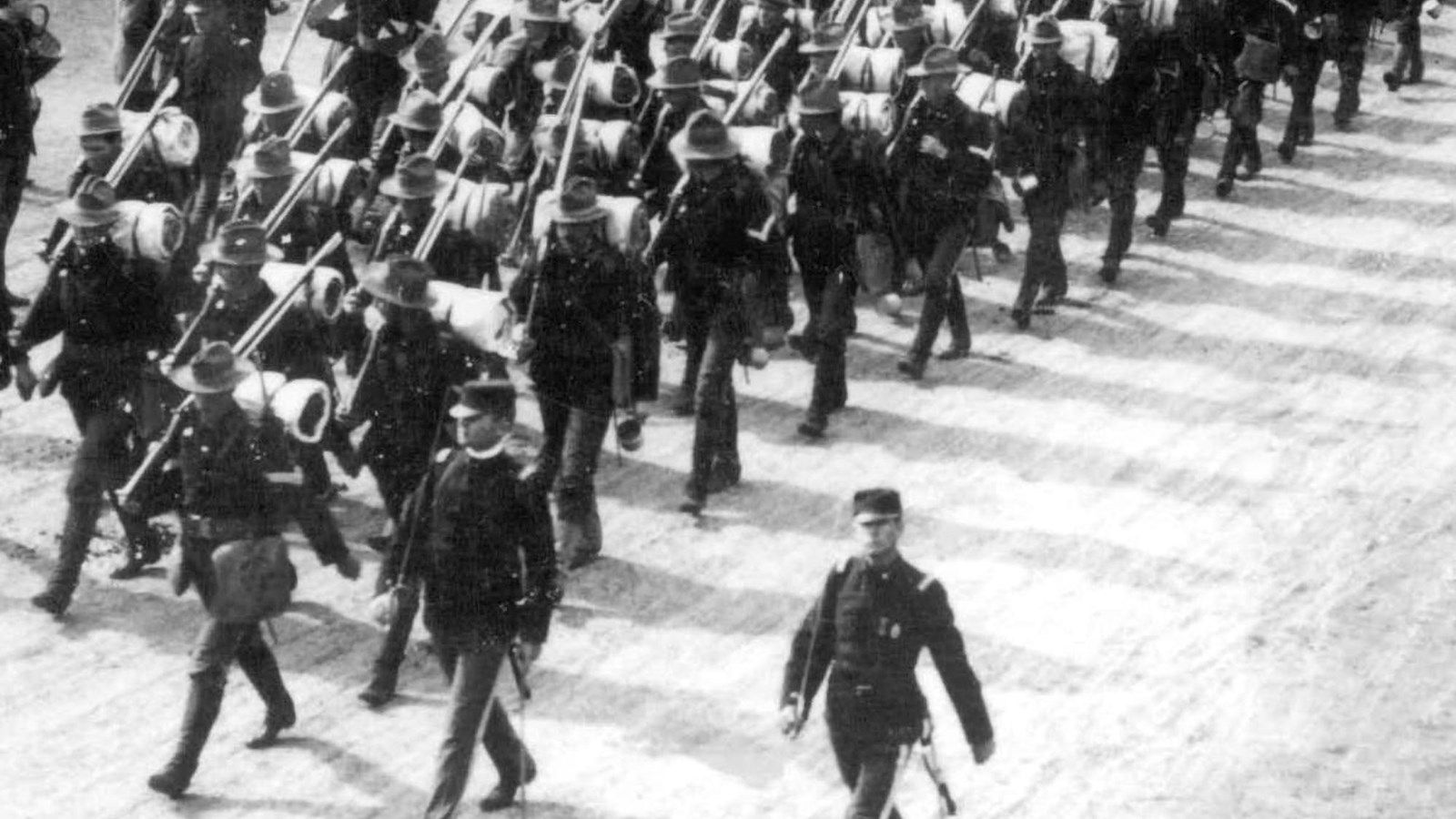
The Spanish-American War handed the United States the Philippine archipelago. Conventional resistance in the north was largely broken by 1902. In the south, on Mindanao and across the Sulu islands, the Army ran into the Moro, Muslim fighters with a centuries-old refusal to be ruled, and a war that ran until 1913.
The fighters who broke the .38 were the juramentado, men who had taken an oath to die killing. A juramentado bathed, shaved, and bound his limbs and torso tight with cord and sometimes copper wire, so that wounds to his arms and legs would not bleed him out before he reached his target. Then he came out of a crowd or a tree line with a kris or a kampilan or a barong and went straight for the nearest American.
A revolver is what you reach for when one of them is already on top of you. The .38 would not put him down. General Leonard Wood, governing the Moro Province, reported to Governor William Howard Taft in 1904 that soldiers had been “shot through and through several times with a .38 caliber revolver, and have come on.” The .45, Wood wrote, “stops a man in his tracks.”
It is worth being exact about what failed here, because the record gets muddied. Soldiers in the Philippines also cursed the .30-40 Krag rifle, but that was the opposite problem. The Krag had energy to spare. Its full-jacketed bullet punched straight through a man without tumbling or dumping that energy, which is why troops filed the tips down or seated bullets backward trying to make them open up. The .38 did not have the power to begin with.
Crawling Back to .45
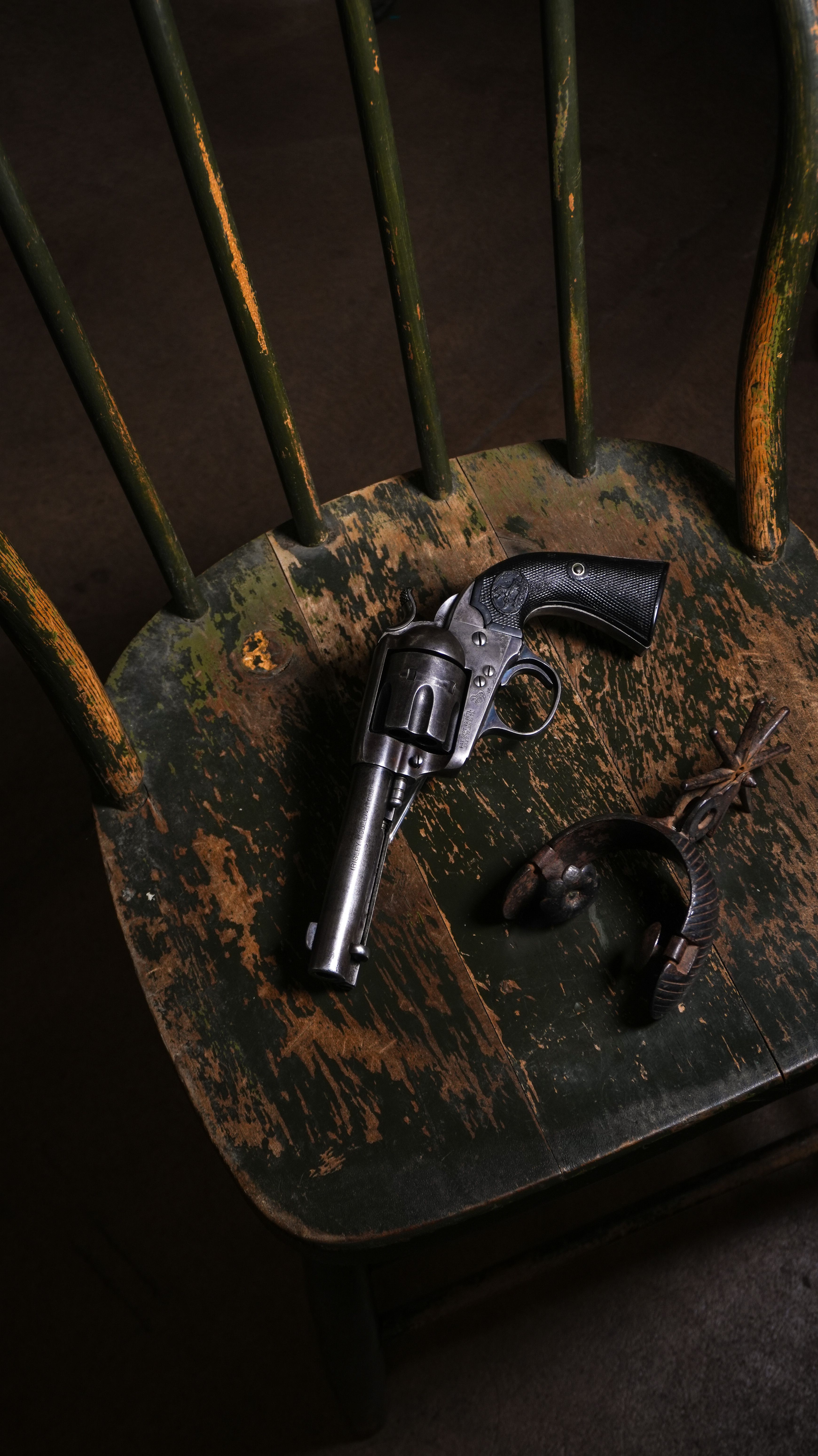
The Army’s return to .45 was not one decision. It came in pieces, and the version you usually hear, that the Army simply pulled old Single Action Armies out of storage, is only the first of them.
That first piece is true. Since the 1890s the Army had been cutting 7.5-inch Cavalry Colts down to 5.5 inches at Springfield Armory, the refurbished guns collectors now call Artillery models. As the reports came back from the Philippines, those stocks went out the door. In 1901 the Army inspected 2,600 of them and shipped 550 straight to Manila. They were old, they were single-action, they were slow to load, and they dropped men. That was the point.
The second piece came in 1902. To arm the Philippine Constabulary, the native police force under Brigadier General Henry Allen, the government bought 4,600 Colt Model 1878 double-action revolvers in .45 Colt. Colt stiffened the mainsprings for reliable ignition and lengthened the trigger and guard so a shooter could get leverage against the heavier pull. Collectors later misread that big trigger guard as a cold-weather feature and stuck the name “Alaskan Model” on it. It was built for the jungle.
The third piece was the real stopgap. In 1909 the Army adopted the Colt New Service as the Model 1909, a 39-ounce double-action .45 with the swing-out cylinder it had wanted all along. The original .45 Colt rim was too narrow for the extractor star to catch every case, so Frankford Arsenal widened it. Between 1909 and 1911 the War Department bought more than 19,500 of them and sent most to the ordnance depot in Manila.
While the revolvers shipped, the Army went looking for proof.
In 1904 it convened a board under Colonel John Taliaferro Thompson of the Infantry, who would later put his name on the Thompson submachine gun, and Major Louis Anatole LaGarde of the Medical Corps, the same officer who had written up Caspi. Their methods were grim. At the Nelson Morris stockyards in Chicago they shot live cattle and horses. At medical schools in Philadelphia and New York they fired into human cadavers hung by the neck and limbs, and read the stopping power off how far the bodies swung. They put .30 Luger, 9mm Parabellum, .38 Long Colt, .38 ACP, .45 Colt, and .476 Eley through the same tests.
The board’s finding set Army doctrine for the next seventy years. A service handgun should fire a bullet of a caliber not less than .45.
The Straight Line to 1911
In 1906 the Ordnance Department opened trials for a semi-automatic pistol to replace the revolvers, and it wrote the Thompson-LaGarde finding straight into the requirements. The gun had to be chambered in nothing smaller than .45.
John Moses Browning had been working with Colt on a pistol in .41 caliber. He scrapped it. He scaled the design up and built a cartridge to feed it, the .45 ACP, a rimless round throwing a 230-grain full-metal-jacket bullet at about 830 feet per second. The jacket was not for looks. A round-nose jacketed bullet runs up a feed ramp without hanging up, which is what a self-loader needs and what soft lead would not reliably do. The number Browning was chasing was the old one. The .45 ACP was built to do what the .45 Colt had been doing since 1873.
His pistol went through the 1907 trials against the Savage Model 1907 and a Luger that Georg Luger had scaled up to .45 for the occasion. In the endurance test it fired 6,000 rounds without a single malfunction. The Army adopted it on March 29, 1911, as the M1911.
The line runs clean from one end to the other. The Single Action Army proved what a .45 could do. The Army talked itself out of it, traded the cartridge for a faster gun, and paid for the lesson in the Philippines with men who emptied their revolvers and got cut down anyway. Then it spent ten years and three different revolvers buying its way back, until Browning handed it the M1911, built around a cartridge designed to do exactly what the old Colt had done thirty-eight years earlier.
The old gun outlasted the whole argument. Combat correspondents were still picking up Artillery-model Single Action Armies out of the rubble of Manila as late as 1945.
The .45 Line
Colt Single Action Army · 1873 · .45 Colt
Colt Model 1878, Philippine · 1902 · .45 Colt
Colt Model 1909 New Service · 1909 · .45 Colt
M1911 · 1911 · .45 ACP
Hard to Kill. Forever Free.

A Colorado company, born on the 4th of July, 2018
Helpful Links

Join the Revolution
Join our e-mail newsletter for giveaways, hot deals, and Swampfox news.
©2026 Swampfox Optics. All rights reserved.
Designed and powered by WebriQ.