
What is Cowitness? The Complete AR-15 Red Dot Cowitness Guide
05/27/2026

You put a red dot on your AR-15 and look through it. The front sight post is sitting dead center in the window, sharing space with the dot on every shot. Or maybe you are running a 1.93 inch mount because someone told you it was the standard lower 1/3 height, and now your irons have disappeared from the window entirely.
Both of those are mount height problems. The relationship between your red dot’s optical center and your iron sights is called cowitness. There are three mount heights that come up consistently for flat-top AR-15 builds, and they produce three very different sight pictures. Here is what each one actually means.
Cowitness: The Complete Glossary
What is cowitness?
Cowitness is the alignment of your iron sights within the field of view of a red dot or other non-magnified optic. When your irons are visible through the optic window, the two aiming systems cowitness. The practical purpose is backup capability: if the dot fails, the iron sights are already in the window and usable without removing or rerouting around the optic.
Cowitness applies only to non-magnified optics. Magnified optics, LPVOs, and prism scopes introduce focal discrepancies that prevent iron sights from being used through the glass. On those systems, backup iron sights belong on offset mounts, not in the primary sight picture.
What is absolute cowitness?
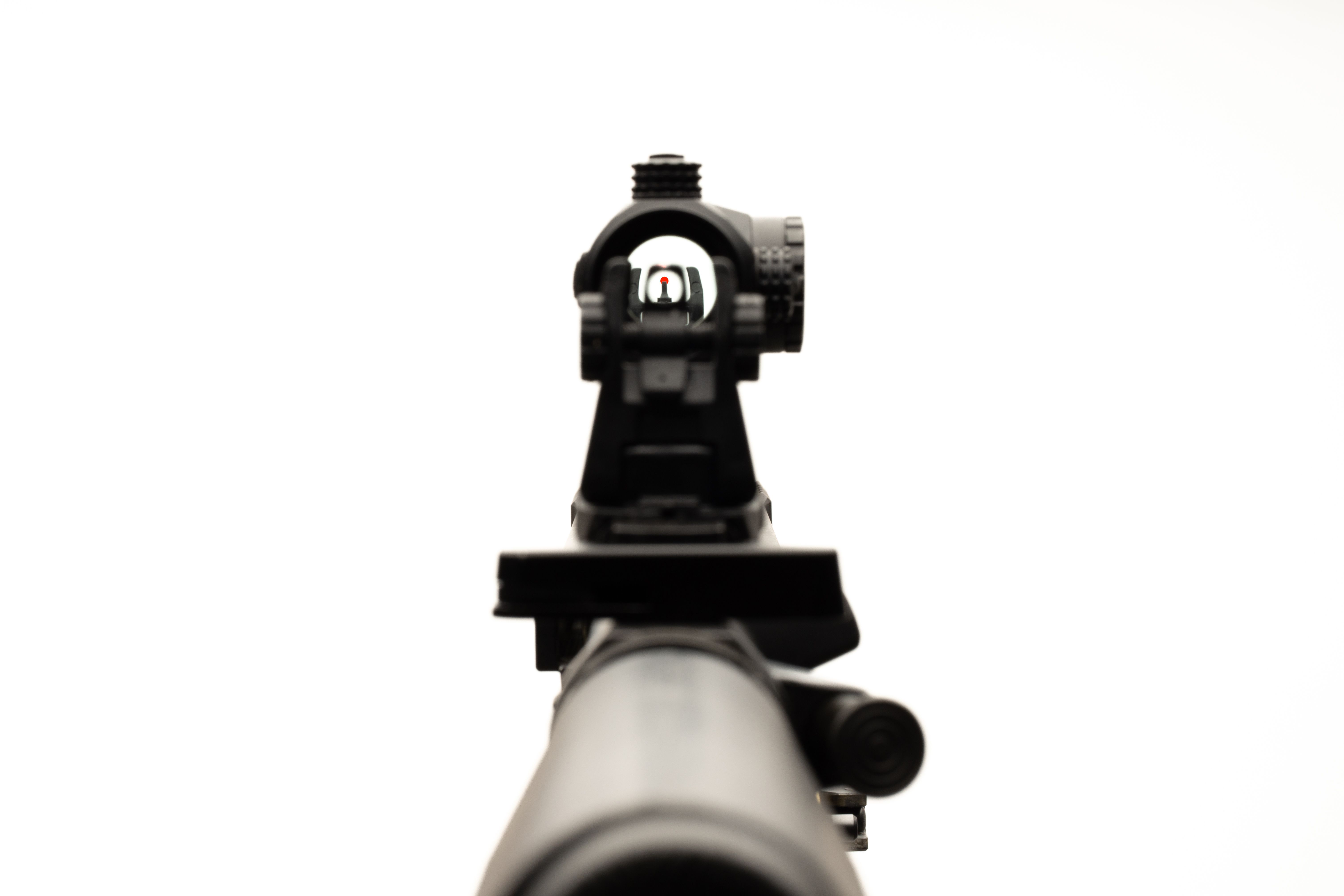
Absolute cowitness places the optical center of the red dot at the same height as the iron sight line. Under a standard cheek weld, the front sight post appears centered vertically in the optic window and the dot sits directly on top of the post tip. The optical center sits approximately 1.41 to 1.50 inches above the top surface of the Picatinny rail.
Because both systems share the same line of sight, the transition to iron sights when the dot fails requires no adjustment to cheek weld or eye position. The tradeoff is a front sight post permanently occupying the center of the window on every shot. For rifles with folding or flip-up iron sights, that post can be stowed when the optic is working, which is why absolute cowitness is better suited to BUIS builds than fixed sight setups.
What is lower 1/3 cowitness?
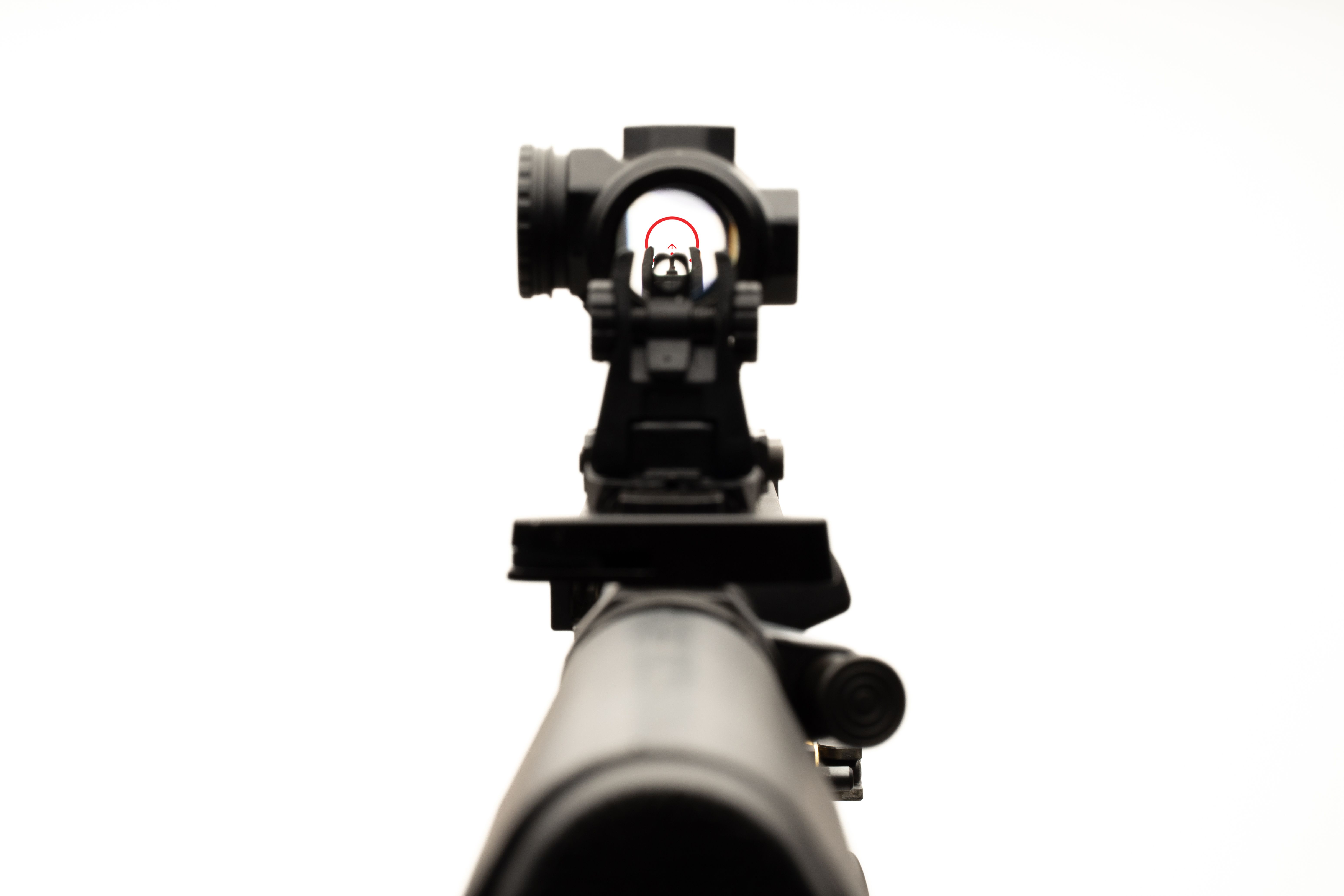
Lower 1/3 cowitness raises the optic so the iron sights drop to the lower third of the field of view. The dot floats in the clear upper portion of the window and the front sight post is visible at the bottom but not competing with the reticle. The optical center sits approximately 1.57 to 1.73 inches above the rail.
This is the standard for most duty rifles and flat-top AR-15 builds running fixed iron sights. The sight picture stays clean for red dot shooting while the irons remain accessible. If the optic fails, you drop the cheek weld slightly to bring your eye down to the iron sight axis at the bottom of the glass. It is a better long-term compromise for rifles that will spend most of their time on the dot.
What is a heads-up or 1.93 inch mount, and does it cowitness?
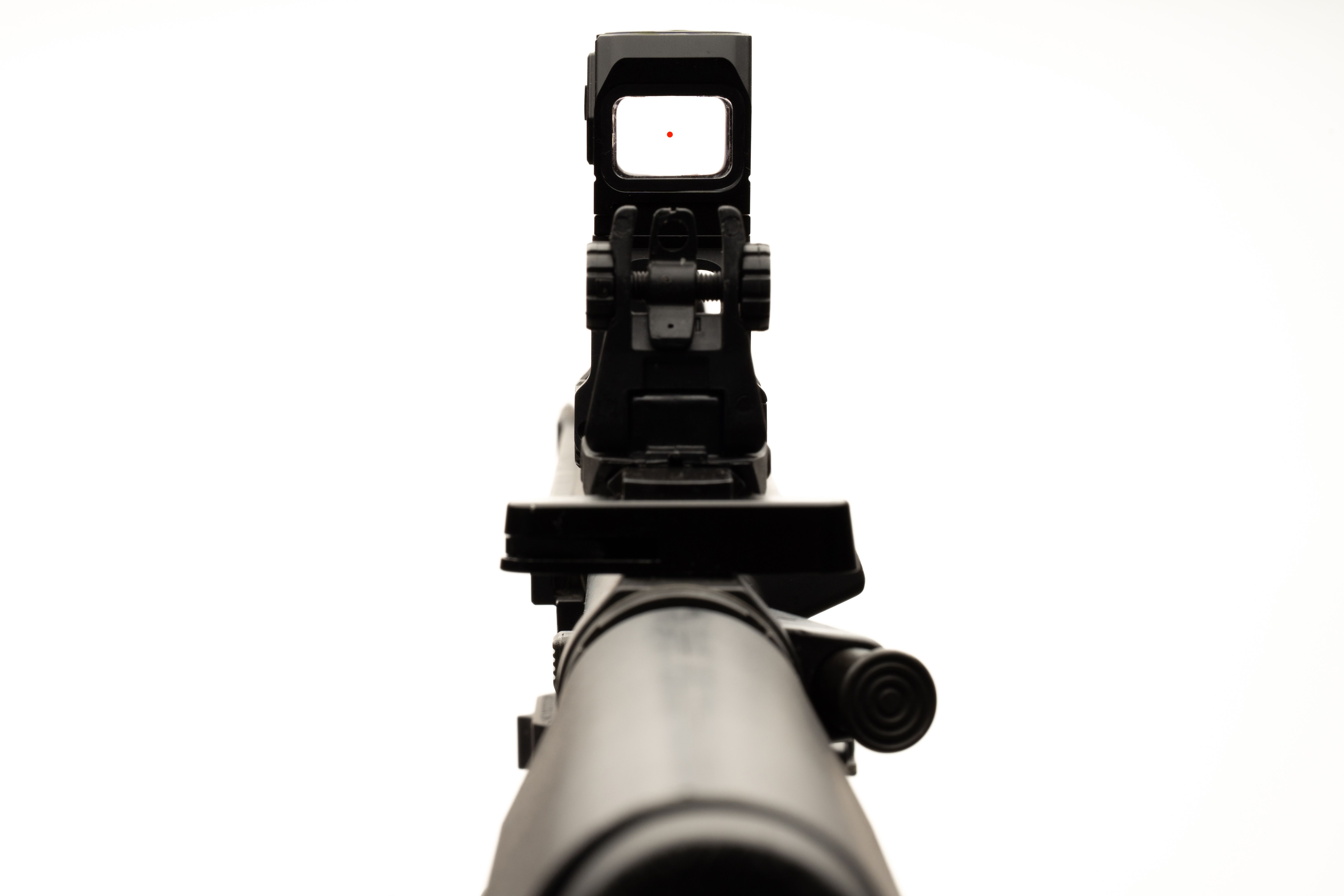
A heads-up mount places the optical center at 1.93 inches above the rail. This height originated from the need to maintain a more upright head position when shooting with plate carriers, chest rigs, or in vehicle environments where a standard cheek weld is impractical. The slightly raised position lets the shooter drive the gun without cramming their face into the stock.
With standard Mil-Spec AR-15 iron sights, a 1.93 inch mount produces no cowitness. The irons sit below the window entirely and are not visible through the glass. This is not a lower 1/3 cowitness setup, which is a common point of confusion in product listings and forums.
To achieve lower 1/3 cowitness at the 1.93 inch height, you need iron sights specifically designed for that height. Scalarworks makes the PEAK/02 folding sight set in a 1.93 inch compatible version for exactly this purpose. Those sights have an elevated centerline that puts the front post in the lower third of the window when paired with a 1.93 inch mount. Standard height irons will not work.
If you are running a 1.93 inch mount with standard fixed irons and relying on cowitness backup capability, that plan does not hold up. You either need the right tall BUIS or you accept that the red dot is a primary-only setup at that height.
What does 1/3 cowitness mean?
It means lower 1/3 cowitness. The name describes where the iron sights appear in the optic window: in the bottom third of the field of view. The terms lower 1/3 cowitness and 1/3 cowitness are used interchangeably in product listings and spec sheets. Same height, same sight picture.
Absolute cowitness vs lower 1/3: which is better?
For rifles with folding or flip-up BUIS, absolute cowitness is the cleaner setup. The irons stow flat when the dot is running and deploy centered in the window when needed. No cheek weld adjustment required.
For rifles with fixed iron sights, lower 1/3 cowitness is better. The irons sit below the dot during normal shooting and do not clutter the window. You get a clean sight picture most of the time and a usable backup when the optic fails.
Most flat-top AR-15 builds with fixed sights run lower 1/3 for this reason. If backup iron sight transitions under stress are a specific training objective, absolute cowitness makes that transition more instinctive because the irons are already centered. Pick based on how you have the rifle built and how you actually train with it.
How do you cowitness a red dot?
Cowitness is determined at mount selection, not at the range. The height of your mount sets where the irons appear in the window. There is no field adjustment.
To set up lower 1/3 cowitness on a standard flat-top AR-15:
- Select a mount with an optical center height of 1.57 to 1.73 inches above the Picatinny rail
- Install the mount to the manufacturer’s torque spec
- Raise or deploy the iron sights
- Look through the optic and confirm the front sight post appears in the lower third of the window
If the post is centered, the mount is too low and you are at or near absolute cowitness. If the irons are not visible at all, the mount is too tall. Adjust mount height to get the sight picture you need.
What size riser do I need for lower 1/3 cowitness?
For lower 1/3 cowitness on a flat-top AR-15, the optic’s optical center needs to sit between 1.57 and 1.73 inches above the Picatinny rail. The specific mount height depends on the body profile of the optic. A taller optic body requires less mount height to reach the same optical center; a lower-profile body needs more.
Check the mount spec sheet for your specific optic, or contact the manufacturer with the optic model. The published optical center height for the mount and optic combination is the number that matters, not the ring height alone.
Do I need to cowitness my red dot?
Only if you have iron sights installed and want them usable through the optic. On a dedicated competition gun or a range-only build without BUIS, cowitness height is an ergonomic preference. Pick what feels natural to shoot.
If you have iron sights installed on a rifle that serves a serious role, getting the height right matters. Iron sights centered in the window during every shot are not functioning as a clean primary sight picture. Iron sights invisible at the bottom of a 1.93 inch setup are not functioning as backup capability. Match the mount height to how the rifle is actually built and how it is used.
Getting the Height Right
The mount is where this decision gets made. A quality mount holds your optic at a consistent, repeatable height and takes the guesswork out of the setup. If you are building an AR-15 red dot setup from scratch, start with the correct optical center height for the sight picture you want, then work backward to the mount.
Browse our AR-15 red dots and mounts at Browse Swampfox Optics and Mounts.
Related Posts

The biggest mistake shooters make? Picking a reticle that doesn’t actually match how they shoot. Whether you’re setting up a pistol, a PCC, or an AR-15, choosing the best red dot reticle for your needs can improve both speed and confidence behind the gun. Here’s a straightforward breakdown of the most common reticles and the strengths of each.

Before you step foot in your local gun dealer or click ‘Add to Cart’ online, ask yourself these nine questions before you buy a red dot for your firearm.

Similar in appearance and function, Liberator II and Raider 1x have a lot in common – but it’s how their reticles are illuminated that's separates them.

A Colorado company, born on the 4th of July, 2018
Helpful Links

Join the Revolution
Join our e-mail newsletter for giveaways, hot deals, and Swampfox news.
©2026 Swampfox Optics. All rights reserved.
Designed and powered by WebriQ.