
USPSA Carry Optics Rules: The Complete 2026 Guide
05/14/2026

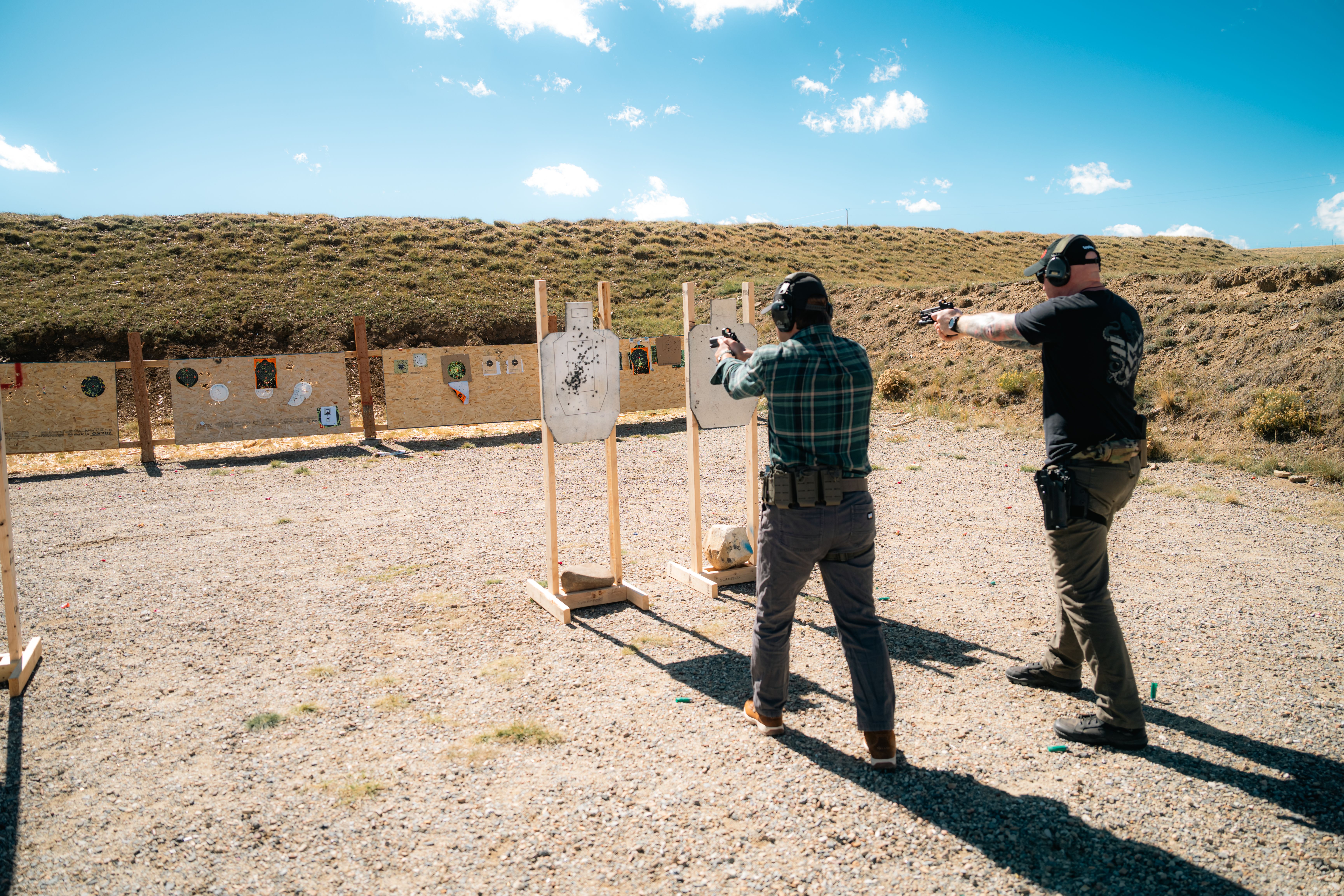
The Carry Optics division is by far the most represented division at nearly any USPSA match in the county. By the most recent USPSA figures, CO accounts for roughly 37% of all division activity, more than Limited Optics, Open, PCC, and Production combined.
It is not an accident. Carry Optics solved a problem the sport had been quietly choking on for years. Before 2015, if you wanted to compete with a slide-mounted red dot, your only legal option was Open. That meant lining up your stock Glock against frame-mounted optics, brake-and-comp race guns, and Major Power Factor scoring. The mismatch was absurd, and the sport bled shooters because of it.
USPSA introduced Carry Optics in mid-2015 as a provisional category and made it permanent in 2018. The rulebook has been refined every year since. Here is what Appendix D7 actually says in 2026, including the recent changes that affect how you build, hold, and run a CO pistol.
What is USPSA Carry Optics?
Carry Optics is a USPSA pistol division that requires a slide-mounted red dot sight on a factory-style duty pistol. Same base guns as Production, same Minor Power Factor scoring, with a red dot bolted on top and a few additional allowances around magazine capacity and accessories.
Appendix D7 of the current USPSA Competition Rules governs the division. Every firearm used in CO must appear on the official USPSA Approved Production Handgun List, published on USPSA.org and updated regularly.
USPSA Carry Optics Approved Gun List and Firearm Rules
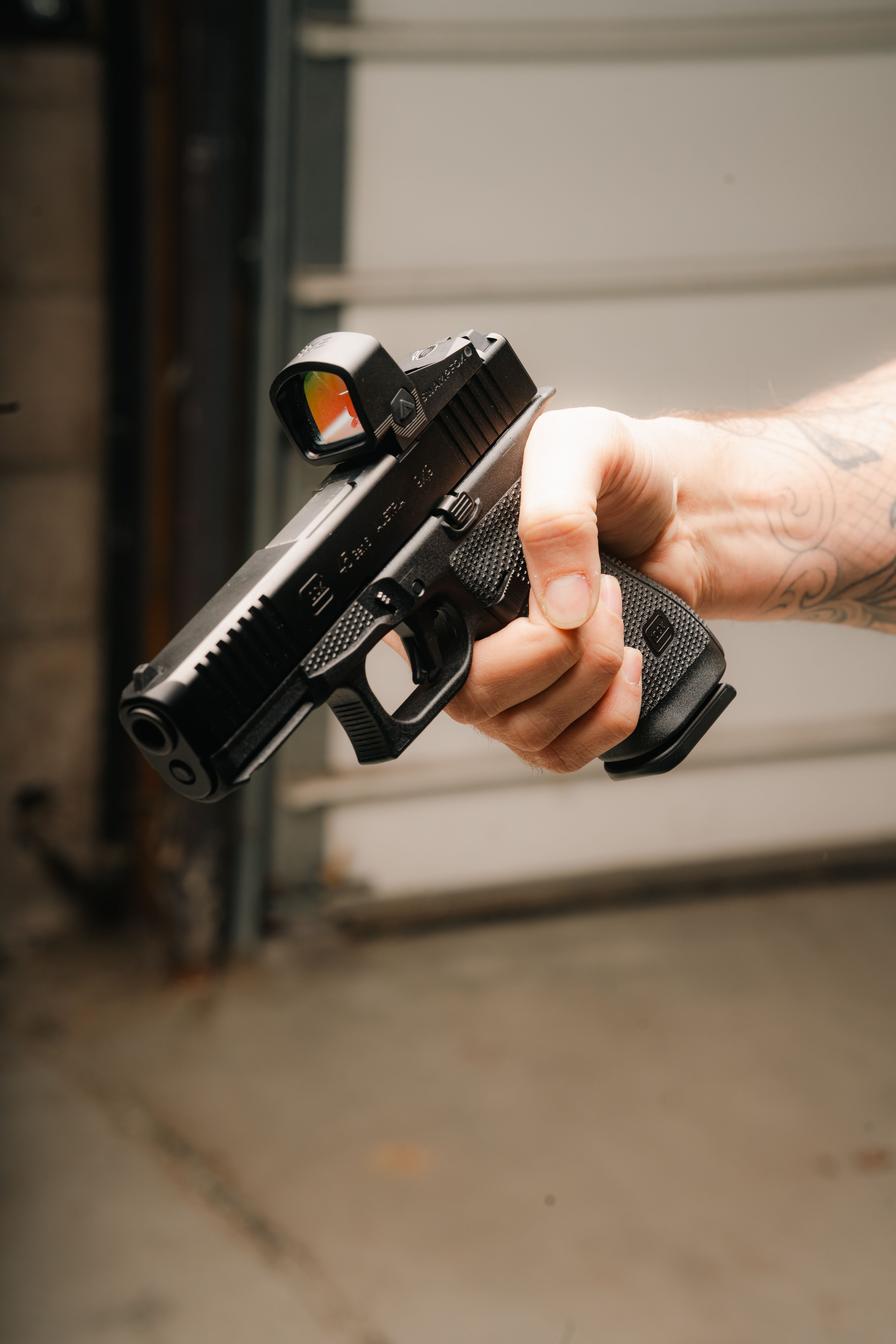
To run a pistol in Carry Optics, the gun must:
- Appear on the USPSA Approved Production Handgun List
- Be striker-fired, DA/SA, or DAO. Single-Action Only (SAO) pistols are not allowed, which effectively excludes 1911 and 2011 platforms.
- Be chambered in 9x19mm or larger (minimum bullet diameter of .355 inches)
- Meet the 59-ounce maximum weight limit with the heaviest empty magazine inserted and optic mounted
- Use ammunition that meets 125 Minor Power Factor at the chronograph stage
No upper limit exists on barrel length or overall pistol size, provided the base firearm is on the approved list and the total assembled weight stays under 59 ounces.
Popular legal platforms include the Glock 34 MOS, Glock 17 MOS, Glock 45, Smith & Wesson M&P 2.0, CZ Shadow 2 Optics Ready, Canik SFx Rival-S, Walther PDP Match, and Sig Sauer P320 X5 Legion. The Glock 35 is technically legal but tactically obsolete in this division (more on that in the scoring section).
If a specific variant of a pistol is not on the Production list, it is not legal for CO. No matter how similar it looks to an approved model. Always check the list before showing up to a match.
USPSA Carry Optics Optic Rules
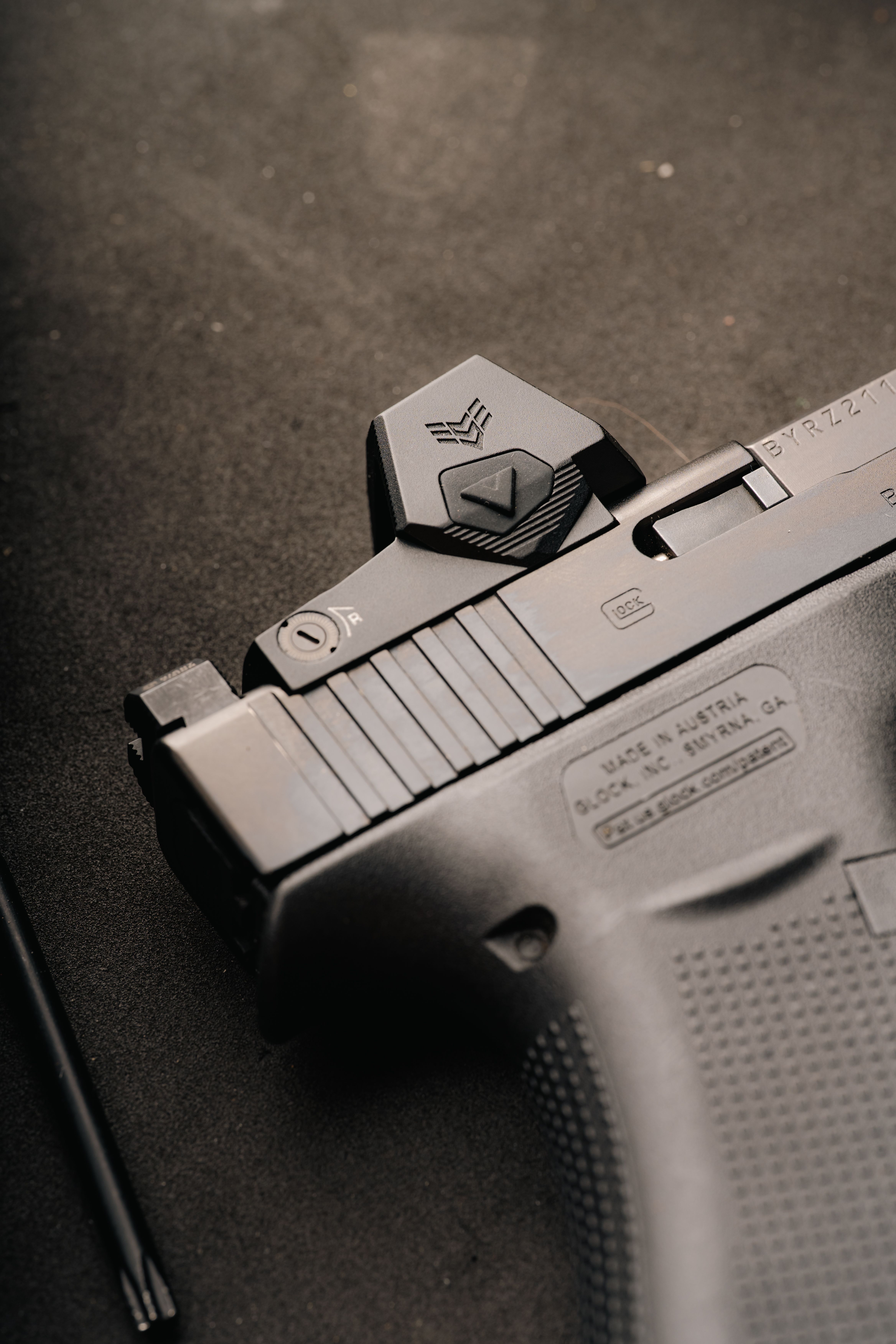
The optic rules in Appendix D7 are specific:
- The optic must be slide-mounted, positioned between the rear of the slide and the ejection port. Frame-mounted optics are an immediate bump to Open division.
- Sights must be 1x magnification only. LPVOs, magnifiers behind a red dot, and prism scopes are prohibited.
- Both red and green emitters are legal.
- No restrictions on window size, reticle type, dot MOA, or optic weight (so long as total firearm weight remains under 59 oz).
Mounting methods are flexible. Direct slide milling, factory optics-ready adapter plates, and dovetail mounts that replace the rear sight are all legal. The most common setup is a factory MOS-style cut with an adapter plate or a directly milled slide.
For competitive use, window real estate matters more than almost any other optic spec. A slide-mounted optic reciprocates violently with the slide, and the bigger the window, the easier it is to track the dot through recoil and find it on the draw. The Swampfox Justice II runs a 30mm window in the standard RMR footprint, which is what most of the approved-gun universe is cut for. That extra window real estate lets you keep eyes on the dot through the full recoil arc, which is what you want when you are chasing tenths.
A note on the 2026 rule update: If your optic falls off or fails during a stage, it is now treated as an equipment malfunction. You either finish the stage with whatever sighting reference you can manage or stop and take the score earned to that point. You are not bumped to Open. This is a change from previous years.
USPSA Carry Optics Magazine Length and Capacity Rules
Carry Optics has no round-count limit. Capacity is governed by physical dimension instead: every magazine, including the base pad, must fit inside the official USPSA 141.25mm magazine gauge. Extended base pads, aftermarket followers, and tuned springs are all legal as long as the loaded magazine drops freely into the gauge.
In practice, competitors routinely extract 22 to 24 rounds of 9mm from standard 15- or 17-round magazine tubes by adding aluminum or brass extended base pads. On a standard 32-round long course, a well-built CO magazine setup lets you shoot the entire stage with a single reload on the move.
This is the biggest mechanical advantage CO has over Production. Production caps you at 15 rounds per magazine regardless of what the gun will hold. CO lets you load to the physical limit.
USPSA Carry Optics Holster Rules
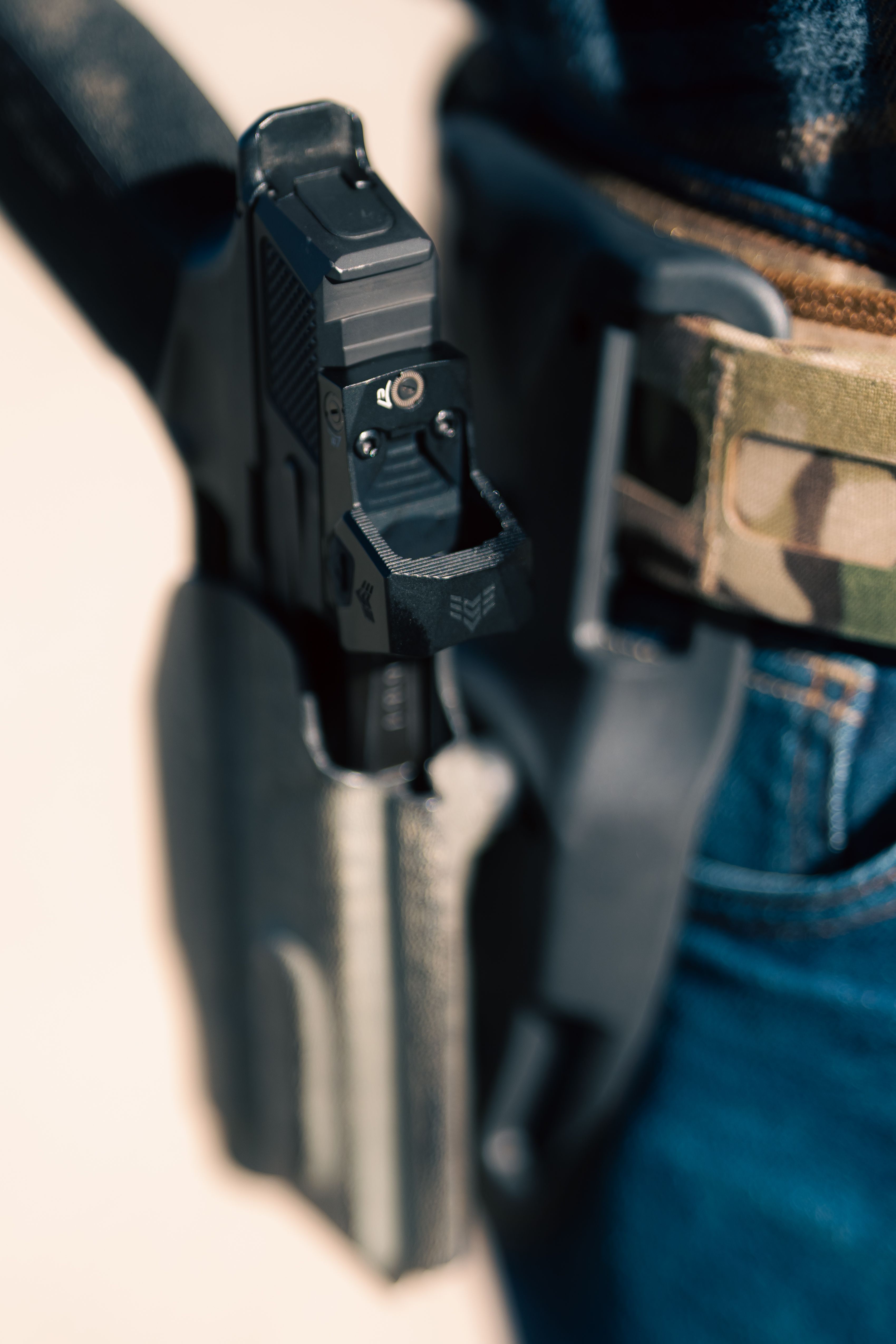
Holster rules in CO are written to keep the division anchored to real defensive setups, not race-gun engineering. The rules:
- No skeletonized race holsters. The trigger guard must be fully covered.
- No drop-leg or tie-down rigs. These are prohibited in all USPSA pistol divisions.
- Retention hoods or thumb-breaks are legal, but if your holster has one, it must be fully engaged before the Standby command. You cannot bypass a retention mechanism for a faster draw.
- The heel of the butt of the handgun must be no more than 2-1/8 inches from the inner surface of the belt and must sit above the top edge of the belt.
The biggest holster-rule change in recent years was the elimination of the “behind the hip” requirement. Appendix carry is fully legal in CO under the current rulebook. You can run your actual concealed carry rig in competition if you want to, which is exactly what a lot of shooters do.
Weapon-mounted lights are also legal in CO, as long as the light is fully functional. No hollowed-out dummy blocks filled with tungsten weights. The light does not need to be turned on during the stage. This is a real concession to defensive shooters who want to compete with their daily setup.
One more 2026 update worth knowing: under the modernized Rule 6.2.5.1, a gear-position violation no longer automatically bumps you to Open. You get the chance to fix the issue, or if you cannot, you shoot the match for no score. The auto-Open bump that ruined many a first major is gone.
Trigger and Internal Modification Rules
The inside of a CO pistol is functionally an unrestricted sandbox. You can:
- Replace the trigger, sear, disconnector, striker spring, and recoil guide rod with aftermarket parts
- Tune the trigger to virtually any weight (USPSA has no minimum trigger pull weight for CO, unlike IPSC, which mandates 5 lbs for DA/SA)
- Install heavy tungsten guide rods, brass backstraps, and other internal weight to dampen recoil
What you cannot do is disable factory safety mechanisms. Drop safeties, firing pin blocks, grip safeties, and manual thumb safeties must remain functional. A pistol that fails the standard drop-safe test is an immediate disqualification.
External Modifications: What Is Legal vs. What Will Get You Bumped
Legal external mods:
- Aggressive slide milling (forward cocking serrations, lightening cuts that do not constitute porting)
- Stippling, grip tape, or silicon carbide texture on the frame
- Threaded barrels (NROI confirmed under Appendix D7, Rule 21.3)
- Extended magazine releases, slide stops, and altered safety levers
- Weapon-mounted lights
Prohibited external mods:
- Compensators of any kind. Thread-on, integral, porting, muzzle brakes. Any device that vents gas to counter muzzle flip puts you in Open.
- Flared magazine wells. This is the trap that catches more new competitors than anything else. Several popular factory pistols (Canik SFx Rival-S, Walther PDP Match, Smith & Wesson M&P Competitor, Sig P320 X5 Legion) ship with magwells from the factory. You have to physically remove the magwell with an Allen wrench before the match, or you are not in CO.
- Thumb rests (gas pedals). Any frame-mounted ledge for the support thumb is illegal.
USPSA Carry Optics vs. Other Divisions
| Carry Optics | Limited Optics | Production | Open | |
|---|---|---|---|---|
| Optic | Slide-mounted required | Slide-mounted required | Iron sights only | Slide or frame mounted |
| Action types | Striker, DA/SA, DAO | Striker, DA/SA, DAO, SAO | Striker, DA/SA, DAO | Unrestricted |
| Power factor | Minor only (125) | Minor only (125) | Minor only (125) | Major (165) or Minor |
| Magazine length | 141.25mm | 141.25mm | 15 rounds max | 171.25mm |
| Magwells | No | Yes | No | Yes |
| Compensators | No | No | No | Yes |
| Weight limit | 59 oz | None | 59 oz | None |
| Holster | Duty/concealment | Race holsters allowed | Duty/concealment | Race holsters allowed |
Carry Optics vs. Production: Same base guns. CO adds the optic and the 141.25mm mag length. Production caps you at 15 rounds and bans the dot. Most modern shooters coming into the sport pick CO over Production.
Carry Optics vs. Limited Optics: This is the most common upgrade path. Limited Optics was introduced in 2023 and made permanent in the 2025 rulebook, specifically to absorb the 2011 and SAO crowd. If you want to run a Staccato or an Atlas 2011 with a red dot, LO is your division. It also permits magwells and frame-mounted thumb rests. CO stays the home for striker-fired and DA/SA factory guns.
Carry Optics vs. Open: Open is a different sport. Frame-mounted optics, compensators, 171.25mm mags holding 29+ rounds, Major Power Factor. A CO gun is non-competitive in Open.
How Scoring Actually Works in Carry Optics
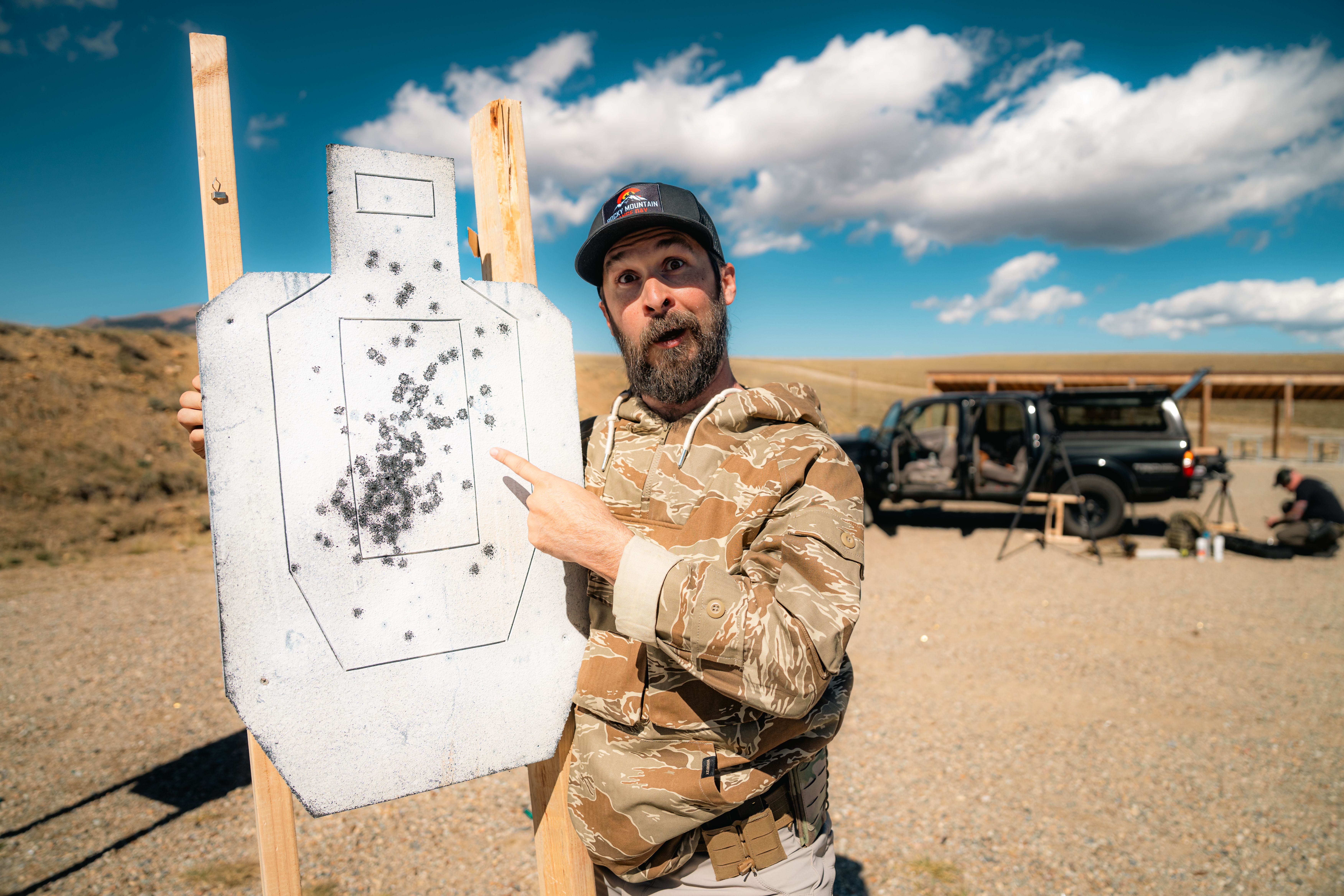
USPSA scores stages on Hit Factor, which is points earned divided by time elapsed. The shooter with the highest Hit Factor on a stage wins 100% of available stage points. Everyone else receives a percentage relative to their own Hit Factor.
Where CO gets interesting is Minor Power Factor scoring:
| Zone | Major Power Factor | Minor Power Factor (CO) |
|---|---|---|
| Alpha (A) zone | 5 points | 5 points |
| Charlie (C) zone | 4 points | 3 points |
| Delta (D) zone | 2 points | 1 point |
A C-zone hit that costs a Major shooter 1 point costs a CO shooter 2 points. On a 32-round stage, ten C-zone hits = 20 points dropped instead of 10. That kind of point bleed wrecks your Hit Factor numerator no matter how fast you move.
In CO, you cannot afford sloppy hits. The dot makes precise alpha-zone shooting easier than irons ever did. It also tempts you to accept C-zone hits in exchange for raw speed. Do not let it. The math is not on your side.
Common Rule Traps That Catch New Competitors
A few specific things bite first-time CO competitors more than anything else.
The factory magwell trap. Several popular pistols ship with magwells installed. Pull yours off before the match.
The DA/SA start condition. If you are running a Shadow 2, Beretta 92, or any other DA/SA, the gun must be decocked (hammer fully down) at the start. You cannot start cocked-and-locked with the safety on. The first trigger pull of every stage is the long double-action pull.
The chronograph trap. All Level II and higher matches chrono your ammo. Loading right at 125 PF is asking for trouble. Temperature, altitude, and barrel length variance can drop you below the floor. Most Grand Master coaches recommend loading to a 130–135 PF buffer.
Belt distance. The 2-1/8 inch heel-to-belt rule gets enforced. Thick competition belts and aggressive drop-offset hangers regularly violate it. Measure your rig at home before you measure it on a podium with an RO standing next to you.
What to Run for Your First Carry Optics Build
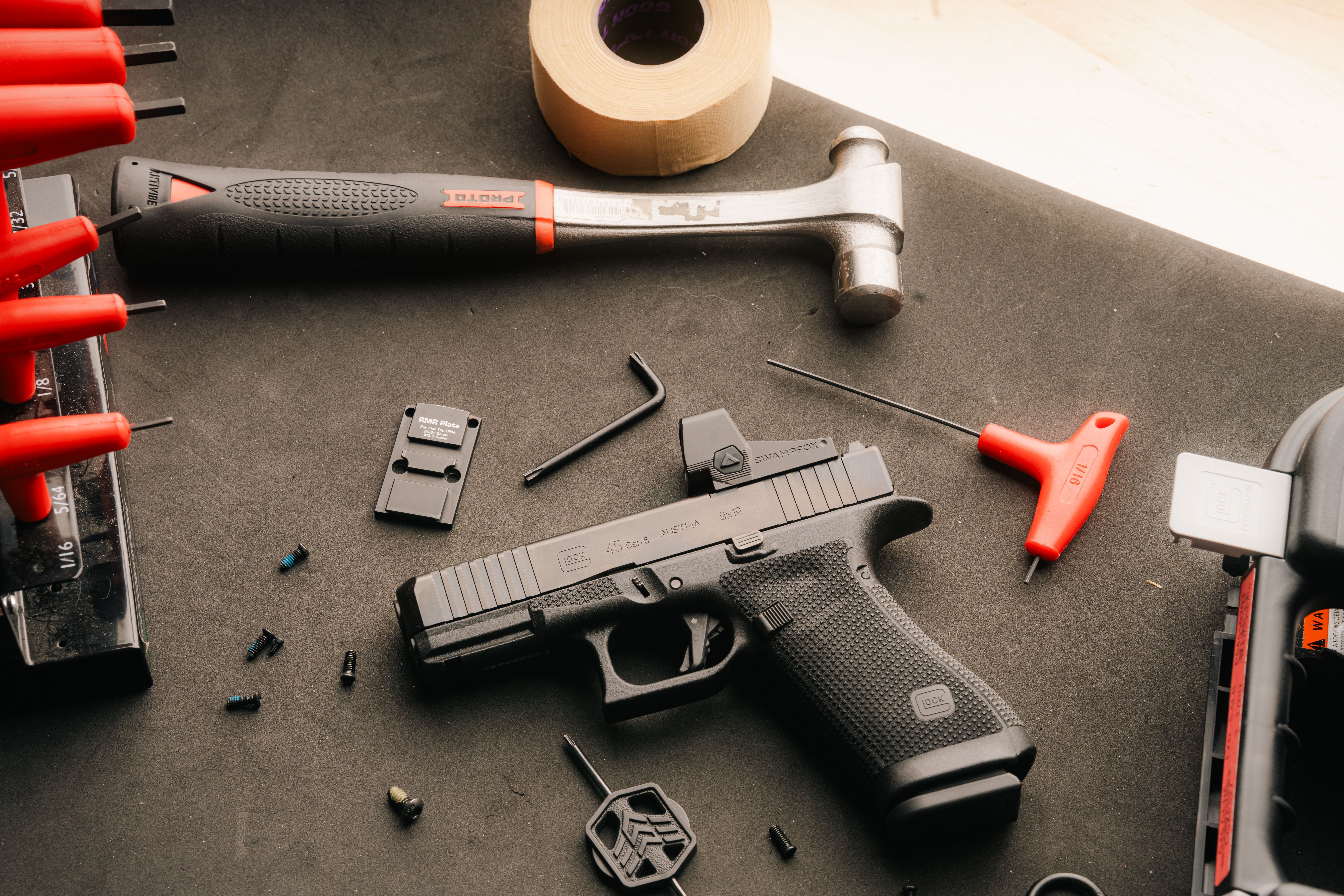
The financial barrier to CO entry is low compared to other divisions. A bone-stock Glock 34 MOS, Glock 17 MOS, Glock 45, or M&P 2.0 with a quality red dot and a couple of extended base pads will get you to Master class if you put the dry-fire reps in.
At the elite level, the meta favors heavy steel- or hybrid-framed guns (CZ Shadow 2 OR, Canik SFx Rival-S, Walther PDP Match, Sig P320 X5 Legion). The added weight dampens recoil and lets the dot return to the window faster between shots.
For the optic, prioritize window size and durability. A slide-mounted dot on a CO pistol absorbs accelerations near 5,000g every time the slide cycles. Cheap optics do not survive this. The Swampfox Justice II offers a 30mm window in the standard RMR footprint, which is the footprint cut into most approved CO guns.
The gear ceiling in Carry Optics is low. The skill ceiling is not. Plenty of GMs got to GM with a stock Glock and an aftermarket trigger shoe.
New to USPSA? Start with our breakdown of USPSA Divisions Explained for the full division-by-division comparison before you pick your lane.
Frequently Asked Questions
How Many Magazines Do You Need for a USPSA Carry Optics Match?
The short answer: six is comfortable, eight is ideal. A standard Level I club match runs four to six stages, each typically requiring one reload. A 32-round stage with one reload on the move means you need two loaded magazines per stage, plus your starting magazine. Six magazines covers most club matches with a spare. Eight covers a full Level II major without doing math at the loading table between stages.
The math gets tighter if you are running CO-legal extended base pads and loading to 23 or 24 rounds per magazine. Fewer rounds per tube means you may need to reload twice on long stages. Count your rounds for every stage during the walk-through. If a stage calls for 32 rounds and you are running 23-round magazines, you need two magazines to finish it. A third magazine on your belt is not optional at that point.
Most serious CO competitors travel to major matches with eight to ten magazines loaded and ready. It sounds excessive until a magazine fails the gauge check at chrono and you are suddenly working with one fewer in the lineup.
How Many Mag Pouches Do You Need for USPSA Carry Optics?
Three double-stack magazine pouches is the standard CO belt setup. That gives you six magazines accessible without a trip to the bag, which covers any stage you will encounter at a club match. Some competitors run four pouches at majors where stage round counts can push past 40 rounds. The magazine gauge limit means your pouches need to handle extended base pads without binding, so check fit before you show up.
Pouch orientation is personal preference, but most CO shooters run one or two forward-cant single pouches close to the holster and one or two double pouches behind them. Whatever setup you run, test it loaded with your actual match magazines. A pouch that runs clean with factory flush-base mags may stutter with an aluminum extended pad under pressure.
Is the Sig P320 RX Legal for USPSA Carry Optics?
It depends on which P320 RX variant you have and whether that exact model appears on the current USPSA Approved Production Handgun List. The base P320 family is well represented on the list, but USPSA lists specific models, not platform families. A P320 RX Full-Size may appear as a separate entry from the P320 X5 Legion or P320 Carry. Check USPSA.org directly before building a match setup around any specific variant.
The Romeo1 optic that ships with some RX configurations does not affect legality. The optic is a separate piece of equipment governed by Appendix D7's optic rules. If the base pistol is on the Production list, the factory-supplied optic is irrelevant to that question. You can swap it for any legal slide-mounted 1x optic and still be in compliance, provided the total assembled weight stays under 59 ounces.
Is the DVC Omni Legal for USPSA Carry Optics?
No. The DVC Omni is a 2011-platform pistol with a Single-Action Only trigger, and Appendix D7 explicitly prohibits SAO pistols from Carry Optics. The action type prohibition exists specifically to keep 1911 and 2011 platforms out of the division. There are no exceptions for NROI letters, specific configurations, or how the gun is serialized.
If you want to run a 2011 with a slide-mounted red dot in USPSA competition, Limited Optics is the correct division. LO was created in 2023 largely to give SAO-platform shooters a legal home, and it permits magwells and thumb rests that CO bans. The DVC Omni is well-suited to LO. It is simply in the wrong division if you try to run it in CO.
Can You Use a Carry Optics Setup in IDPA?
Yes. IDPA added a Carry Optics division in 2020. It allows slide-mounted red dot sights on IDPA-legal pistols, which aligns closely with the spirit of USPSA's CO division. The two rulesets are not identical, but a gun built for USPSA Carry Optics will generally meet IDPA CO requirements without significant modification.
There are a few key differences worth knowing before you show up to an IDPA match expecting an easy transfer. IDPA CO caps magazine capacity at 20 rounds, which is below what a well-built USPSA CO setup runs. IDPA's concealment requirement is also still present in some divisions, though CO-specific stages often waive it. IDPA also scores on a time-plus-penalty system rather than USPSA's hit-factor model, which rewards a different style of shooting.
Bottom line: your CO pistol and optic are legal for IDPA competition. Just read the IDPA rulebook before your first match rather than assuming the rules are the same. They are close. They are not identical.
What Happens If Your Ammo Fails the Chronograph in Carry Optics?
At a Level II or higher match, failing the chronograph means your scores for stages already shot are thrown out. You can continue shooting the match, but those stages score zero. At a Level I club match, chrono procedures vary, but most clubs follow the same structure. Failing is not a minor inconvenience. It wipes out the work you already did.
The 125 Power Factor floor gets more dangerous than it looks on paper. Power Factor is calculated as (bullet weight in grains × velocity in fps) / 1000. Temperature drops velocity. Higher altitudes drop velocity. A shorter barrel than you load-tested with drops velocity. A load that clears 125 PF on a warm afternoon at sea level may not clear it at elevation in October. Most experienced competitors load to a 130–135 PF working floor to absorb that variance. Chronographs at major matches are also not always identical to yours at home. Give yourself margin.
Can I Remove the Compensator from My Pistol and Run It in Carry Optics?
Removing a compensator does not automatically make a pistol legal for CO. The base gun still needs to appear on the USPSA Approved Production Handgun List. If the compensated variant is a different model entry than the non-compensated version, it may not qualify regardless of what you bolt off before the match. The same logic that applies to the factory magwell trap applies here: the list specifies models, not configurations.
This is a genuine gray area with some pistols. Certain factory-ported barrels are listed separately from standard barrels on the same frame. If you are not certain whether your specific gun qualifies once the compensator is removed, the right move is an NROI ruling request before you build a match rig around it. A rule interpretation you read on a forum is not binding at a match. An official NROI ruling is.
What Is the Best Gun for Getting Started in USPSA Carry Optics?
The Glock 17 MOS and Glock 34 MOS are the default answer for a reason. Both are on the Production list, both run the RMR footprint that most aftermarket slides and factory milling services target, parts are everywhere, and the aftermarket trigger ecosystem is mature enough that you can tune them well without custom gunsmith work. The Glock 45 is the same package in a slightly shorter slide, which some shooters find easier to draw from a concealment-position holster.
If budget is not a constraint and you want to skip a step in the upgrade path, the CZ Shadow 2 Optics Ready, Canik SFx Rival-S, and Walther PDP Match all ship with heavier frames that reduce felt recoil straight out of the box. The additional weight is a legitimate competitive advantage at the higher levels. For a first CO build, the extra cost is probably not the best investment. Buy a Glock, put a quality optic on it, and spend the remaining budget on ammunition and match fees.
For the optic, window size matters more than almost any other spec on a slide-mounted dot. The Swampfox Justice II runs a 30mm window in the RMR footprint, which is what most CO-legal guns are cut for. More window means a larger visible area to find the dot through recoil, which translates directly to faster splits on close targets. It will outlast your first season of slide cycling without issue.
Related Posts

Thinking about shooting your first match but intimidated by the rulebook? We remove the guesswork by breaking down the major USPSA divisions. Whether you are running a stock daily driver or a race-ready 2011, there is a division for you.

The Glock 19 and 17 MOS platform is built to handle full-size optics, but versatile doesn't mean simple. Liberty II, Justice II, or Kraken? The right answer depends entirely on what you're building and where it's going.

Making up only 10% of the U.S. population, left-handed shooters have limited options when it comes to carry handguns with ambidextrous controls.

A Colorado company, born on the 4th of July, 2018
Helpful Links

Join the Revolution
Join our e-mail newsletter for giveaways, hot deals, and Swampfox news.
©2026 Swampfox Optics. All rights reserved.
Designed and powered by WebriQ.