
Grandpa Sal | Private Salvatore Gallo
By Nic Lenze
04/27/2026

My grandfather, Salvatore J. Gallo wasn't the kind of man you'd expect to find on any list of heroes.
He was born in Palermo, Sicily, and raised in Brooklyn under circumstances that were anything but ordinary. Eventually, like so many other young men of the 1940s, he was sent to fight in World War II. These men came from everywhere. Farmers, lawyers, laborers, and even men who lived outside the boundaries of the law. Sal was one of those men. In war, these distinctions were as useful as an empty rifle. What mattered wasn't who you had been, but what you were willing to do for your country, and the fellow American at your side. He fought in North Africa, was sent behind enemy lines in Europe, and saw things most people never will. Like many who served, he carried those experiences with him for the rest of his life. This was proven by the mix of Sicilian and American curse words he muttered between snores. As is true for so many, his story doesn't fit neatly into the idea of a traditional war hero. He came home as something harder to define.
Brooklyn by Way of Palermo
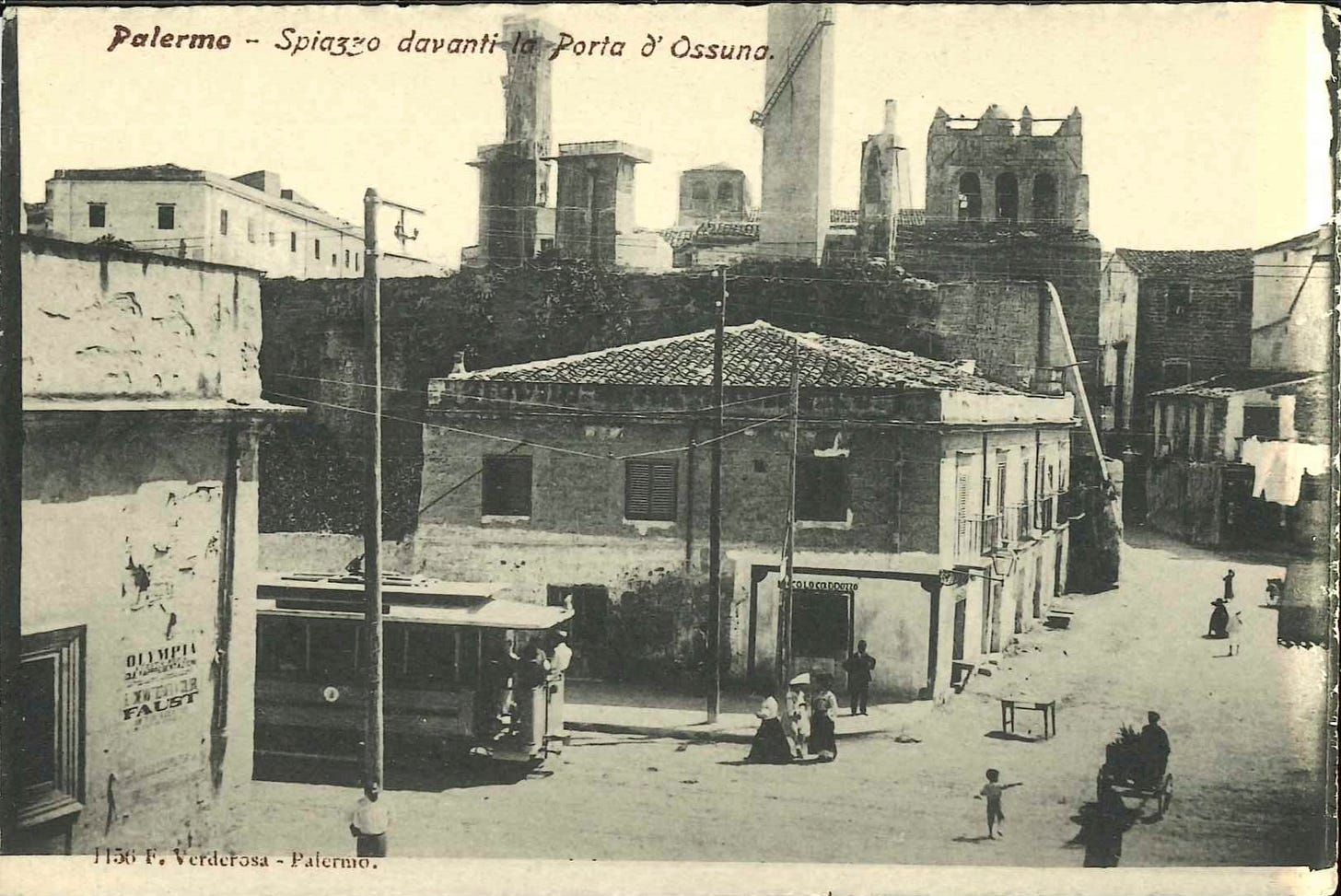
Salvatore J. Gallo's story began far from the battlefields he would one day see, on the western coast of Sicily. He was born into a world where opportunity was limited and rules were often rewritten out of necessity. His father, a counterfeiter, eventually secured passage to the United States, bringing his family to an Italian neighborhood in Brooklyn, and forging documents to keep them there.
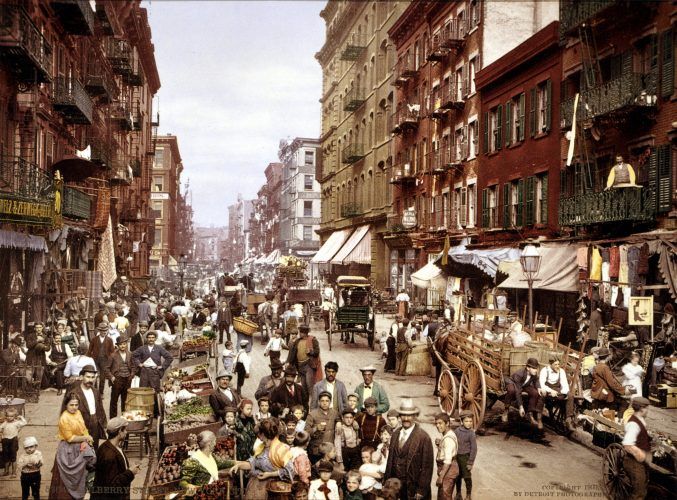
By the time the United States entered World War II, after the attack on Pearl Harbor in 1941, the U.S. military was looking for young and adaptable recruits.
Whether he enlisted or was drafted is unclear, but like millions of others, he was pulled into a system that moved quickly and demanded even more. Salvatore entered the service as a Private, and notably, was discharged as a Private. In an army where advancement was common for those who followed the rules, that detail says as much about the man as anything else. At some point during his service, he appears to have moved between roles or possibly even between branches—something that was not typical, but not unheard of during wartime. The military often reassigned men based on need, especially those who demonstrated a willingness to take risks or operate outside conventional boundaries.
What is clear is that he did not remain in a conventional role for long. He would soon find himself operating in environments where survival was less dependent on rank, and more on instinct.
April 29, 1945
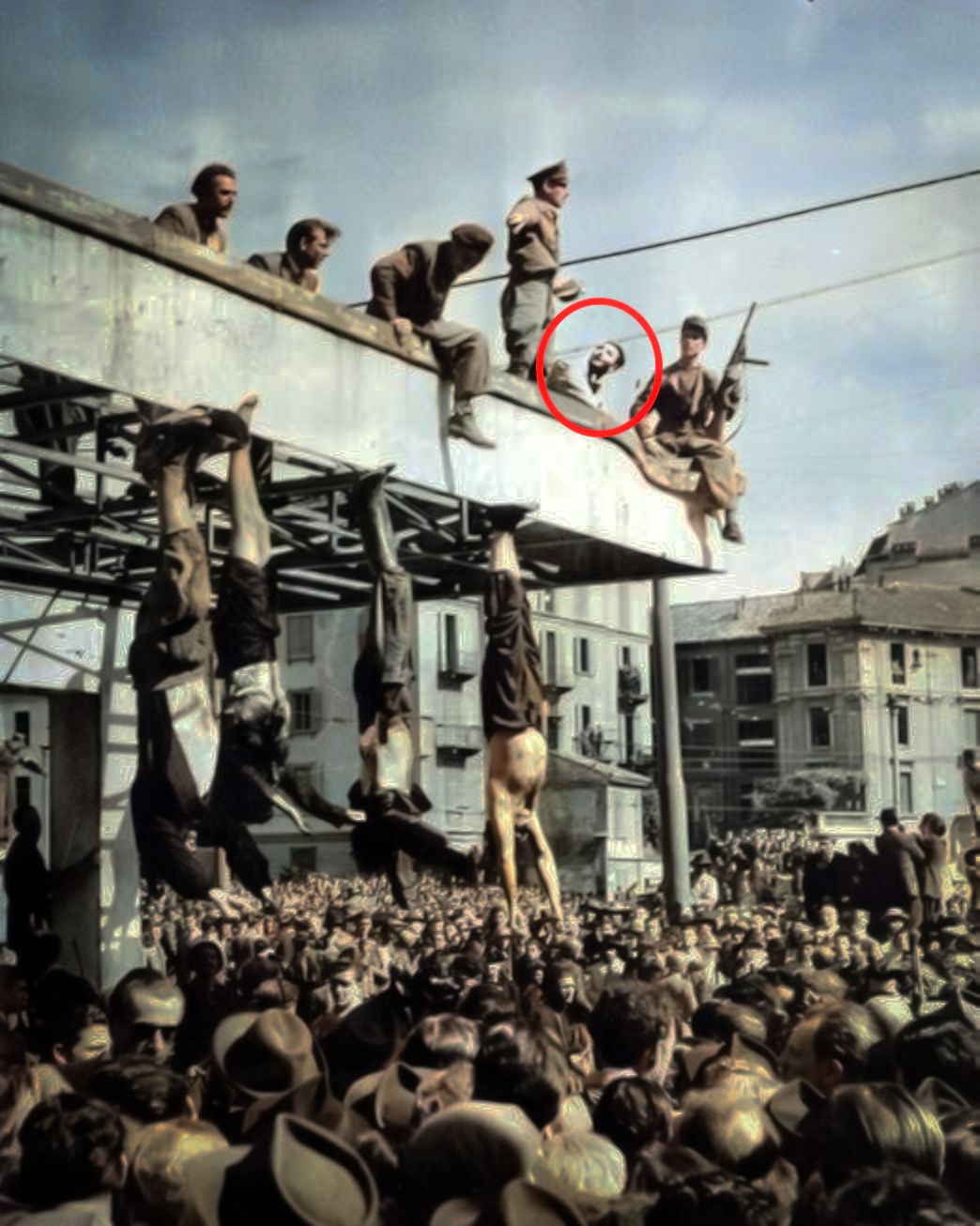
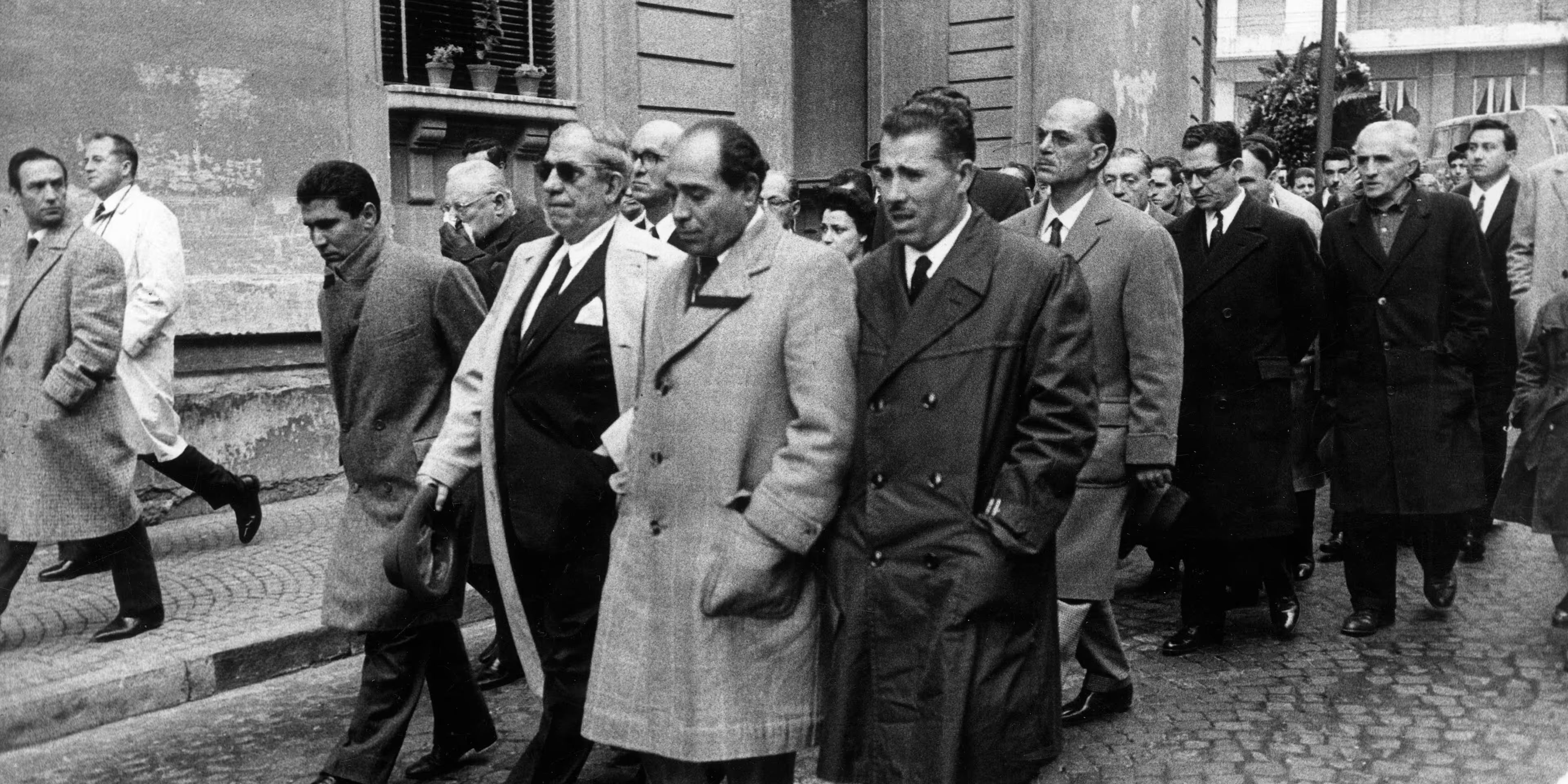
One of the most vivid moments of Private Gallo's wartime experience was the day Benito Mussolini was executed and publicly displayed in Milan's Piazzale Loreto on April 29, 1945.
The chaos of that day was unlike anything most soldiers ever saw. Mussolini, the Italian dictator, and his mistress were hung upside down in a public square, a grim spectacle meant to mark the end of fascist rule in Italy. Among the sea of soldiers, journalists, and heated Italians, Sal found himself in an unusual position. While in the rafters above the hanging, Salvatore pinned up the skirts of the women, ensuring that photographs could be taken.
War on Two Fronts
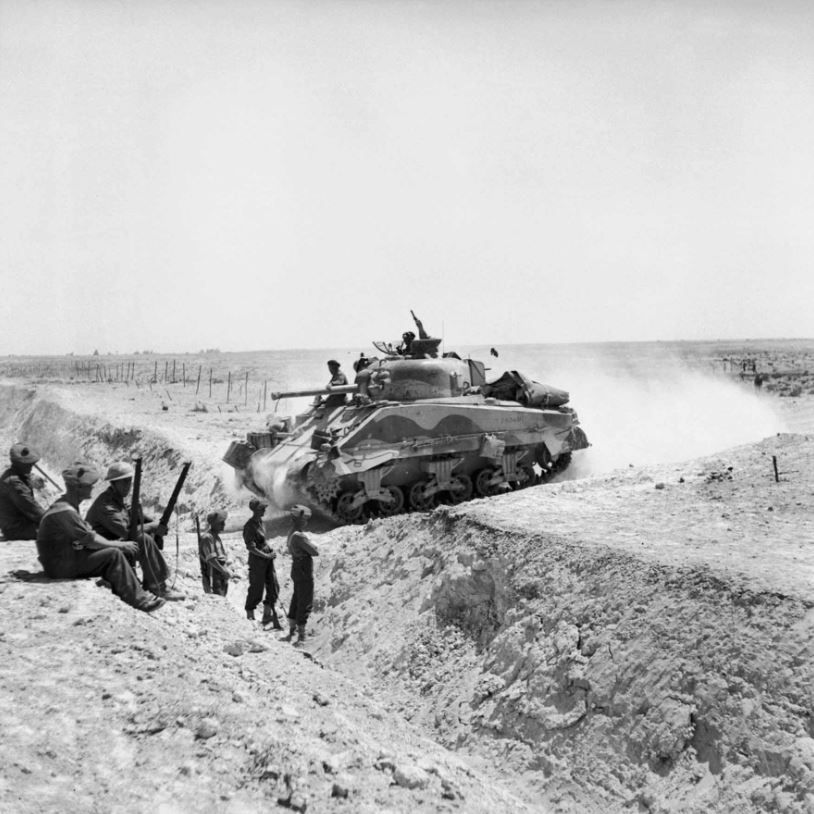
Before Milan, before Mussolini's fall, Salvatore J. Gallo's war began in the deserts of North Africa. It was there that he experienced the brutal realities of combat for the first time. As night cloaked the desert, a thief had been making off with essential rations. Until the night he ended up on the wrong side of an American rifle. Sal's first life had been taken, and there was no going back.
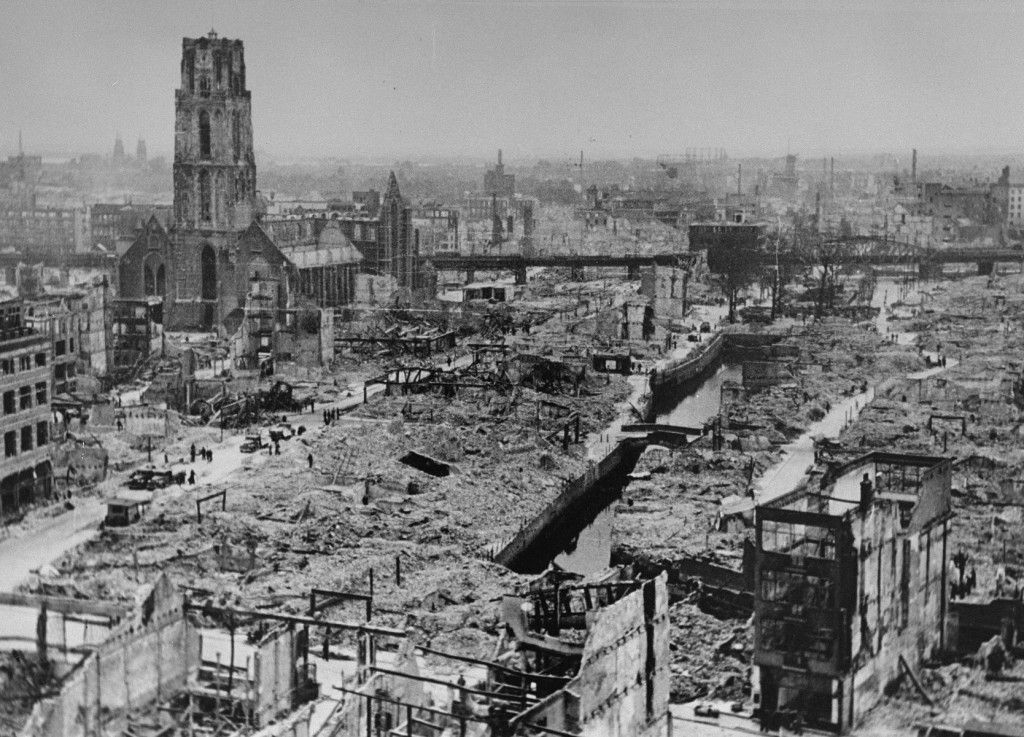
As the Allies pushed deeper into Europe, the nature of the war shifted. Salvatore, now hardened by North Africa, found his way into reconnaissance, and was sent to Europe. He was assigned to missions behind enemy lines, tasked with photographing enemy positions. More often than not, the men he dropped with did not make it to their extraction. On one occasion, he was chased by German troops. During the pursuit, Sal fell into an open manhole, where he would hide from the approaching soldiers. The sewer rats saw this as an opportunity, clawing and biting at him. Unable to move or scream, Sal was never able to stand rodents again, and had a real problem with his cat's "gifts".
The Boys They Sent to Fight
By 1944, Germany was conscripting boys, sometimes as young as 15 or 16. These soldiers were thrown into desperate battles as the Third Reich collapsed. For Sal and his fellow Americans the age and inexperience of these soldiers added a layer of moral complexity that was difficult to reconcile. These experiences shaped the man who would later be in the rafters during Mussolini's execution. He had seen the cost of war.
A Line He Wouldn't Cross
One of the defining moments of his time in Europe came not from combat, but from an act of humanity. While in Italy, Salvatore noticed that some prisoners of the Americans were starving. Seeing the amount of waste, he decided to take food from the trash and feed the prisoners. This landed him in some very hot water. To him, this was a humane gesture. To command, however, this was viewed through a lens of suspicion. He was detained, questioned, and officially reprimanded.
After the War
When the war ended, Salvatore returned to Brooklyn a changed man. The moral complexities of the battlefields had shaped him into someone tough, resourceful, and unafraid of risk. Back in New York, he applied those same survival instincts to a new kind of war; a job with the Gambino crime family. His crew would rob meat trucks and sell the goods through mob-run delis. Eventually, he moved out west to Las Vegas to acquire property for the family's interests. Then to California, where he ran out his days on San Diego beaches.
Hard to Label
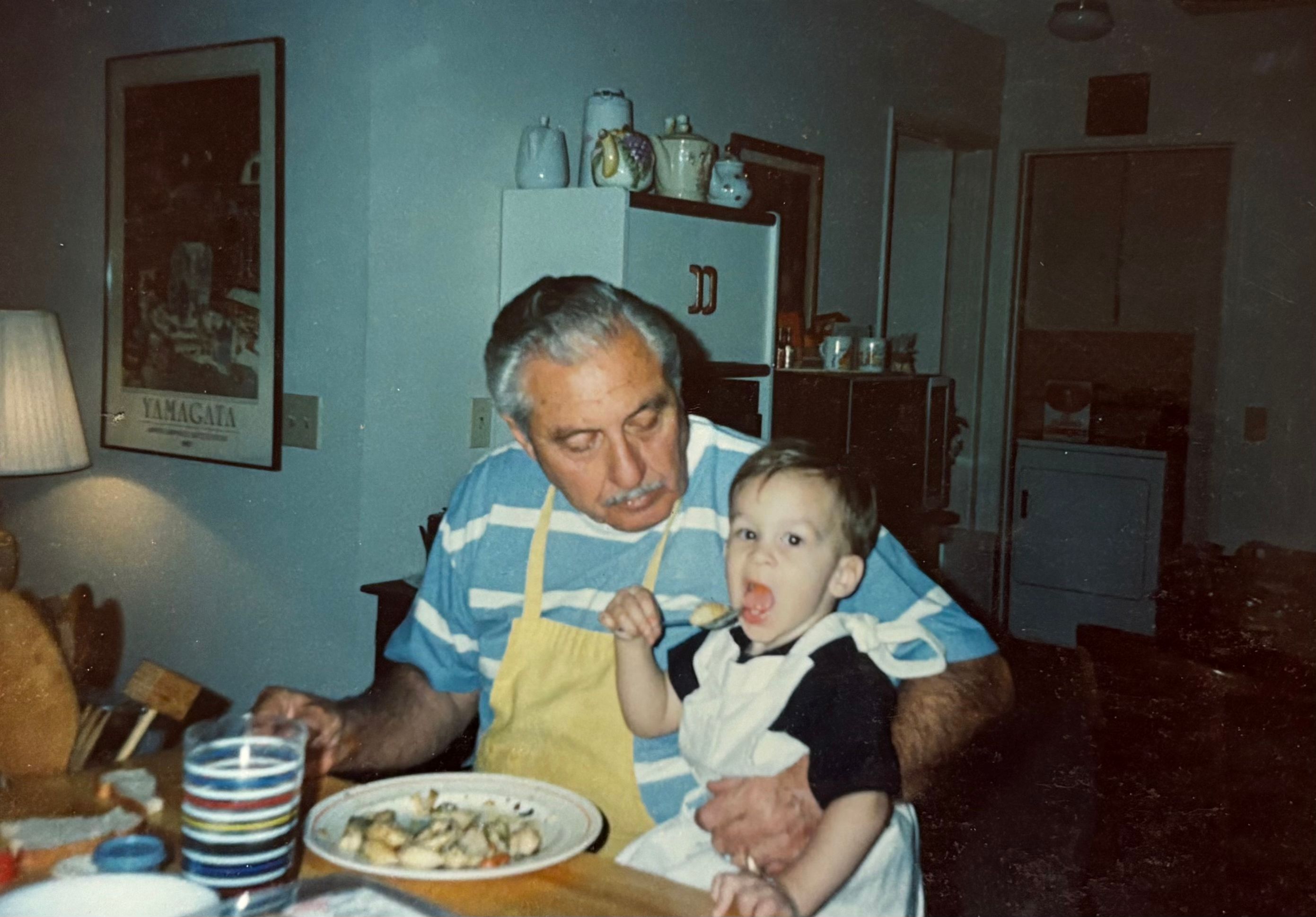
Sal lived into his eighties, passing away in the early 2000s from pancreatic cancer. His postwar life reminds us that heroism is not confined to acts of war. Some of the bravest acts of his life occurred in peacetime, in the choices he made to survive, provide, and ultimately reshape his own destiny.
Salvatore J. Gallo's story resists simple labels. He was a soldier, a survivor, and a man who bore witness to history. He was also a loving and caring man who lived a life of violence and sacrifice. What makes his story remarkable is not only his courage in the face of danger, but his compassion in the gray morality of war. In every era of his life, Salvatore embodied a courage as complex as it was inspiring to a young Italian American boy, AKA me. This story, while unique in its details, is common among our soldiers of past and present. These warriors are humans; people who leave behind lasting legacies, and it's these stories of courage that will inspire generations to reach for more.
Related Posts

James Megellas was lethal enough to sprint at a 45-ton Panther tank and kill it with two grenades. He earned the Distinguished Service Cross for running through mortar fire with a wounded man over his shoulder, firing a Thompson one-handed to suppress the enemy on the way out. He did it more than once. The most decorated officer in the history of the 82nd Airborne Division didn't lead from behind. He led from the front, in every battle, in every storm, carrying the men who couldn't carry themselves.

The StG 44 was the world's first true assault rifle. We break down how Hugo Schmeisser's intermediate cartridge concept changed infantry combat forever, and how its logic runs directly from WWII to the M4 carbine American soldiers carry today.

In a global war defined by millions of infantrymen, a single piece of precision glass could hold a frontline or doom a tank crew. Explore the history of World War II optics, the fatal flaws in American sniper doctrine, and how early scopes laid the groundwork for today's tactical battlefield.

A Colorado company, born on the 4th of July, 2018
Helpful Links

Join the Revolution
Join our e-mail newsletter for giveaways, hot deals, and Swampfox news.
©2026 Swampfox Optics. All rights reserved.
Designed and powered by WebriQ.