
Black Eyes and Brass Tubes: How WWI Forced America to Build Its First Sniper Optic
05/06/2026

When the United States declared war on Germany in April 1917, the U.S. Army had 127,000 men, no division structures, and no formal sniper doctrine. The Western Front had been a meat grinder for nearly three years. German marksmen were already paralyzing entire British battalions with daily attrition fire, and the men who would eventually wear American uniforms across No Man’s Land had nothing equivalent and no plan to build it.
This is how that gap closed under fire. Two flawed scopes. A metallurgical nightmare. A prismatic optic that punched the shooter in the face every trigger pull. And an Arkansas duck hunter who outshot all of it with iron sights.
The German Problem
The trenches had been a sniper’s killing field since the winter of 1914.
Germany had a deep national tradition of hunting and competitive marksmanship, an established commercial optics industry led by Zeiss, and the foresight to recognize the tactical value of precision shooting from the opening weeks of the war. When the Western Front froze into static lines, German commanders systematically requisitioned civilian hunting rifles fitted with quality scopes and put them in the hands of trained marksmen all along the line. Glass clarity, light transmission, and mechanical reliability put German snipers in a different league than anything the British or French could field in response.
The toll was constant and demoralizing. A single German sniper could pin down a battalion. Sentries died at observation slits. Officers died lighting cigarettes. The casualties were not strategic but they were daily, and the psychological weight of being hunted in your own trench was as effective at degrading combat power as any artillery barrage.
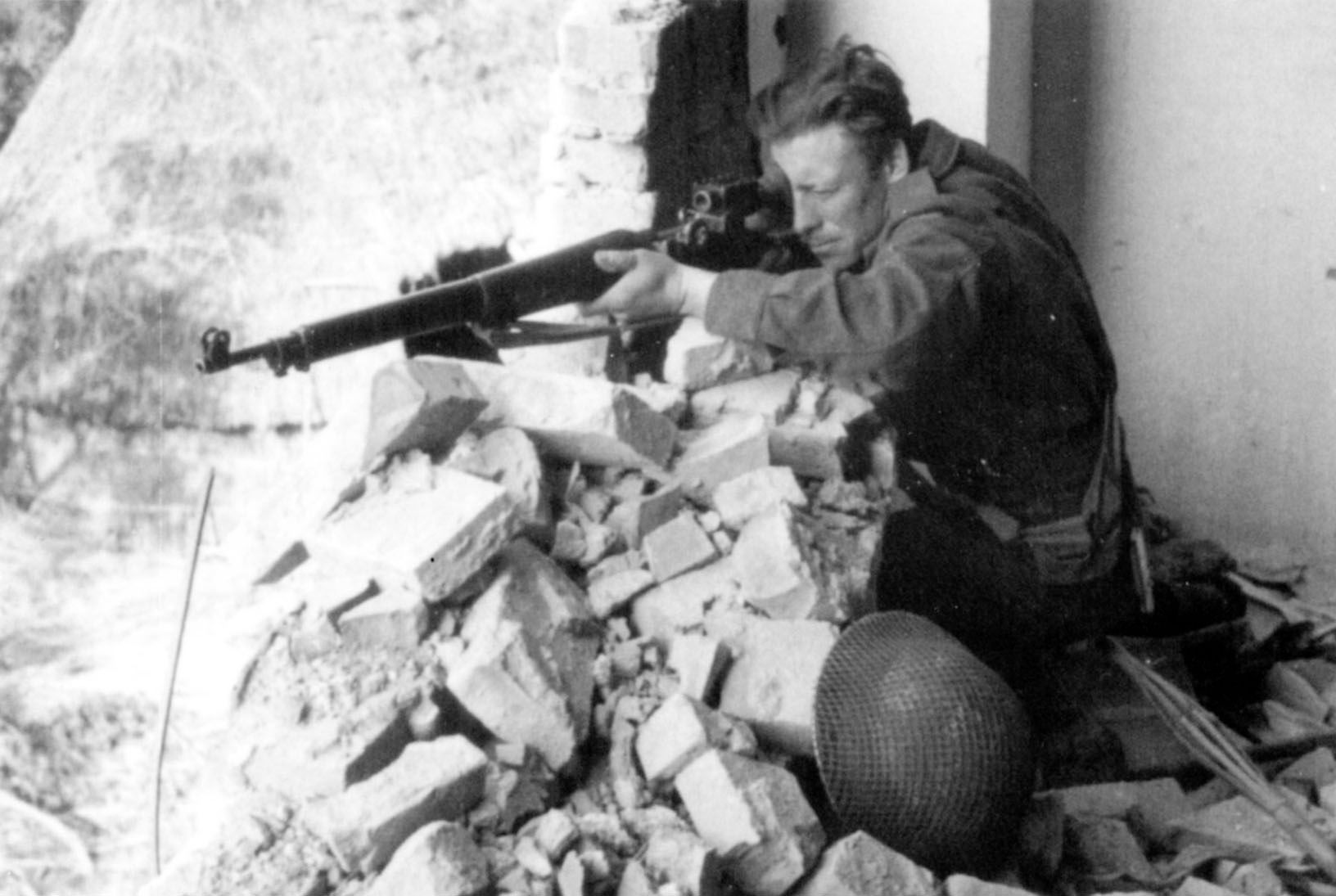
The British response came from Major H.V. Hesketh-Prichard, a big game hunter who established the British First Army School of Sniping, Observation, and Scouting in northern France. Hesketh-Prichard treated the sniper as more than a marksman. He built a doctrine around observer-sniper teams, frontline reconnaissance, and counter-sniping tactics designed to defeat the armored loophole plates German shooters used as cover. By 1916 the British had clawed back parity in No Man’s Land. By 1918, when American Marines and soldiers started arriving in numbers, his school was a working institution and the AEF began funneling its best shooters into it.
He found the Americans were exactly the right material. Many came out of the rural South, the hardwood swamps, the Appalachian hills, and the western frontier. They had hunted to eat. They understood ballistics, stalking, and patience instinctively. The doctrine could be taught. The instinct could not.
The Warner & Swasey Disaster
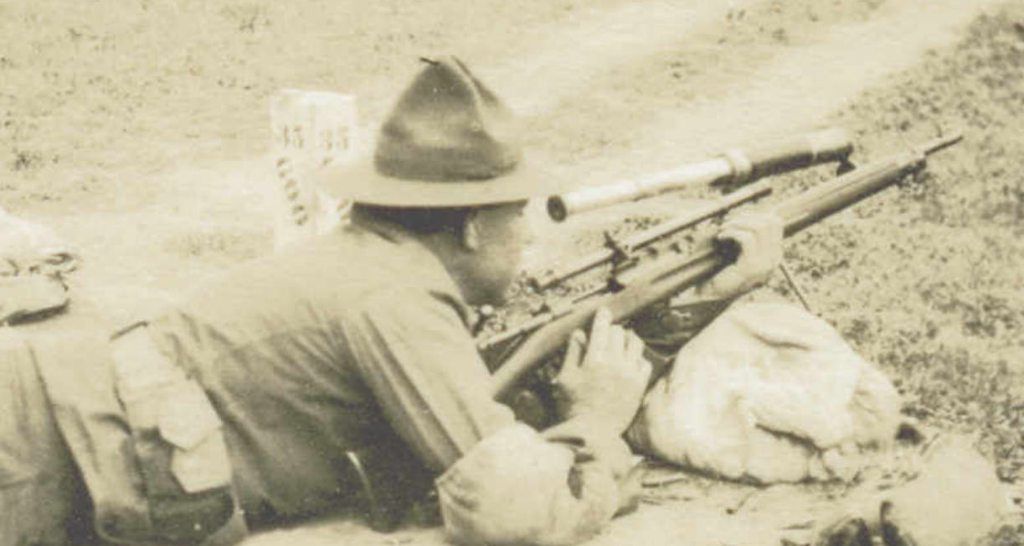
The first sniper optic America fielded in significant numbers was the Warner & Swasey Musket Sight, a prismatic telescope built primarily of brass and steel and weighing two and a quarter pounds. The U.S. Army’s table of organization called for 96 of them per infantry division, mounted to the M1903 Springfield via a heavy dovetail bracket fastened to the left side of the receiver with three screws.
The left-side mount was a deliberate decision. It allowed a Marine to load five-round stripper clips through the open top of the action and gave him access to the iron sights underneath the optic for close work. Both reasonable design priorities. The cost was that the scope sat off the bore line and forced the shooter into an asymmetrical, awkward firing position with no proper cheek weld. A bad cheek weld is a bad zero, and a bad zero at three hundred yards is no zero at all.
That was the best of the Warner & Swasey’s problems.
The eye relief was an inch and a half, with a rubber eyepiece designed to seal against the shooter’s face for a clear sight picture. When the rifle fired, recoil drove the optic into the orbital socket and created a literal vacuum that suctioned the eyepiece to the soldier’s face. The result was a severe black eye on virtually every trigger pull. Soldiers in the field cut holes in the rubber to break the seal. Some sliced the eyepiece off entirely.
The brass housing was unsealed. Internal moisture penetrated and fogged the prisms. The black enamel painted on the inside of the tube to kill stray light flaked off under vibration. Pieces settled on the lenses where the optic magnified them into floating black specks across the sight picture. Artillery concussion threw the prisms out of alignment. The mounting brackets loosened under recoil, and soldiers shimmed them with safety razor blades to hold zero. The official assessment from veterans was that the W&S was “better than no scopes at all,” which is the kind of damning praise you give a piece of equipment that hurts you almost as much as it helps.
About 5,730 Model 1913 W&S sights were procured. Roughly 1,530 saw actual combat. The rest arrived after the Armistice and were never issued. The optic was retired without ceremony and replaced with nothing.
The Winchester A5: Commercial Precision Goes to War
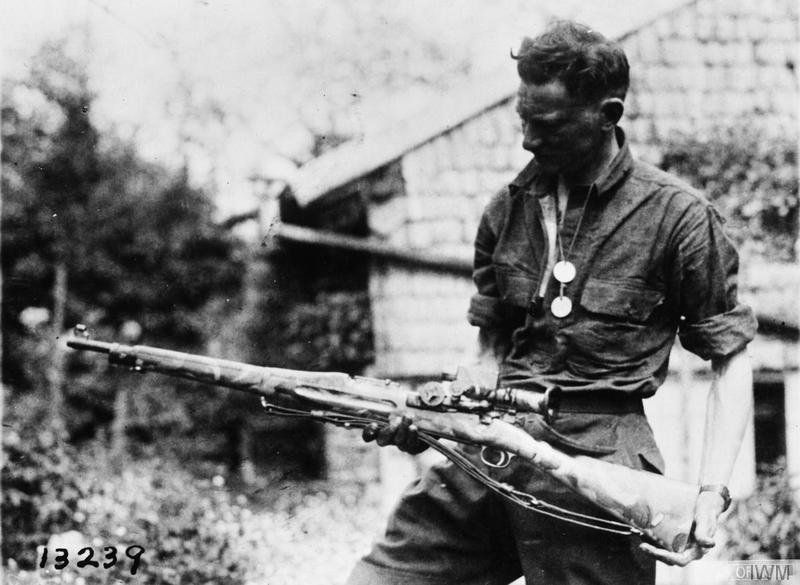
While the Army wrestled with the Warner & Swasey, the Marine Corps had quietly built a parallel sniper program around a commercial sporting scope. The Winchester A5 was introduced to the civilian market in 1910, designed using optical calculations from Professor Charles S. Hastings of Yale and patented in 1907. It was sleek, light, and built right.
Five-power magnification. Sixteen-inch tube. Tube diameter under three-quarters of an inch. Total weight ten ounces, less than a third of the Warner & Swasey. Eighteen-foot field of view at 100 yards. A fine cross-hair reticle. Critically, it mounted directly over the bore, which made a proper cheek weld possible and meant a Marine could shoot it without the rifle hitting him in the face.
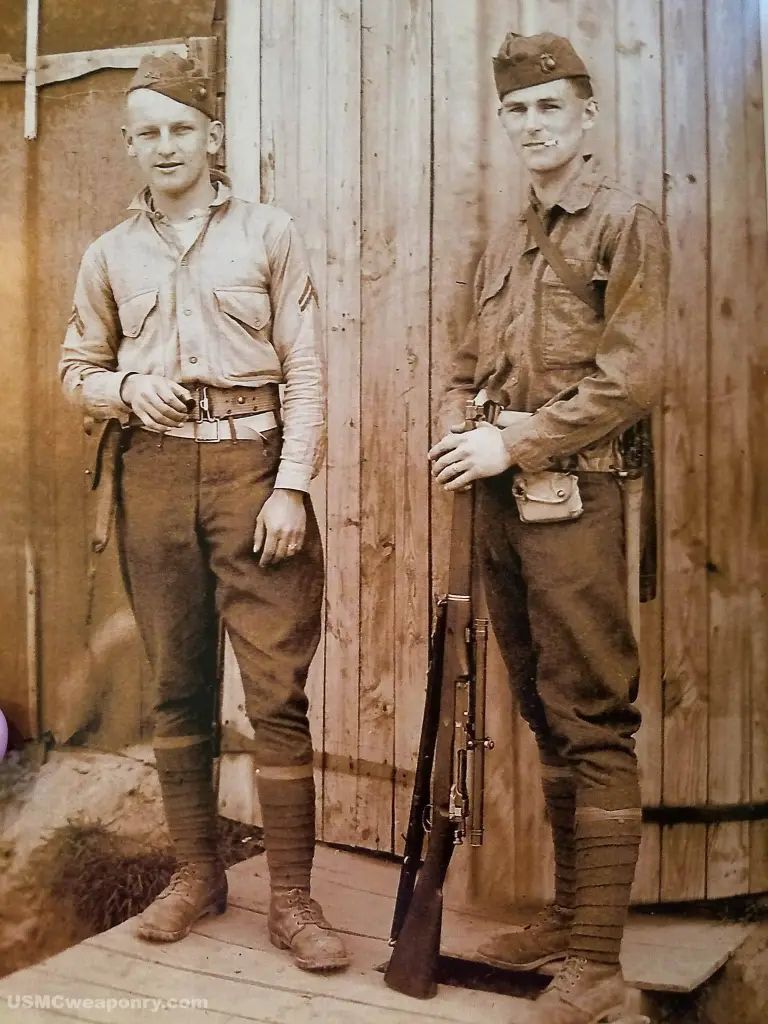
The Marine Corps bought roughly 500 commercial A5s in 1910 and put them on National Match M1903s for competitive shooting. When the country mobilized in 1917, those match rifles were pulled out of the armory and shipped to France as the primary USMC sniper arm. The A5 became the only rifle scope adopted unilaterally by British, Canadian, and American forces during the war.
The optic was the easy part.
The Metallurgy Problem
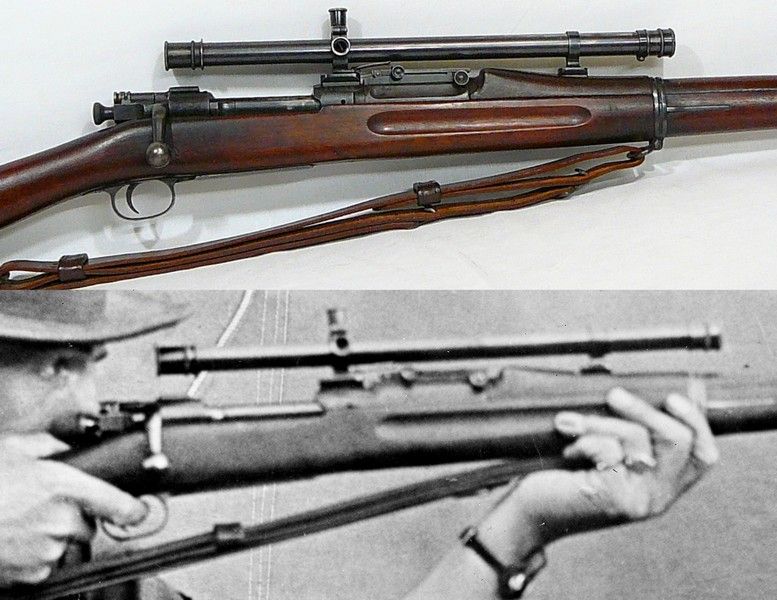
Mounting a commercial scope to a military service rifle in 1917 was not a matter of clamping it on. The M1903 Springfield receiver was case-hardened to withstand .30-06 chamber pressures, and the surface was so hard that period drill bits shattered on contact. To install scope bases, armorers used a technique called spot annealing. They applied a localized torch flame to specific points on the receiver to soften the steel just enough to drill it.
It worked, but it left visible discoloration on the rifle’s blued finish, and a torch held a few seconds too long could weaken the receiver enough to cause a catastrophic failure. The work demanded a skilled craftsman and could not be mass-produced. Every WWI Marine sniper rifle was effectively an artisanal weapon built one at a time.
The mounting hardware itself went through a rapid evolution that tells you exactly how much was being figured out under deadline pressure.
The earliest Army builds avoided drilling the case-hardened receiver entirely by mounting the rear scope block on the rifle’s existing rear sight base. That gave six inches of center spacing between the front and rear blocks. With external micrometer adjustments built into the mounts, six inches of spacing produced a click value of 0.6 inches at 100 yards. Coarse. Almost unusable for precision work.
Dr. Franklin Ware Mann and Adolph Niedner developed a tapered block system that used recoil to tighten the mount progressively with every shot. Niedner was contracted to build 150 of them for the Marine Corps in May 1917. Production ended abruptly when Niedner was investigated under suspicion of being a German saboteur, a fact that says more about wartime paranoia than about Niedner.
The definitive solution arrived in mid-1917 when Winchester developed a new mounting system that placed the rear block directly on top of the receiver ring. That moved the spacing out to 7.2 inches. At 7.2 inches between blocks, the math worked out to exactly 0.5 inches per click at 100 yards, which is half a minute of angle. A round number a sniper could actually use. The Marines called these the “Springfield Marine” bases. The Marine Corps received 500 rifles built on this system in 1917 and the Army ordered another 900 in 1918. When the USMC built its WWII sniper rifles around the 8-power Unertl, they copied the Springfield Marine base almost verbatim.
The 7.2-inch dimension is one of those quiet engineering decisions that nobody talks about and everybody downstream depends on.
Herman Davis and the Limits of the Optic
Here is the wrinkle in the WWI sniper story. The most famous American shots were not made through a scope at all.
Private Herman Davis was a 5-foot-3 hunting guide from the hardwood swamps of Manila, Arkansas, with a fourth-grade education. Before the war he made his living as a market hunter and outdoor guide on Big Lake, where his marksmanship was already locally legendary. The recruiting board initially rejected him as too old and too short. He was drafted anyway in March 1918 and went to France with Company I, 113th Infantry Regiment, 29th Division.
On October 10, 1918, during the Meuse-Argonne Offensive, Davis was advancing with his platoon through the woods near Molleville Farm when a concealed German machine gun opened on them. The platoon scattered to flank it. Davis went straight at it. He crawled to within fifty yards of the position, killed all four crewmen with his Springfield, and captured the gun. The next time his unit saw him he was carrying the captured weapon back like a yoke across his shoulders. The action earned him the Distinguished Service Cross, the French Croix de Guerre with Palm, the Croix de Guerre with Gilt Star, and the Médaille Militaire.
Davis did it with iron sights. The historical record is clear on this. He had been assigned as a sharpshooter once his officers saw what he could do with a rifle, but the available scopes were so scarce, so fragile, or so unwieldy in the mud that he never bothered with one. The standard-issue M1903 Springfield was enough.
General Pershing later named Davis fourth on his list of the top hundred American heroes of the war. Davis came home, never spoke about any of it, and kept his medals in a fishing tackle box. His friends and neighbors only learned what he had done when Pershing’s list was published. He died in January 1923 of tuberculosis, almost certainly worsened by his repeated exposure to poison gas in the Argonne. He was 35.
The lesson was not lost on anyone paying attention. The optic mattered. The man behind it mattered more.
The Model of 1918 and the End of the Line
By spring 1918, the Ordnance Department understood that both the Warner & Swasey and the Winchester A5 were stopgaps. They wanted a purpose-built American military sniper optic. Major L.O. Wright was tasked with developing one in coordination with Winchester. The plan was to mount it on the M1917 Enfield, whose concave bolt handle and side safety made it more scope-friendly than the M1903.
The Frankford Arsenal first attempted to reverse-engineer the German Goerz scope, which was widely admired across the lines. They could not produce a functioning prototype. Winchester was then tasked with adapting the commercial A5 into a militarized version designated the Model of 1918. Tens of thousands of units were ordered.
The optic shot itself apart in field testing. Internal lenses shattered under the M1917’s heavy recoil. Tubes deformed. Reticles collapsed. The procurement program was canceled. The Warner & Swasey and the A5 carried America to the Armistice with no successor.
The Quiet Inheritance
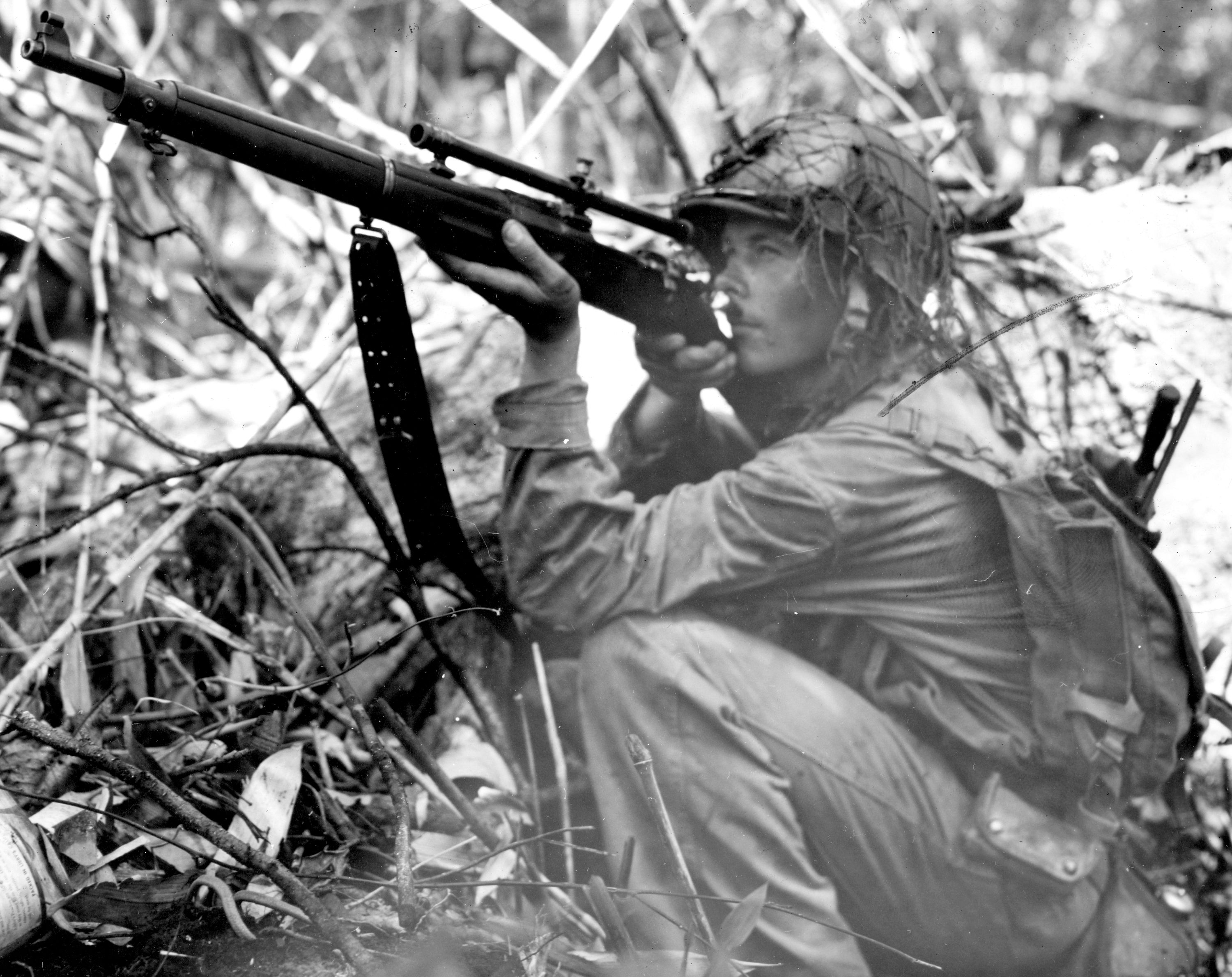
After the war ended, the U.S. Army stripped the Warner & Swasey sights off its rifles and scrapped the program. The institutional assumption was that sniping had been an artifact of trench warfare and would not be needed in future mobile conflicts. The Marine Corps disagreed and quietly kept its A5-equipped match rifles in inventory for competitive shooting through the 1920s and 1930s.
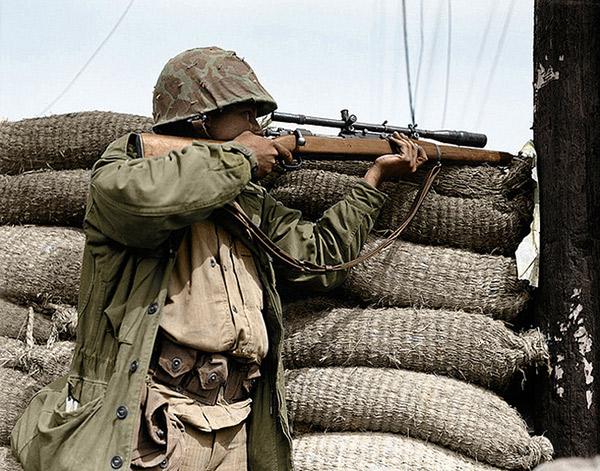
In 1928, Winchester sold its scope manufacturing line to the Lyman Gun Sight Corporation. Lyman engineers reviewed combat and competition feedback from the A5 and made three real improvements. They added achromatic lenses to eliminate the chromatic fringing at the edges of the sight picture. They machined a Pope-style rib along the underside of the tube to mate with a V-groove on the front mount, locking the scope against rotation while allowing it to slide forward smoothly under recoil. They replaced the fragile grasshopper spring with an internal spring-driven stud for more consistent adjustment tension. The refined optic was sold as the Lyman 5A. By 1940 the Marine Corps had roughly 887 of them.
Then Pearl Harbor happened, and the Marines had no current-generation sniper rifles. They pulled the M1903s with the Winchester A5s and Lyman 5As back out of inventory and shipped them to the Pacific. Those WWI-vintage optics saw extensive combat in the early island-hopping campaigns, including the jungles of Guadalcanal, before being replaced by the 8-power Unertl on the M40 platform that would carry the Corps into Korea and eventually toward Vietnam.
What WWI Left Behind
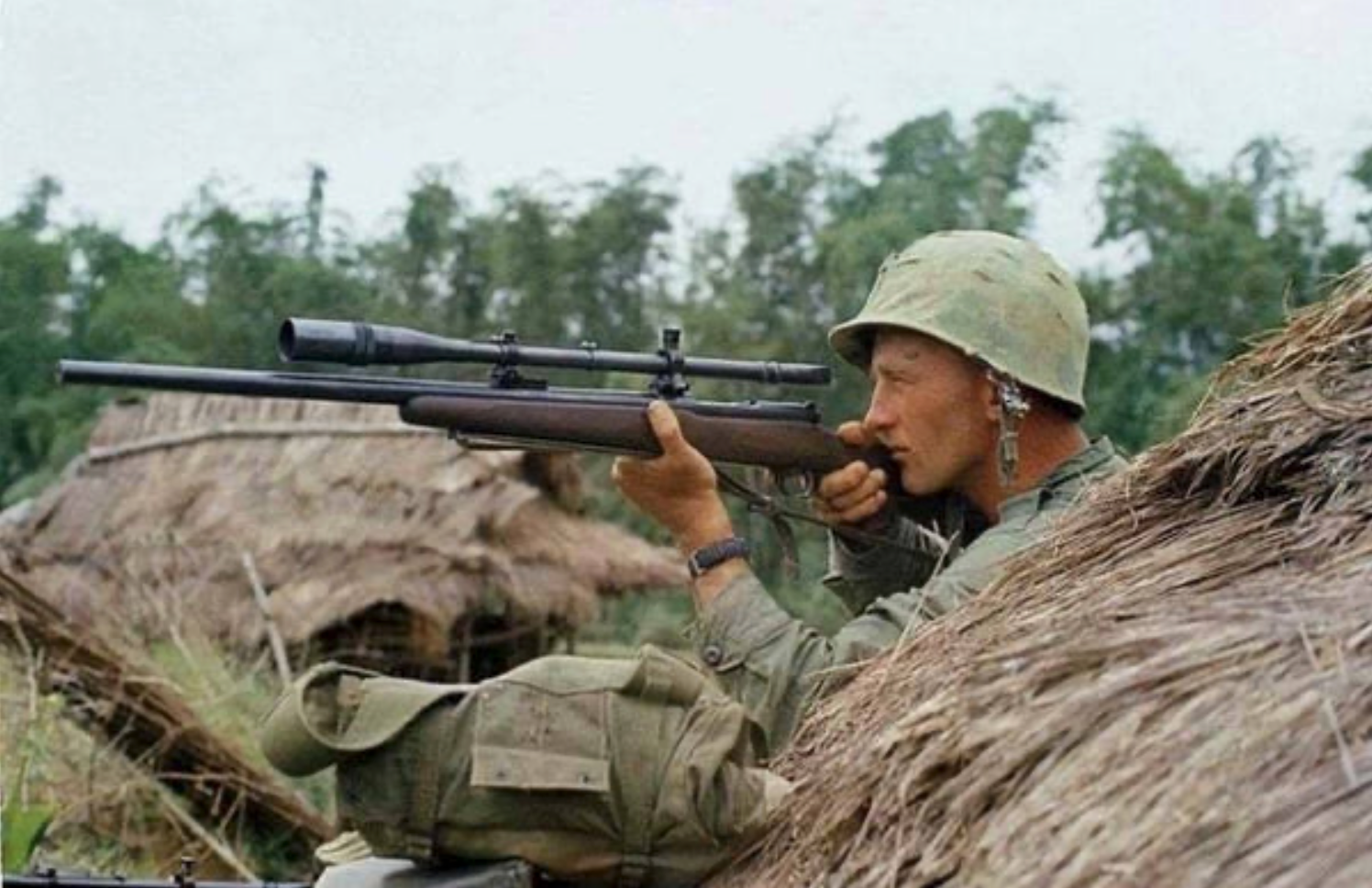
Today the Civilian Marksmanship Program runs Vintage Sniper Rifle Matches that explicitly authorize Winchester A5 and Lyman 5A optics under the rulebook, with two-man sniper-observer teams engaging targets at 300 and 600 yards. Hi-Lux Optics manufactures faithful exterior reproductions of the A5, the 5A, and the Unertl USMC scopes under the Wm. Malcolm brand, with modern multi-coated lenses and nitrogen-purged tubes hidden behind period-correct steel. The originals are too scarce and too fragile to compete with as they sit. The reproductions keep the experience alive.
What WWI left the rest of us is harder to put on a price tag.
An optic mounted off the bore line is a compromise the shooter pays for in accuracy and fatigue. The 7.2-inch mounting standard produces clean half-MOA click values, and that geometry carried straight into the WWII USMC sniper program. A scope that fogs, flakes, or comes loose under recoil is a scope that gets a man killed. None of those statements were obvious in 1917. Every one of them was paid for in the trenches.
A generation of American officers and ordnance engineers came home from France finally understanding that an optical sight is not a luxury accessory bolted onto a rifle. It is part of the rifle, and it has to survive what the rifle survives. Every sealed tube and locking turret on a modern scope carries some piece of that lesson, paid for by the Warner & Swasey black eyes and the Model of 1918 that shot itself apart on the test bench.
The men who fought with that gear deserved better than they got. The men who came after them got better in part because of what those soldiers reported back from the trenches.
Hard to Kill. Forever Free.
Related Posts

Every BDC reticle, every auto-gating Gen 3 night vision tube, every side focus knob exists because of decisions made under fire in a triple-canopy jungle half a century ago. Vietnam was not just a military conflict. For precision optics, it was the crucible.

In a global war defined by millions of infantrymen, a single piece of precision glass could hold a frontline or doom a tank crew. Explore the history of World War II optics, the fatal flaws in American sniper doctrine, and how early scopes laid the groundwork for today's tactical battlefield.

As America marks its Semiquincentennial, we honor the unbreakable spirit of the American Warrior, from Revolutionary War legends like Francis Marion to today's modern fighters. Join Swampfox as we launch a bold campaign through July 4th, featuring limited edition drops, untold stories, and the grit that forged a nation.

A Colorado company, born on the 4th of July, 2018
Helpful Links

Join the Revolution
Join our e-mail newsletter for giveaways, hot deals, and Swampfox news.
©2026 Swampfox Optics. All rights reserved.
Designed and powered by WebriQ.