
The Role of Optics in World War II
04/14/2026

The M1 Garand had no scope mount. That was not an oversight.
Patton called it the greatest battle implement ever devised, and he meant it as an iron-sight weapon built for mass infantry combat on a global scale. World War II put sixteen million Americans in uniform. Entire theaters measured in hundreds of miles. You don't equip that force with magnified optics. You train them to close distance and use what they have.
But that was not the whole story. In the same war where most firefights happened inside 300 meters with iron sights, a German sniper with a 4x Zeiss on a K98k was holding ground that infantry could not take. A Soviet woman with a 3.5x PU scope on a Mosin-Nagant was running a confirmed kill count that would make most modern snipers uncomfortable. And at 25,000 feet over the industrial heart of Germany, a single piece of optical glass was rewriting the doctrine of strategic warfare.
This is the story of optics in a war that didn't fully believe in them yet. And what that cost.
Iron Was King
World War II was fought at a scale that made universal optic deployment impossible. The terrain compressed engagement distances in ways the manuals did not anticipate. Hedgerow country in Normandy. Urban rubble in Stalingrad. Dense forest in the Ardennes. The Pacific added jungle and coral beaches. In most of those environments, a rifle scope was a liability. It added weight, restricted the field of view, and fogged in rain.
The dominant paradigm was volume of fire and maneuver. The M1 Garand was the right answer for that fight. Eight rounds of .30-06, semi-automatic, in the hands of millions of trained riflemen. The Germans had the K98k, a bolt gun, and they paid for it in rate of fire across the whole war. The Soviets issued the Mosin-Nagant in numbers so large the factories nearly collapsed under demand.
Iron sights served all of it. But on the margins, where precision mattered more than volume, the war exposed something the Army brass did not want to hear: they had entered the fight with the wrong glass, and in some cases, no glass at all.
The American Sniper Problem
The United States entered World War II without a formal sniper program. Field Manual 21-75 (1944) treated the sniper as a forward intelligence asset and an opportunity shooter, not a dedicated force multiplier. Engagement doctrine was left to individual company commanders. Kill verification was not systematized. The institutional knowledge of sniping the Army had briefly developed in World War I had been allowed to rot in peacetime.
The stopgap was the M1903A4 Springfield, officially adopted in January 1943. The Army needed a sniper rifle quickly, and the 1903 action was what they had.
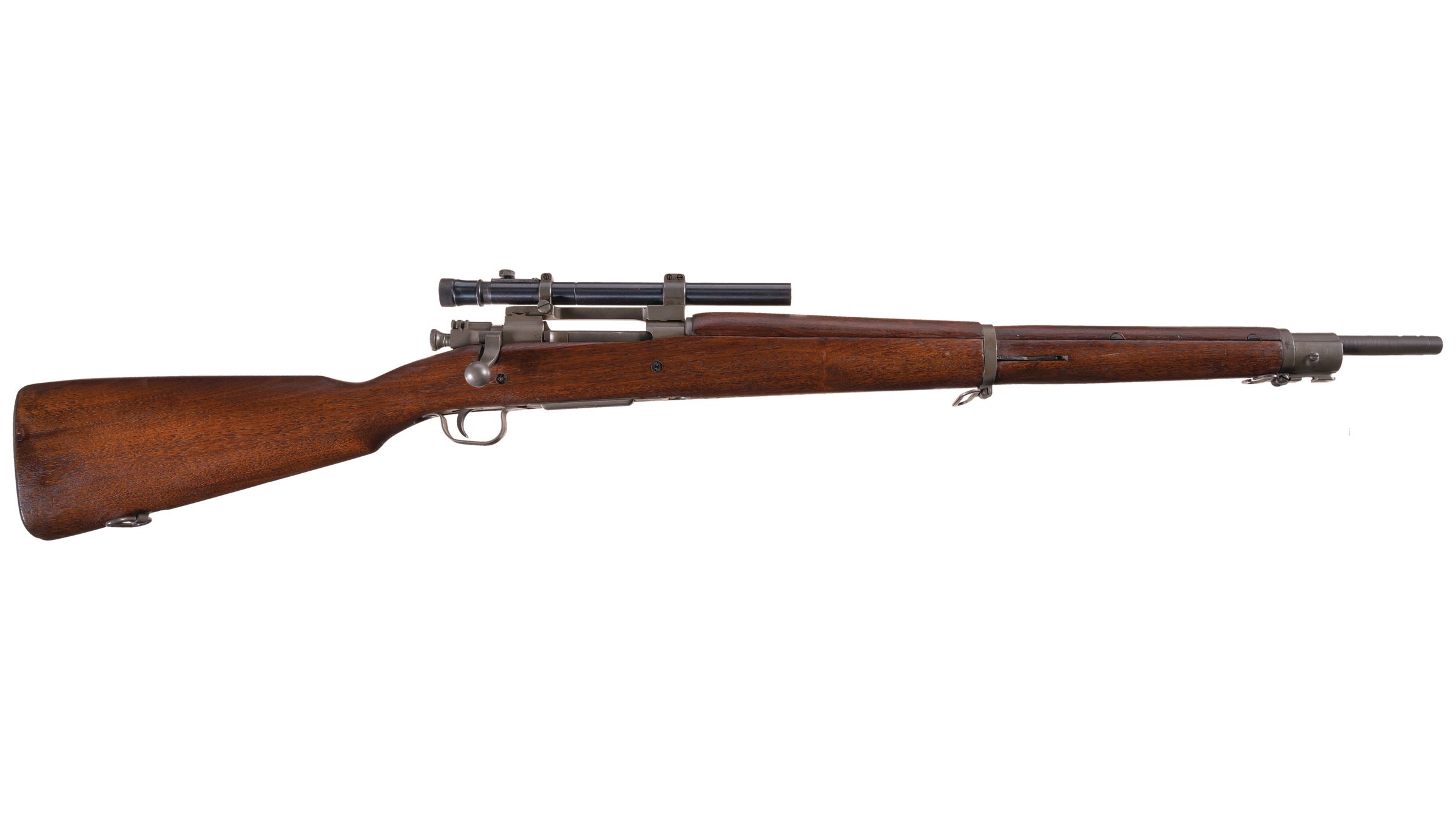
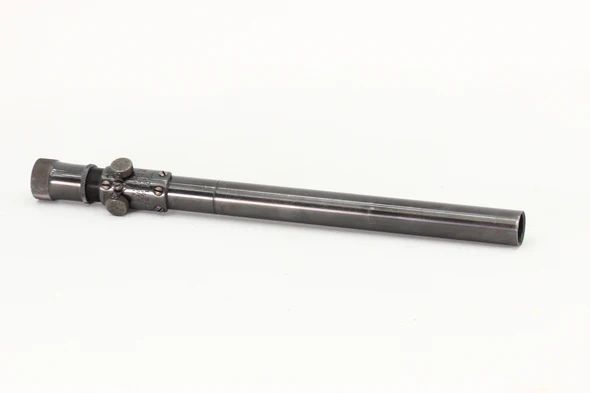
The scope issued with it was the Weaver 330C, designated the M73B1. It was a commercial hunting optic pulled from sporting goods stores because military-grade production could not meet demand. At 2.5x magnification with a 0.75-inch tube, it restricted light transmission severely. In the low-light conditions common to combat — dawn and dusk and heavy overcast — target acquisition was unreliable. The scope fogged internally under field conditions. The eye relief combined with the standard stock geometry meant snipers could not hold a consistent cheek weld. They were shooting with their neck craned at an angle that compounded parallax error.
The mount created a problem with no good solution. To fit the scope over the receiver, the Army removed the iron sights entirely from the A4 variant. If the optic took a hit, fogged beyond use, or lost zero from rough handling, the sniper was left with a rifle he could not aim. No backup. No fallback. Just a $500 stick.
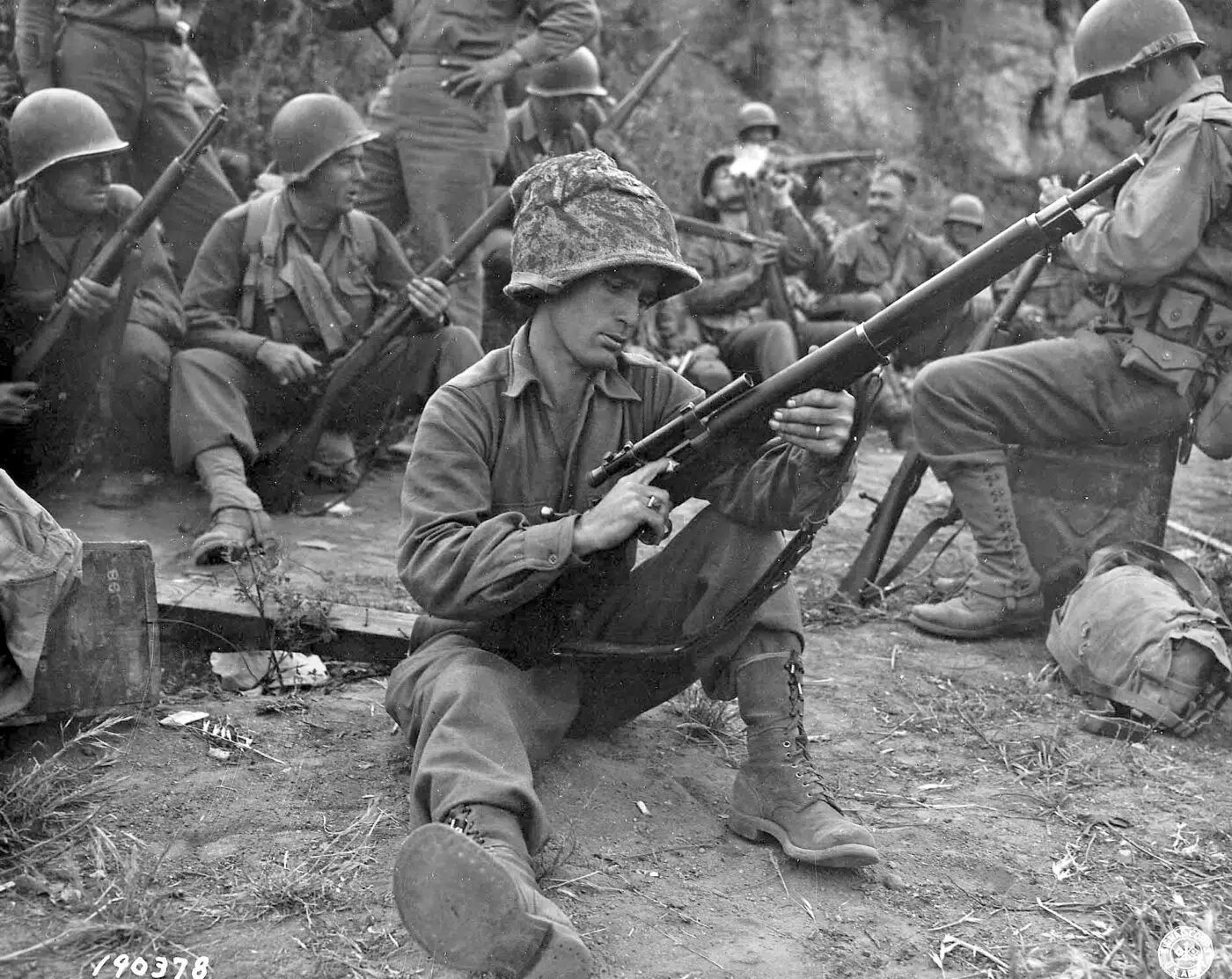
The M1C Garand sniper variant arrived in June 1944 with an offset left-side mount to accommodate the rifle's top-loading en-bloc clip system. The M81 and M82 scopes, both derived from the commercial Lyman Alaskan, offered 2.5x magnification with a wider field of view than the M73B1. The later M84 stepped back to 2.2x with a post-and-horizontal-wire reticle that field snipers criticized for obscuring a man-sized target past 500 yards. The offset mount introduced lateral parallax requiring windage hold-offs that varied by distance. Doctrine recommended zeroing at 200 to 300 yards and compensating manually beyond that.
Fewer than 8,000 M1C rifles were produced before Germany surrendered. Ordnance historians agree the platform saw virtually no documented combat use in the European Theater. The M1D, a simpler barrel-mounted variant designed for field assembly without a machine shop, did not see widespread issue until Korea.
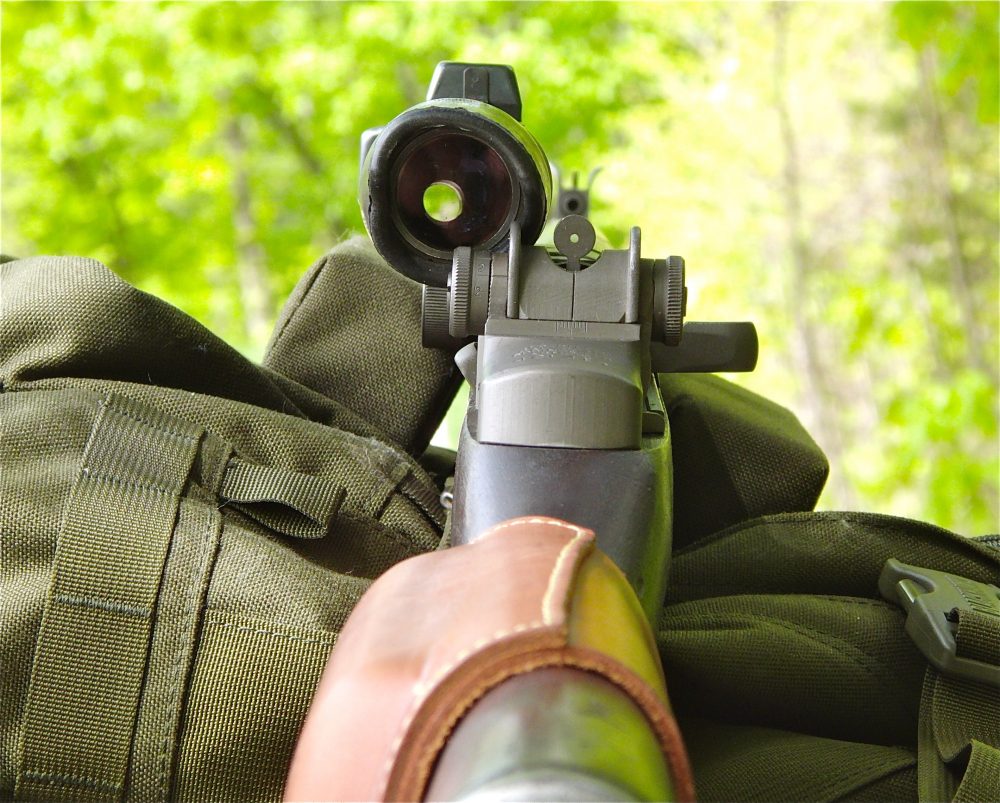
The statistical record from American WWII snipers is almost nonexistent. The U.S. military kept no centralized sniper logbooks and ran no formal kill-verification protocol. The program was real. The glass was inadequate. The doctrine was improvised. When the war ended, the Army disbanded what little institutional knowledge it had built.
Germany’s Optical Edge
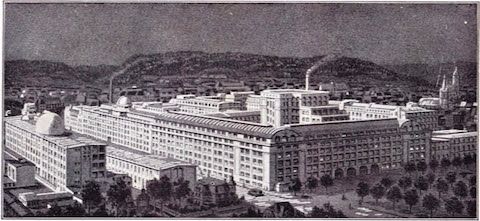
Germany entered the war with the world's finest optical manufacturing infrastructure and used it. Carl Zeiss in Jena, Ernst Leitz in Wetzlar, Hensoldt in Wetzlar. These were not wartime production shops. They were precision instrument makers with decades of scientific pedigree, built on the optical physics of Ernst Abbe and the glass chemistry of Otto Schott.
The contrast with American procurement was stark. The U.S. was buying hunting scopes from sporting goods stores. Germany was fielding glass built by craftsmen who had served multi-year apprenticeships and subjected every lens to multi-stage quality inspections. The clarity and light transmission of German optics were unmatched in the 1930s and 1940s. That advantage showed up in the field.
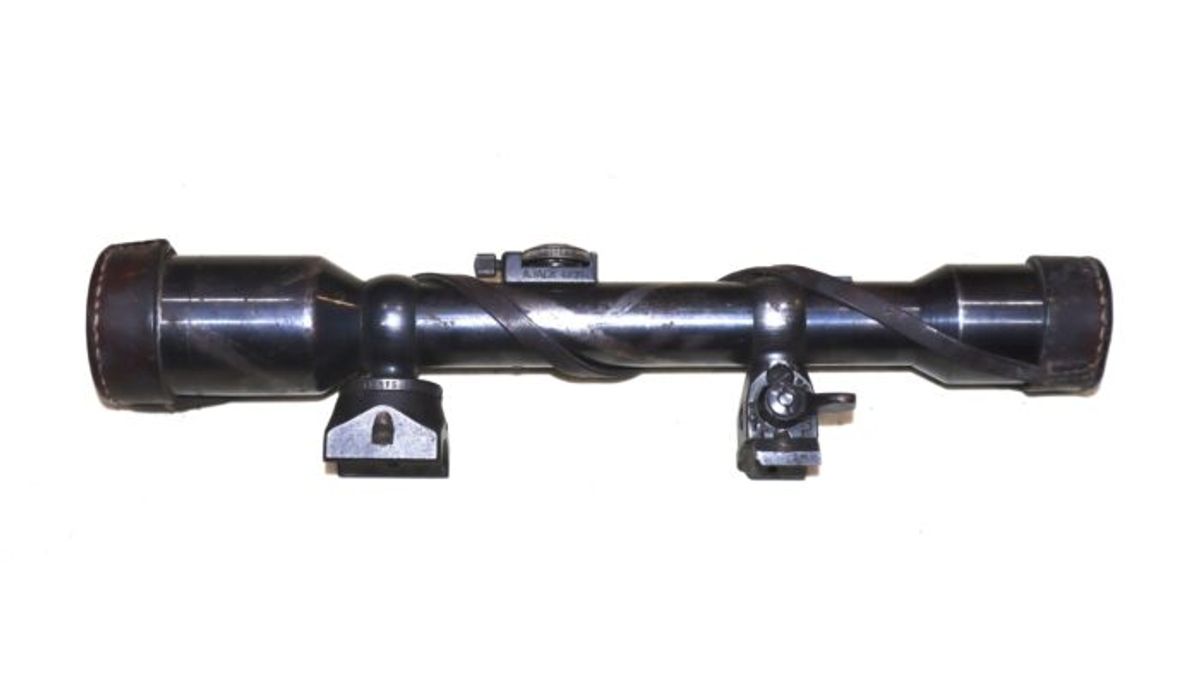
The most widely issued German rifle optic was the ZF41. Over 100,000 were produced. What the ZF41 was is often misread: it was not a sniper scope. It was a designated marksman optic, intended to improve the accuracy of the average infantryman at moderate range. Mounted on a rail machined into the rear sight base of the K98k, it delivered 1.5x magnification and required an eye relief of approximately 220 millimeters because the scope sat far forward on the rifle.
German snipers despised it. The 1.5x was useless past 300 meters. The forward mounting produced a tiny exit pupil and poor light-gathering in anything less than direct sunlight. Elite German sniper schools rejected the ZF41 outright. Some front-line troops discarded them and re-armed with captured Soviet Mosin-Nagants fitted with PU scopes. The enemy's glass was better.
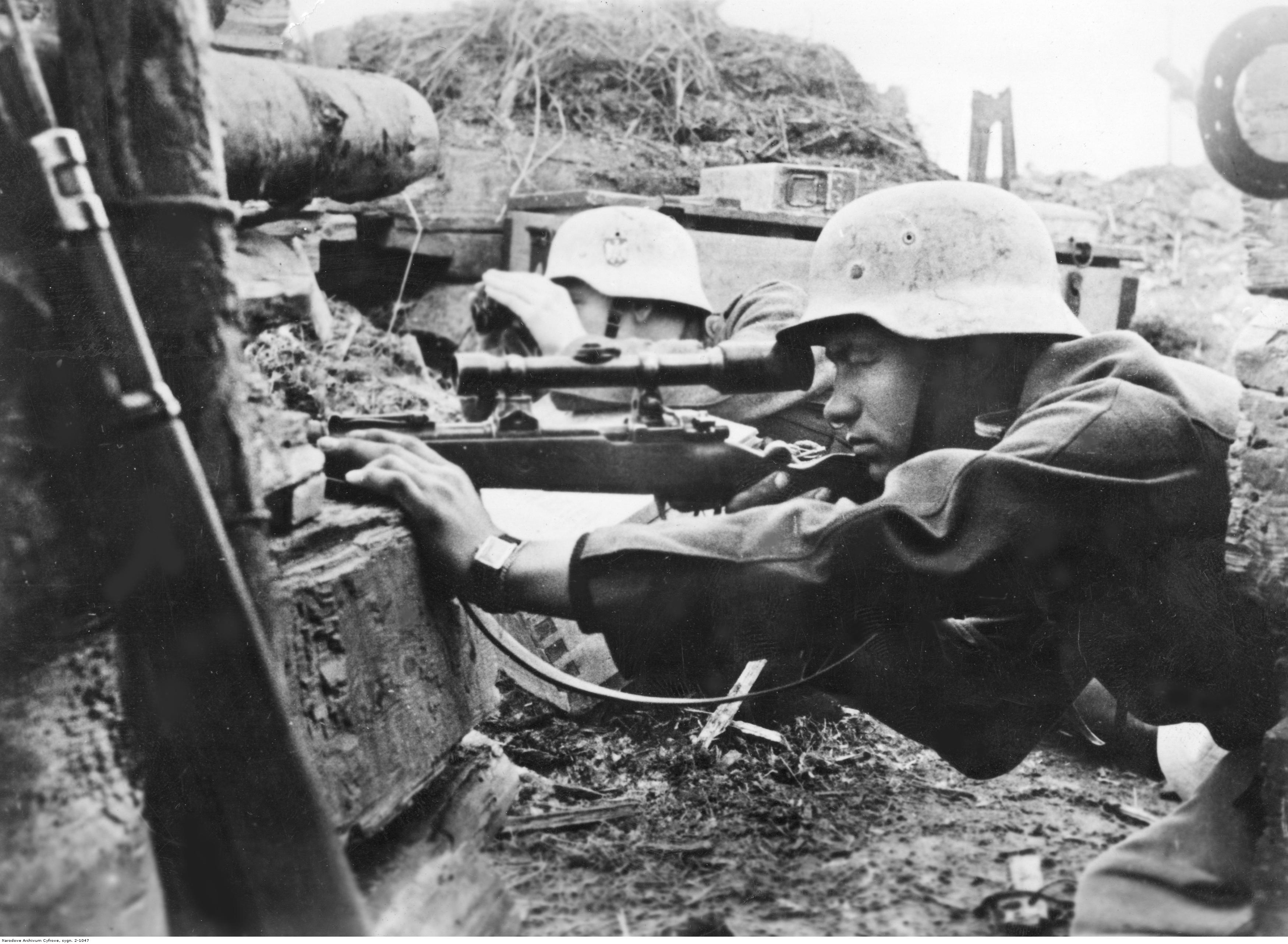
Real German snipers ran the K98k with the Zeiss Zielvier, designated the ZF39. Four power magnification. The rifle itself was hand-selected from factory production for exceptional bore tolerances before it was ever paired with an optic. A sniper K98k was not a standard infantry rifle with a scope bolted on. It was a different category of weapon from the start.
The results are in the record. Matthias Hetzenauer finished the war with 345 confirmed kills. Sepp Allerberger had 257. Both operated primarily on the Eastern Front. Their after-action accounts show the ZF39 combination was delivering consistent head and chest shots at 400 meters and effective hits on a standing man at 600 to 800 meters.
German sniper doctrine reinforced the glass advantage. The training maxim that separated elite German snipers from every other force in the field: “Survival is ten times camouflage and one time firing.” They worked in two-man shooter-observer teams, studied terrain, and did not rush shots. When the ZF39 was unavailable, the Wehrmacht ran the Jagerspende program — a national appeal for civilian hunters to donate Kahles, Ajack, and Hensoldt commercial optics for military conversion. They collected precision glass the way other armies collected rifles.
Late in the war, Germany introduced the ZF4, a simplified 4x scope built for mass production, primarily issued with the semi-automatic Gewehr 43. The G43 was never as accurate as the bolt-action K98k, and the rifle's violent cycling limited what even good glass could do. The ZF4 was a production compromise. The ZF39 on a hand-selected K98k remained the standard.
The Soviet Sniper Culture
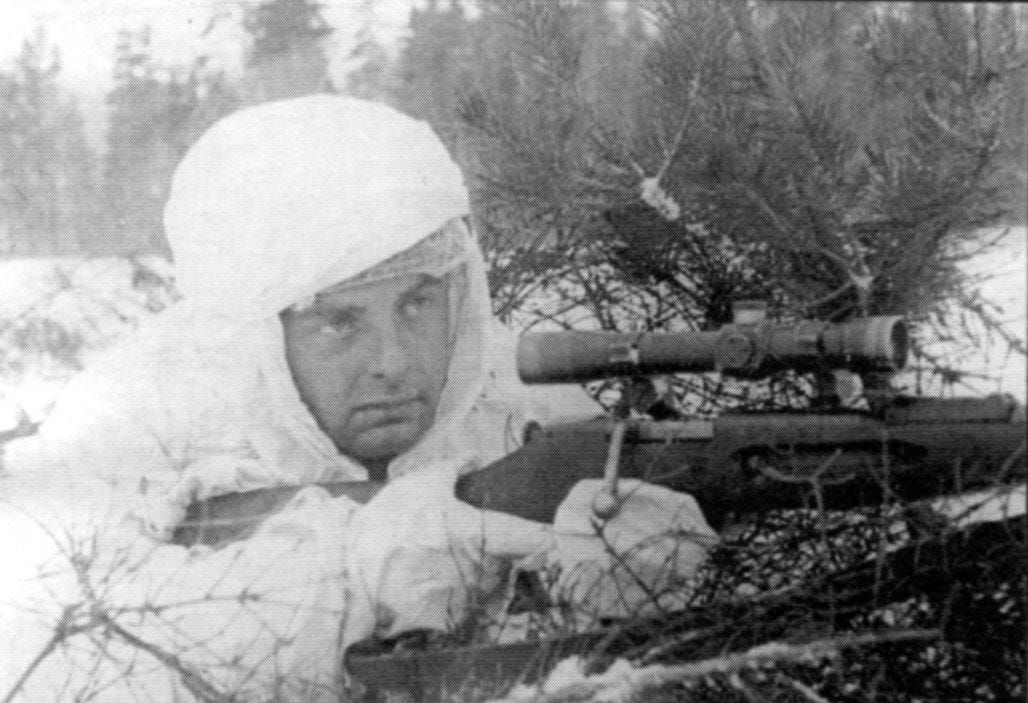
The Soviet Union was the only major power that entered World War II with sniping fully built into doctrine. The Osoaviakhim, a state-sponsored civilian marksmanship society, had been training shooters since the 1920s. When Germany invaded in June 1941, the Red Army had a reservoir of pre-trained riflemen to draw from immediately. Over the course of the war, the USSR trained 400,000 snipers and integrated them down to the platoon level.
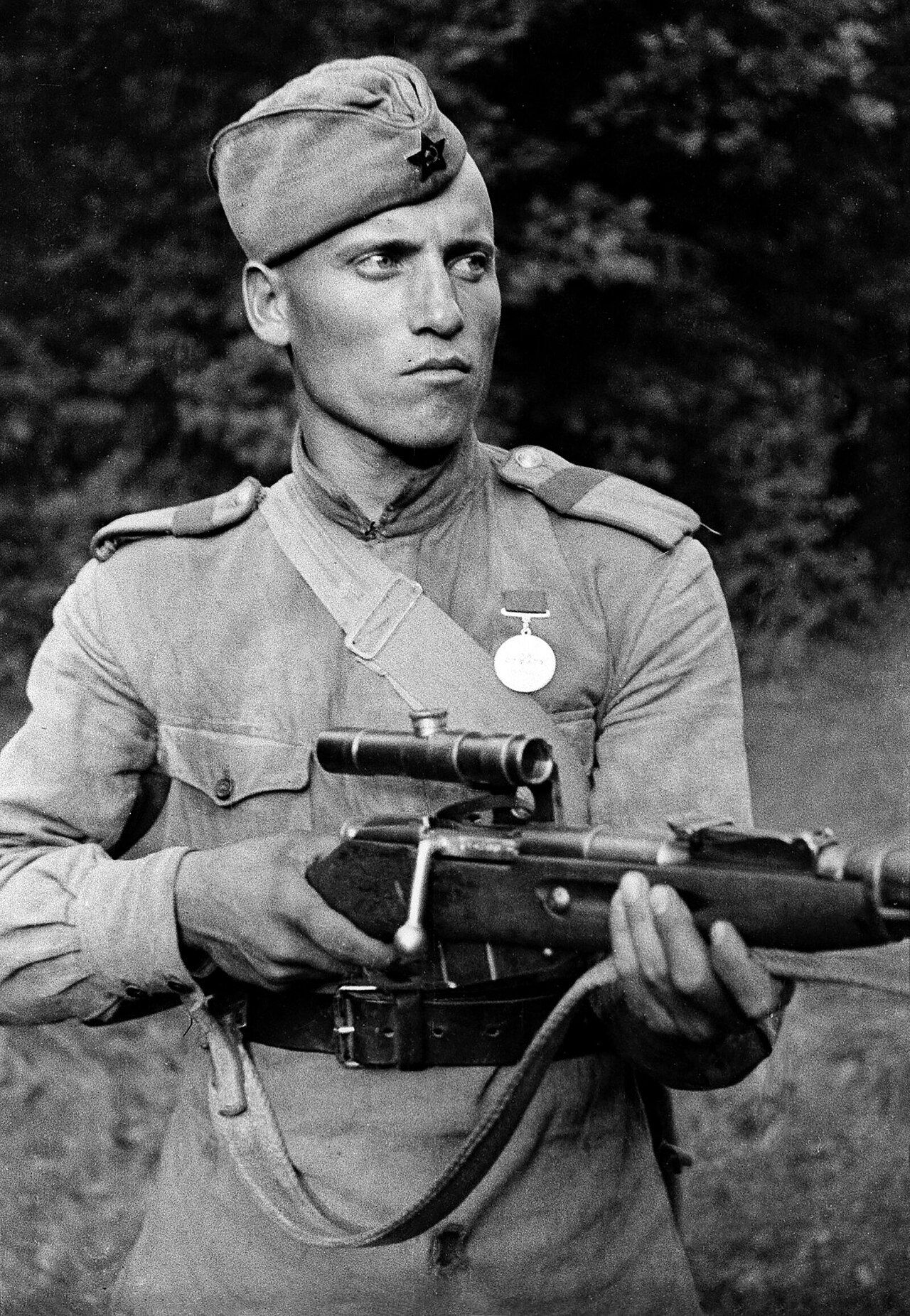
The optic they used was the PU scope. Adopted in 1940 and adapted for the Mosin-Nagant 91/30 bolt-action in 1942, the PU was 3.5x magnification in a blued steel tube weighing 9.5 ounces. Short, rugged, and stripped of unnecessary complexity. No fragile focal adjustment rings. No external moving parts to snap off in the field. The Soviets had initially fielded the PE and PEM scopes at 4x, based heavily on prewar German Zeiss designs, but those proved too expensive and complex to produce at Eastern Front scale. The PU solved that problem: simpler, cheaper, and tough enough to survive Russian winters.
The mounting system was the detail that separated the PU from everything the Americans were fielding. Side-rail mount, leaving the Mosin-Nagant's receiver entirely clear. The Soviet sniper could reload using standard 5-round stripper clips without removing the scope. The iron sights stayed fully accessible for close-quarters emergencies. In the brutal, fluid combat of Stalingrad and Leningrad, where ranges could shift from 600 meters to hand-to-hand in the same hour, that dual-sighting capability was not a convenience. It was a survival tool.
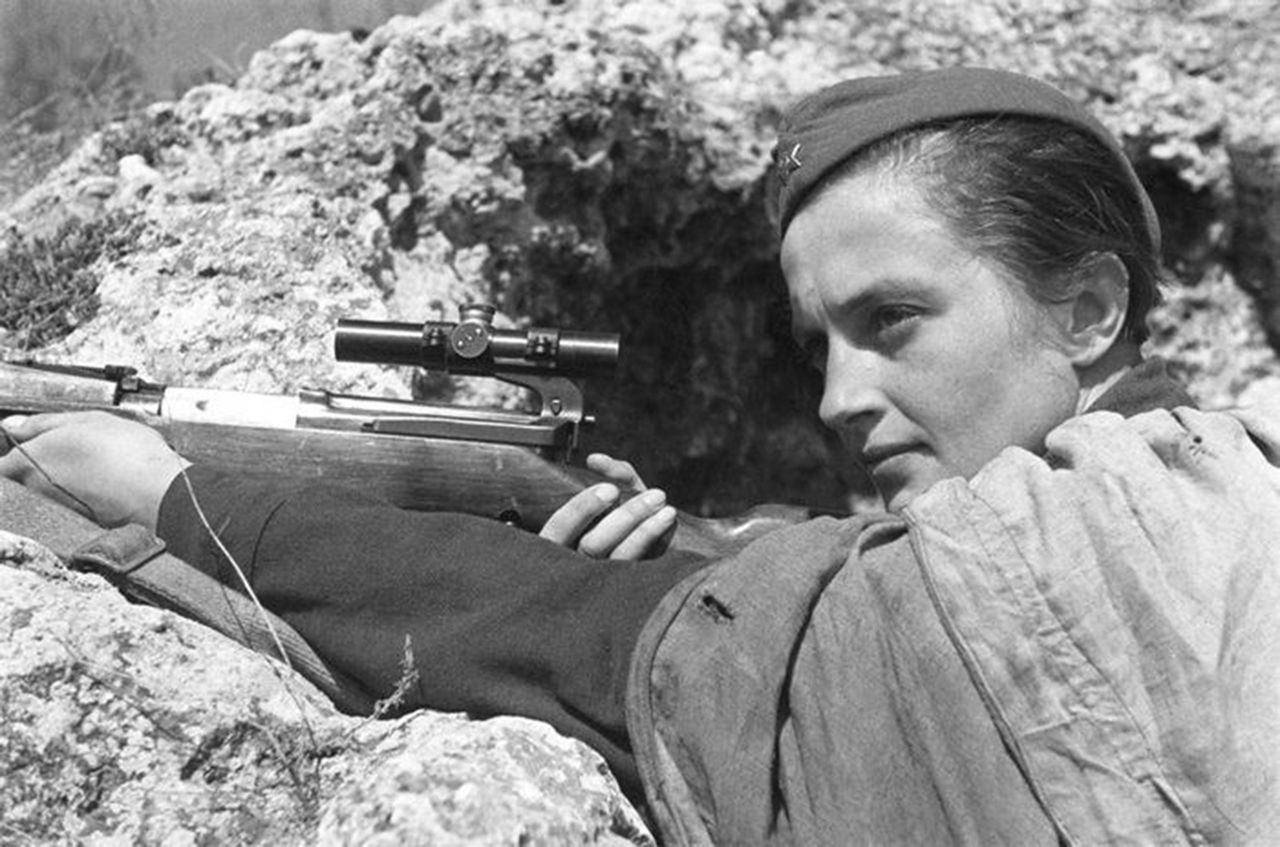
Lyudmila Pavlichenko finished the war with 309 confirmed kills, the verified record of any female sniper in military history. Vasily Zaitsev was credited with over 225 verified kills during the Battle of Stalingrad alone. Zaitsev also developed what he called the leveret system, pulling raw recruits from the line and training them directly in urban camouflage, patience, and the geometry of sniping in rubble.
One note on the historical record. The famous sniper duel between Zaitsev and a German master sniper named Major Erwin Konig has been repeated in books and films for eighty years. Extensive review of Wehrmacht personnel logs and German archival records has found no evidence Konig existed. No deployment orders. No personnel file. No corroborating German account. Modern historians widely consider the duel a Soviet propaganda construct, built to elevate Zaitsev's status and give the grinding horror of Stalingrad a narrative shape. The real Zaitsev did not need the embellishment. His verified record was sufficient.
The Most Classified Piece of Glass in American History
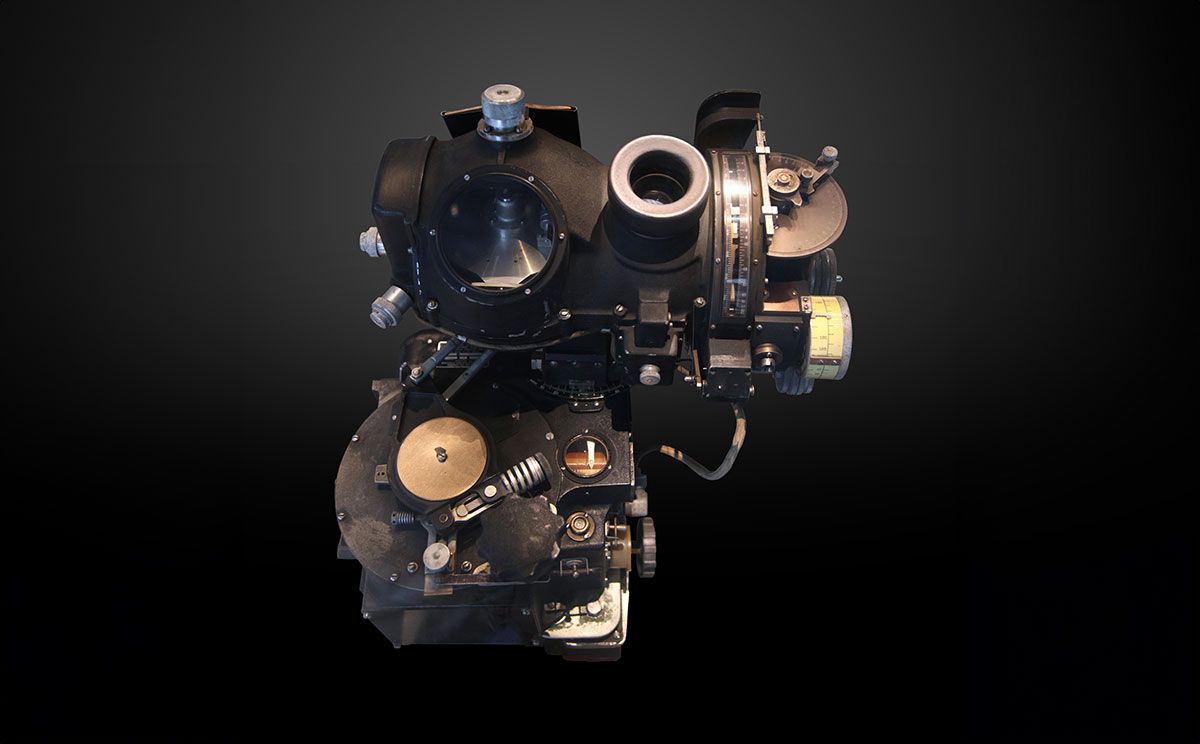
Infantry snipers and tank gunners were solving a two-dimensional problem. The USAAF was trying to solve a three-dimensional one: drop an unguided bomb from 25,000 feet, traveling at 250 miles per hour, onto a specific building in a specific German city.
Carl Norden, a Swiss engineer, built the device supposed to solve it. The Norden Mk. XV bombsight was two pieces: a gyroscopic stabilizer on the left and a sighthead on the right containing the telescopic optic and an electromechanical analog computer.
The bombardier entered four variables into the computer: altitude, true airspeed, drift from crosswinds, and trail — the specific ballistic drag factor of the bomb being dropped. He located the target through the eyepiece, tracked it by moving a prism, and clutched the analog computer into the sight. At that point the Norden took over the aircraft. It was wired directly to the autopilot. The bombardier flew the final bomb run through the bombsight. The computer recalculated the drop point continuously and released the payload automatically when the geometry matched.
Pre-war testing under ideal conditions produced a circular error probable of 150 feet. That number generated the claim that the USAAF could drop a bomb into a pickle barrel from high altitude. The Army Air Corps sold that claim to Congress, to the press, and to themselves. It shaped the entire American strategic bombing doctrine, splitting sharply from the British approach of nighttime area saturation.
Combat was different. Bombers flew in tight formations to survive fighter attacks and evade flak, which made straight, level precision runs tactically suicidal. Only the lead aircraft generally sighted the target. The rest were toggliers, releasing the moment they saw the lead aircraft drop. During the Schweinfurt ball-bearing raid of October 1943, statistical analysis showed only 10 percent of bombs fell within 500 feet of the aiming point. The mission required costly follow-up raids to achieve what prewar doctrine said one formation could do.
The security apparatus around the Norden matched the Manhattan Project. Bombardiers swore a formal oath before they were permitted to see the device uncovered. Sights were removed from aircraft after every mission and stored in guarded vaults. Crews ordered to crash land or bail out over enemy territory were to destroy the analog computer core first — with a .45 caliber sidearm into the lenses, then with a built-in thermite grenade designed to melt the mechanism into unidentifiable metal.
The protocols were pointless. Herman Lang, a German spy working at the Norden manufacturing facility, had already smuggled the complete blueprints to the Luftwaffe in 1938, three years before the United States entered the war. Every security oath, every guarded vault, every thermite charge was protecting intelligence the enemy already had.
Steel on Steel: Tank Optics and the Targeting Gap
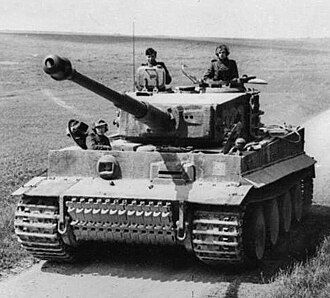
The optical advantage Germany held in its sniper rifles was even more pronounced in its armor. The Tiger I and Panther were feared weapons. Their reputation rested on the 88mm and 75mm guns, but those guns were only as effective as the optics aiming them.
The Tiger I carried the Zeiss Turmzielfernrohr 9b (TZF 9b), an articulated binocular telescopic sight with 2.5x magnification and a 25-degree field of view. Later German tanks pushed further. The Tiger II and Panther received dual-magnification monocular sights that toggled between 2.5x for target acquisition and 5x for precision engagement. The reticles included stadiametric rangefinding triangles. A German gunner who knew the approximate dimensions of a Sherman could frame it in those triangles and determine range without firing a shot. First-round hits from concealed positions, before the target could respond, became a tactical signature of German armor on the Eastern Front.
American Shermans entered the war with the M38 periscope at zero magnification. The updated M38A2 reached 1.44x. The M70 series telescopic sight offered 3x but a field of view of only 12.3 degrees — less than half the scanning area of the German 2.5x setting. Late in the war, the M10 periscope arrived with a 1x/6x combination, but by then most of the critical armored engagements in Western Europe were already decided.
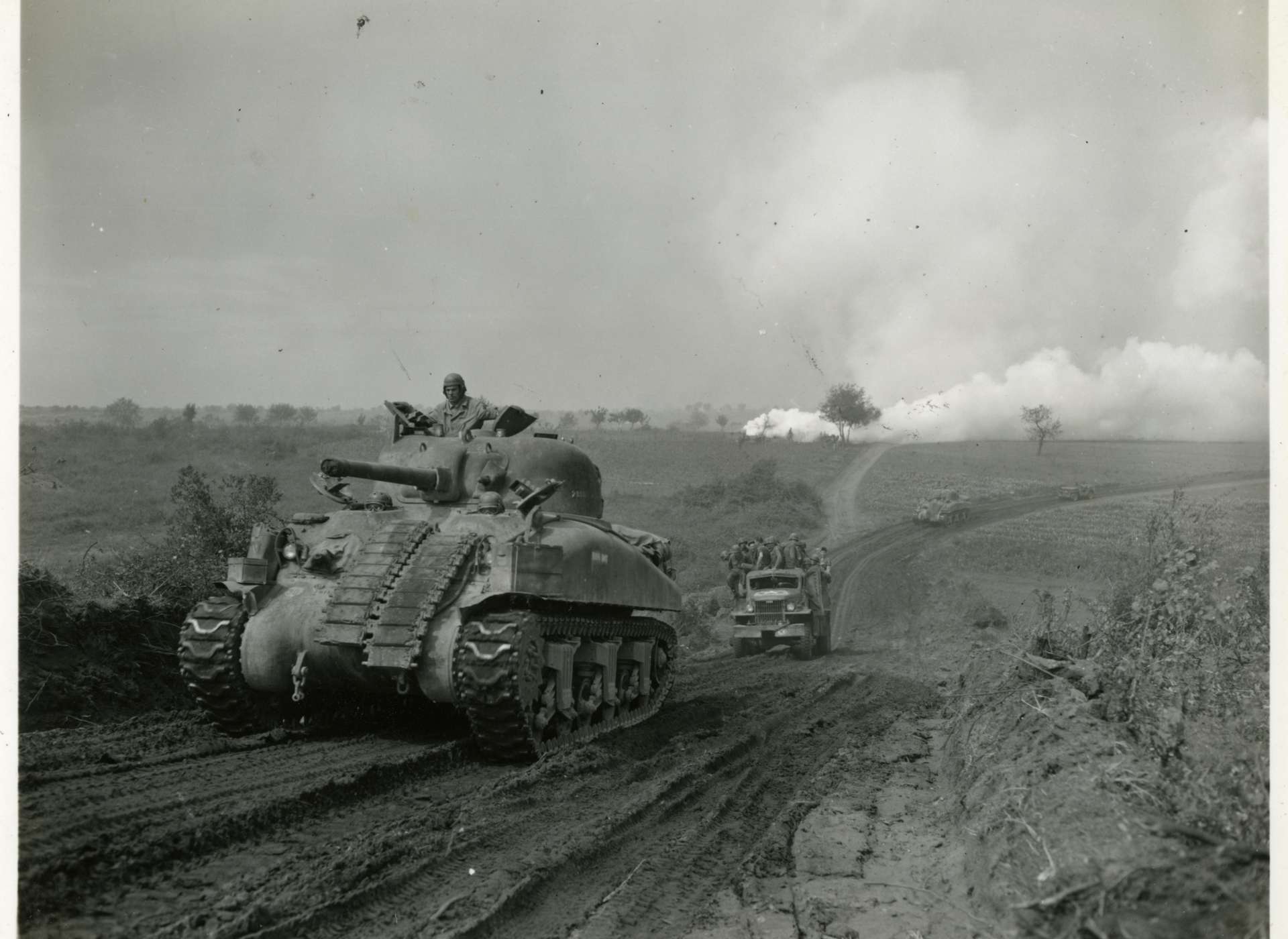
American and Soviet tank crews adapted. U.S. doctrine pushed crews to close distance aggressively, getting inside the German optical advantage before engaging. American Shermans also carried electro-hydraulic turret traverse systems and gyro-stabilized guns that gave crews a speed advantage in the acquisition cycle. After-action reports documented a consistent pattern: German tanks could range and engage accurately at 2,000 meters, but American crews at medium range could often acquire, traverse, and fire before German gunners could respond. Better glass, slower hands. It was an exchange American crews learned to exploit.
What WWII Left Behind
The war ended in 1945 and the U.S. Army disbanded its sniper program. The rationale was that future wars would be mechanized or nuclear, fought at scales where one rifleman with a glass did not matter. That was wrong inside of five years.
When the static, trench-warfare phase of the Korean War began in 1951, Army ordnance pulled M1Cs, M1Ds, and M1903A4s out of storage and reissued them. The M84 scope — 2.2x magnification with a post reticle that obscured a man-sized target past 500 yards — went back into service for counter-sniper work across Korean mountain valleys where engagement ranges ran well beyond what the optic could support. The Army did not establish a permanent sniper school at Fort Benning until 1987. The same mistake, made twice, forty years apart.
When Germany fell, the United States ran Operation Paperclip, a program to pull German scientists westward before the Soviets could. Aerospace and medical personnel got the press. But manufacturing knowledge and personnel from Zeiss, Leitz, and Hensoldt also transferred westward, feeding directly into American military optics development through the 1950s and 1960s. The glass that went into Korean War and early Vietnam-era American scopes carried German DNA.
The geopolitical division of Germany split the world's premier optical empire down the middle. The historic Carl Zeiss headquarters in Jena fell inside the Soviet occupation zone and became the state-owned VEB Carl Zeiss Jena. Western personnel and assets moved to the American zone and established Carl Zeiss Oberkochen in West Germany. Two Zeiss companies, simultaneously developing optical systems for NATO and Warsaw Pact militaries across the Iron Curtain. That split held until German reunification in the 1990s.
The Norden bombsight's legacy runs longest. The device was obsolete within a decade, replaced by radar bombing systems that worked through clouds. But the doctrine it created did not go with it. The idea that one munition placed precisely on a target is tactically superior to saturating a grid square with blind fire became the organizing principle of American air power. That philosophy is the direct ancestor of the laser-guided Paveway bombs that changed the Vietnam air war, and the GPS-guided munitions that defined the GWOT. The optics were analog. The targeting computers were mechanical. The doctrine was modern.
The glass from World War II is still in the lineage of what you are running today. The ranging reticles that came out of German sniper doctrine, the precision targeting philosophy that the Norden forced into American air power, the side-rail mounting system the Soviets used on the PU scope — all of it fed forward. The specific hardware is in museums. The solutions it found are in your optic.
Related Posts

James Megellas was lethal enough to sprint at a 45-ton Panther tank and kill it with two grenades. He earned the Distinguished Service Cross for running through mortar fire with a wounded man over his shoulder, firing a Thompson one-handed to suppress the enemy on the way out. He did it more than once. The most decorated officer in the history of the 82nd Airborne Division didn't lead from behind. He led from the front, in every battle, in every storm, carrying the men who couldn't carry themselves.

Every BDC reticle, every auto-gating Gen 3 night vision tube, every side focus knob exists because of decisions made under fire in a triple-canopy jungle half a century ago. Vietnam was not just a military conflict. For precision optics, it was the crucible.

As America marks its Semiquincentennial, we honor the unbreakable spirit of the American Warrior, from Revolutionary War legends like Francis Marion to today's modern fighters. Join Swampfox as we launch a bold campaign through July 4th, featuring limited edition drops, untold stories, and the grit that forged a nation.

A Colorado company, born on the 4th of July, 2018
Helpful Links

Join the Revolution
Join our e-mail newsletter for giveaways, hot deals, and Swampfox news.
©2026 Swampfox Optics. All rights reserved.
Designed and powered by WebriQ.